Tamil Progressive Alliance intensifies pressure on the European Union to make Sri Lanka’s GSP+ trade concession conditional on concrete land rights, equality safeguards and dignified citizenship for marginalized Malayaga Tamil estate communities.
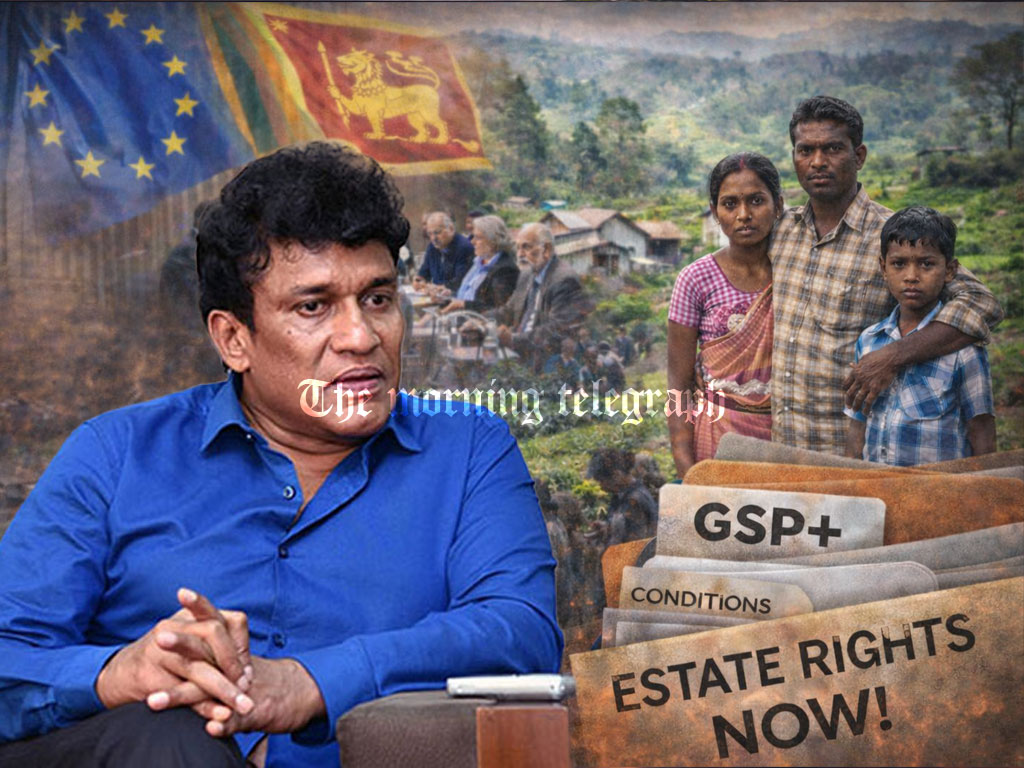
The Tamil Progressive Alliance has formally urged the European Union to attach strict human rights and land security conditions to the continuation of Sri Lanka’s GSP+ concession, arguing that trade privileges must reflect measurable justice on the ground. The appeal was made during a high level discussion in Colombo with a visiting delegation from the European External Action Service led by Asia and Pacific Regional Director Paola Pampaloni. The meeting was hosted by EU Ambassador Carmen Moreno and headed on the Sri Lankan side by MP Mano Ganesan.

Also participating in the dialogue were Tamil Progressive Alliance Vice President for International Affairs Bharat Arulsamy and Kandurata Janata Peramuna General Secretary and TPA Politburo member Professor Vijayachandran. The alliance reiterated that it supports the continuation of the Generalized Scheme of Preferences Plus concession for Sri Lanka, recognizing its economic importance for export sectors such as tea and garments. However, Ganesan stressed that GSP+ must be tied to clear, measurable guarantees of justice, equality and dignified citizenship rights for Malayaga Tamils, a historically marginalized estate community.
He emphasized that the credibility of GSP+ depends not merely on the ratification of international human rights conventions, but on real and verifiable implementation. The delegation outlined long standing structural discrimination in plantation regions, insecure land tenure, entrenched poverty and exploitative labour conditions linked to plantation supply chains. They noted that despite the continued strength of key export industries, estate communities remain disproportionately vulnerable and excluded from national development gains.
The Tamil Progressive Alliance also expressed concern over the exclusion of displaced Malayaga families from the government’s Rs 5 million National Housing Scheme and their transfer to the Rs 2.7 million Indian aided housing programme. Ganesan argued that disaster recovery and housing policy must be fair, non discriminatory and aligned with national responsibility, asserting that international assistance cannot replace the Sri Lankan state’s obligation to its own citizens.
The delegation further pointed to independent policy evidence documenting unequal recovery patterns and systemic socio economic inequality affecting estate populations. They called for the immediate inclusion of Ditwa displaced Malayaga families within the national housing framework and for land based solutions that reflect the social structure, livelihood patterns and security needs of estate communities.
The TPA concluded that continued denial of land security and persistent structural discrimination raise serious questions about Sri Lanka’s effective compliance with international commitments tied to GSP+, warning that trade concessions must reflect genuine progress in human rights, governance and inclusive development.