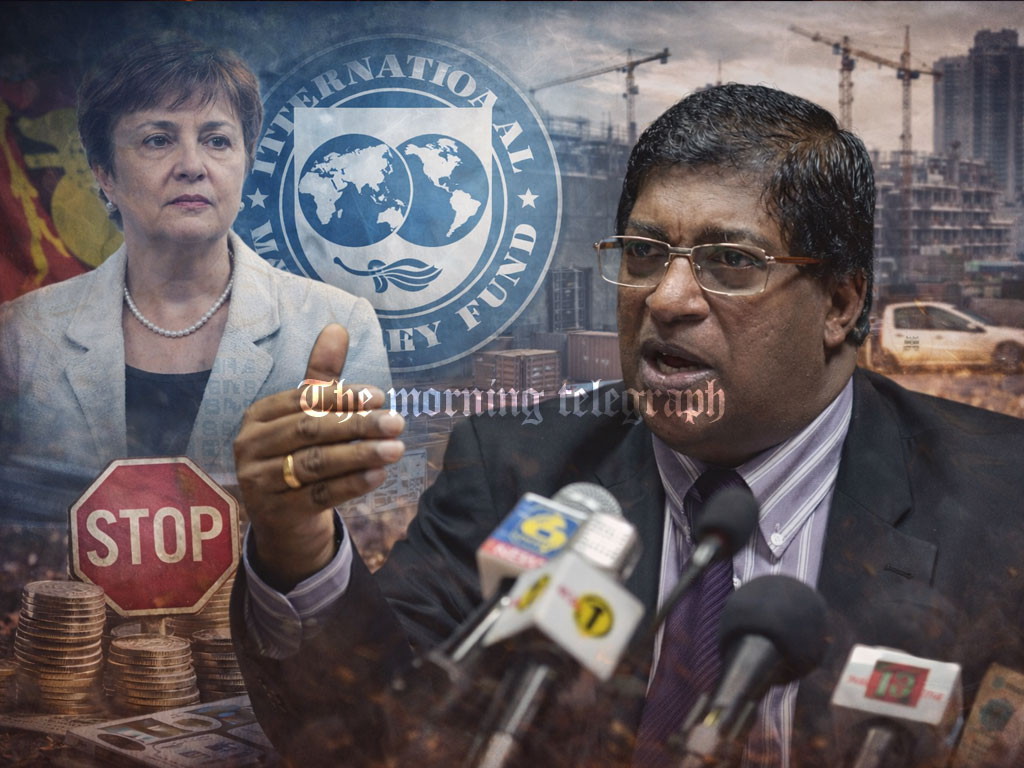
Ravi Karunanayake says Sri Lanka gained stability from past IMF backed reforms under Ranil Wickremesinghe, but warns that stalled capital expenditure, rising debt concerns and policy missteps could threaten fragile economic recovery.
Former Minister Ravi Karunanayake has stated that IMF Managing Director Kristalina Georgieva is expected to visit Sri Lanka soon for critical discussions on the country’s future economic program. Speaking at a media briefing in Colombo, he stressed that while Sri Lanka has regained some economic strength, serious structural challenges remain unresolved.

According to Karunanayake, the relative stabilization seen today is largely due to policy decisions taken during the tenure of former President Ranil Wickremesinghe. He emphasized that those reforms, particularly in fiscal discipline and currency stabilization, helped protect the rupee and restore a degree of international confidence. However, he cautioned that the real test lies ahead, especially in managing external debt repayments from 2028 onward.
He pointed out that capital expenditure has effectively come to a standstill, slowing infrastructure development and long term economic growth. Without sufficient foreign reserves, he said, Sri Lanka cannot responsibly secure new loans. Even if reserves improve in 2025, the true financial position must be transparently disclosed to the public.
Commenting on the easing of import restrictions, Karunanayake questioned whether reopening large scale vehicle imports through letters of credit is economically prudent at this stage. He warned that such measures could pressure foreign reserves and widen the trade deficit. Instead, he urged the government to adopt a forward looking economic vision, promote domestic agriculture, and manage import costs strategically.
He also remarked that Wickremesinghe consistently prioritized national economic stability over political advantage and retired from politics with that conviction.
Turning to opposition politics, Karunanayake called for unity between the UNP and SJB, urging leaders to think beyond internal divisions. He further highlighted the impact of inflation on purchasing power, emphasized national security responsibilities beyond high security zones, and called for the immediate holding of delayed provincial council elections.