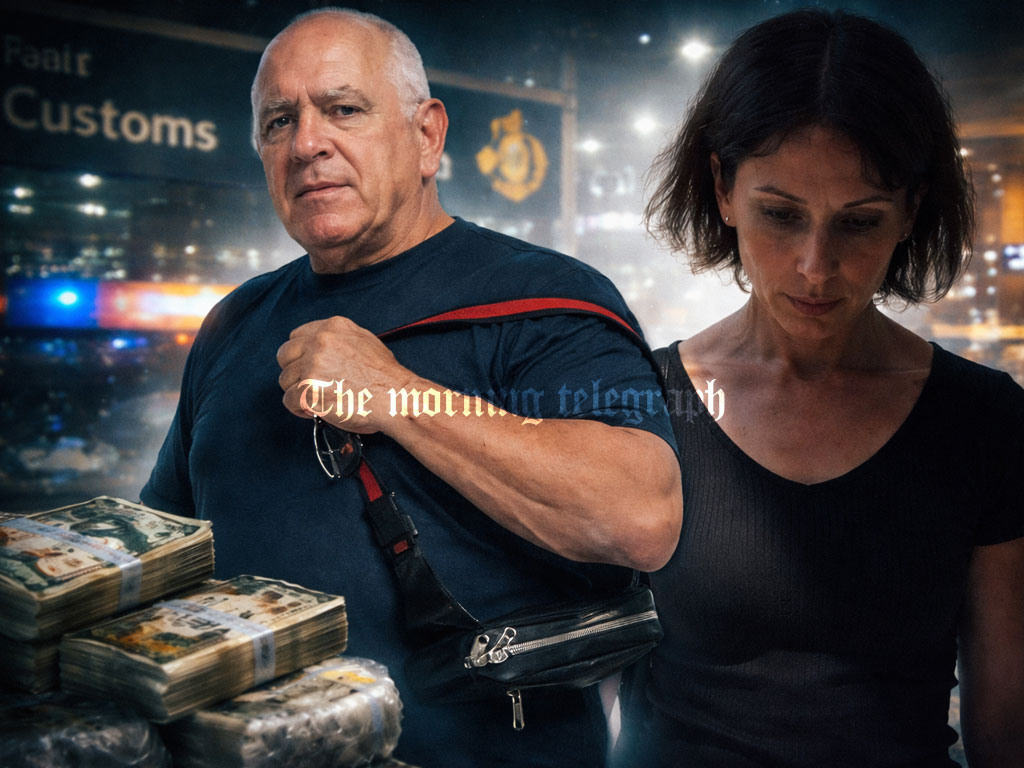
A senior airport guardian, seduced by luxury and whispered promises of love, allegedly opened the gates to a multimillion dollar cocaine pipeline, shaking public trust in national security.
Have you ever walked through an international airport and felt your heart race as you passed uniformed Customs officers? Even when we carry nothing illegal, there is that flicker of anxiety. We trust those officers to protect the nation, to stop drug traffickers and organized crime syndicates at the border.

But what happens when the guardian becomes the gatekeeper for the underworld?
This is not fiction. It is the unfolding saga of Rita Gargiulo, a 50 year old supervisor in the Australian Border Force at Sydney Airport. As a senior cargo section officer, her authority carried weight. If she instructed that a parcel not be inspected, junior officers complied. Her word carried operational power inside one of Australia’s most critical security zones.
Behind that authority, investigators allege, was a hunger for luxury beyond what a government salary could afford. Designer handbags, diamond jewelry, lavish dining, and the trappings of an elite lifestyle became the backdrop to a dangerous relationship.
Enter Cosmo, a 67 year old figure described in court as a key player in organized crime. Prosecutors say he did not rely solely on cash bribes. He allegedly deployed emotional manipulation, addressing Rita in messages as “My Queen,” promising devotion, partnership, and a glamorous future. Flattery became leverage. Affection became currency.
According to court filings, Rita received around 40,000 dollars in cash along with high end luxury goods. In exchange, investigators claim she accessed internal systems and marked certain cargo consignments as “Do Not Inspect.” She is also accused of warning the network when border checks were heightened, enabling traffickers to adjust their operations.
Authorities allege that 6.9 kilograms of cocaine entered Australia with her assistance. In the illicit drug trade, that quantity translates into millions of dollars in street value. Beyond the money lies the social cost: addiction, crime, broken families, and long term public health damage. Border security failures ripple through entire communities.
The pair allegedly used covert communication methods. Cosmo is said to have used public payphones, while Rita reportedly relied on burner phones to avoid detection. Investigators describe coded exchanges and carefully timed contacts designed to evade law enforcement surveillance. For months, the operation appeared to function without disruption.
Then came the knock on the door.
In March 2025, Federal Police officers arrived at Rita’s home. What followed stunned the public. Searches allegedly uncovered significant cash reserves and luxury items. The arrest of a senior Border Force supervisor sent shockwaves through Australia’s national security framework.
Cosmo has reportedly downplayed the relationship, characterizing the gifts as friendly gestures. Rita’s legal team has argued that she struggled with mental health issues and depression. The case now moves through the courts, with prosecutors seeking severe penalties. She faces the possibility of life imprisonment under serious drug importation and corruption charges.
Beyond the courtroom, the scandal raises uncomfortable questions. Can a uniform guarantee integrity? Does rank shield vulnerability? How resilient are border protection systems against insider threats and corruption?
Public trust in law enforcement and customs agencies depends on transparency and accountability. When a senior officer is accused of colluding with organized crime, the damage extends far beyond one individual. It touches the credibility of the entire system.
As this case unfolds, it forces a broader reflection on power, temptation, and responsibility. In a world where technology enables complex smuggling networks, the greatest risk may not always come from outside the border, but from within.