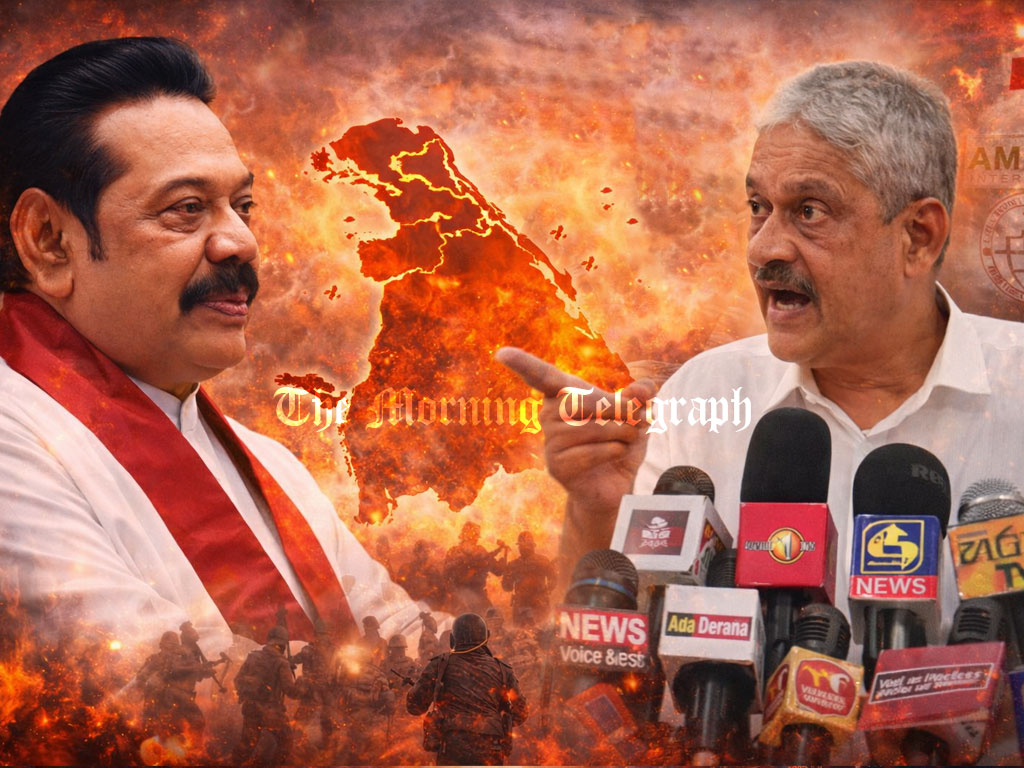
A dramatic war of words erupts as Field Marshal Sarath Fonseka accuses former President Mahinda Rajapaksa of attempting secret deals with the LTTE during the final stages of Sri Lanka’s civil war.
A fierce political controversy has resurfaced after Field Marshal Sarath Fonseka made explosive allegations against former President Mahinda Rajapaksa regarding the final phase of the war against the LTTE. Fonseka claims that on two separate occasions there were attempts to save LTTE leaders when the military campaign was at a critical stage.

According to Fonseka, during the 2005 presidential election, the LTTE was allegedly given two million dollars to prevent Northern voters from casting their ballots. He asserts that this money was later used by the LTTE to intensify attacks on the Sri Lanka Army, resulting in significant military casualties and prolonging the armed conflict.
Fonseka further alleges that a ceasefire was declared on January 31 and February 1, 2009, when the war was nearing its decisive end. As Army Commander at the time, he says he strongly opposed the move, claiming it was intended to allow LTTE leaders to escape. He maintains that this decision cost the lives of around 500 soldiers and extended the war by two months.
He also contends that during the final hours of the conflict on May 17, 2009, discussions took place between senior government figures and international organizations such as the ICRC and Amnesty International. Fonseka claims the objective was to facilitate a third party surrender of LTTE leaders rather than a direct military capture. According to him, had that plan succeeded, figures like Prabhakaran, Susei and Pottu Amman could have entered provincial politics.
Fonseka insists his clear directive was to defeat the LTTE completely. He argues that any political compromise would have undermined the sacrifice of war heroes and distorted Sri Lanka’s military victory.
He also criticized the May 9, 2022 Temple Trees incident and the Nittambuwa killings, raising concerns about legal fairness, accountability, and selective justice in Sri Lanka’s political and security landscape.