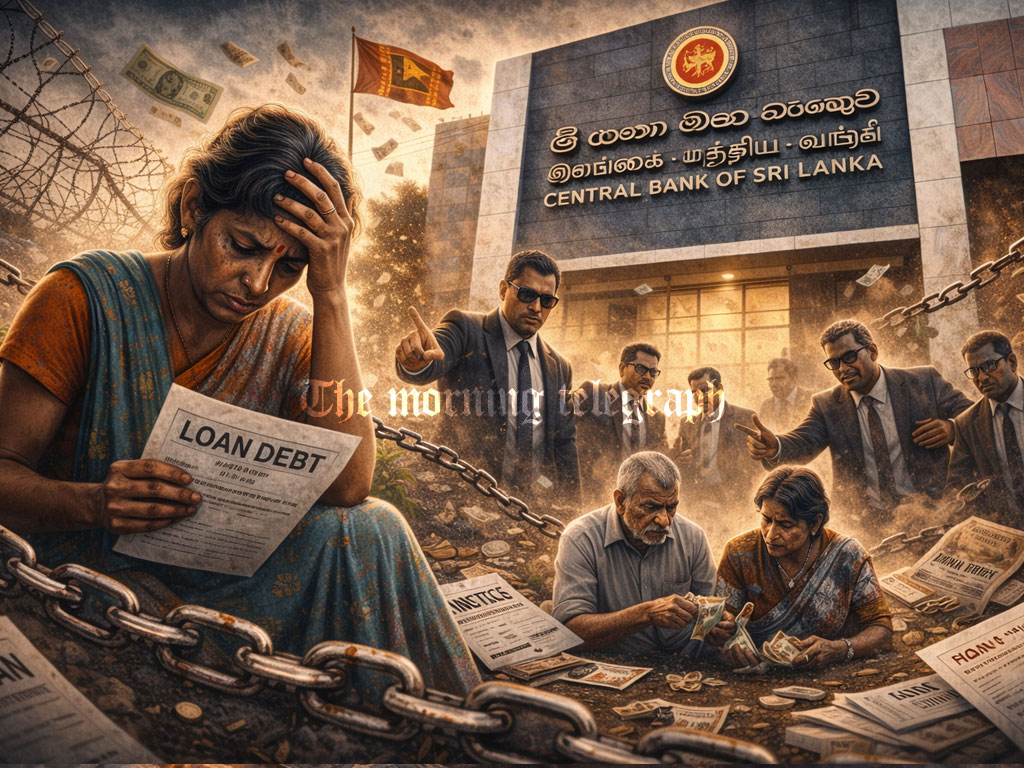
Sri Lanka signals a decisive regulatory reset aimed at shielding low-income families from exploitative microfinance practices while restoring confidence in rural credit systems.
The government of Sri Lanka has launched what officials describe as a decisive intervention to rein in informal microfinance operators accused of exploiting economically vulnerable communities. The move marks a significant shift in the country’s financial oversight and regulatory framework. Authorities say the focus is firmly on protecting low-income households that have for years faced aggressive lending, high interest rates, and coercive recovery tactics from unregulated credit providers operating under the guise of financial assistance.

A senior official from the Ministry of Finance confirmed that a new bill is currently being drafted to establish a dedicated Microfinance and Credit Regulatory Authority of Sri Lanka. This proposed regulator will be tasked with safeguarding borrower rights, enhancing transparency in loan approval processes, and enforcing stricter supervision of institutions engaged in microfinance and rural credit activities. Lawmakers are also considering amendments to the Microfinance Act No. 6 of 2016 or, alternatively, introducing a new legal framework to strengthen enforcement powers and close regulatory loopholes.
The Microfinance Act No. 6 of 2016 was originally introduced to license, regulate, and supervise microfinance companies. It required formal registration, responsible management of financial funds, and compliance with regulatory oversight standards. Under the Act, microfinance businesses were mandated to obtain licenses from the Monetary Board, placing them under the supervision of the Central Bank of Sri Lanka. Certain cooperative societies and development-oriented institutions were also brought within its scope through special provisions to ensure accountability in the credit market.
Despite these safeguards, authorities have acknowledged that gaps in enforcement allowed informal lenders to operate outside the legal framework. Many were reported to have charged excessive interest rates and engaged in coercive debt recovery practices that disproportionately affected rural and underserved communities. The new regulatory overhaul aims to tighten monitoring mechanisms, clarify legal boundaries for all credit providers, and strengthen consumer protection in the microfinance sector.
Officials emphasized that accepting public deposits will remain strictly limited to banks and financial institutions registered with the Central Bank. Unauthorized entities will be barred from collecting funds under the strengthened legal regime. The government views these reforms as a necessary step toward preventing financial exploitation, promoting ethical lending practices, and building a more transparent, sustainable, and accountable microfinance environment across Sri Lanka.