How Sri Lanka’s political leaders turned cricket into a battleground of class, identity, nationalism and global recognition, shaping the country’s sporting destiny and rewriting its social narrative.
J.R. was not merely a political leader. He was a man shaped by cricket. In 1952, he served as chairman of the Cricket Board, long before he became President. For him, cricket was never just a sport. It was culture, diplomacy, aspiration and identity rolled into one disciplined game. Once he rose to power, he made a conscious decision to elevate Sri Lankan cricket to the global stage.

The responsibility for that mission did not go to Ranil. Instead, J.R. entrusted it to his Mahaweli Minister, Gamini Dissanayake. To carry out that directive, Gamini became Chairman of the Cricket Board. It was a strategic political move that linked governance and sport in a way that would alter Sri Lanka’s sporting history forever.
In August 1981, Gamini toured Australia. During that visit, he met the world-renowned cricketer Sir Garfield Sobers. Gamini sent him a message saying that a Sri Lankan minister wished to meet him.
In his book Gamini Dissanayake: The Story of a Historic Mission by Ranjith Amarakirthi Palihapitiya, Gamini recounts:
“I discussed with him over dinner whether he would be willing to take on a role in Sri Lankan cricket. I was astonished by his comprehensive knowledge of every aspect of the game. I met him once or twice before he left Melbourne. By then, I had firmly decided to go to Sri Lanka and take up coaching responsibilities…”
After Sobers arrived in Sri Lanka, President J. R. Jayewardene invited him and his wife to dinner. Sobers later wrote about the occasion:
“I was surprised to find that, apart from Gamini Dissanayake and his wife, there were no other guests. President Jayewardene was a refined and gracious man with deep knowledge of cricket. I learned that he had once headed cricket administration and that, at one time, Learie Constantine had been brought to Sri Lanka from the West Indies for a short period. The President had read widely about the game and described Ranjitsinhji as ‘a giant king of the game though from a small state.’ I understood that Gamini Dissanayake’s enthusiasm for Sri Lankan cricket was driven not only by his own dynamism but also by the support of the ‘elderly gentleman,’ as he referred to the President.
‘Sir Garfield, how did you score so many runs in your time? How did you keep doing it consistently?’ he asked me. I looked toward the distinguished Mrs. Jayewardene, who seemed to expect an answer. As I had thoroughly enjoyed the evening, I felt obliged to respond directly. ‘Sir, when I focus my eyes, the ball coming toward me appears very large. As long as I don’t throw my wicket away, I won’t get out,’ I replied.
‘Sir Garfield, can you give our boys such eyesight as well?’ he asked, bursting into laughter. It was a memorable night.”
This dinner conversation was not merely social diplomacy. It symbolized how political leadership and cricket administration worked hand in hand to build Sri Lanka’s credibility in international cricket. The ultimate goal was clear. Sri Lanka needed Test status.
The mission to secure Test status for Sri Lanka was also entrusted by J.R. to Gamini. At the International Cricket Conference held at Lord’s in London, Gamini delivered a speech that won the hearts of the delegates. Representatives from Pakistan immediately rose to second the proposal that Sri Lanka be granted Test status by the International Cricket Council.
It was a defining moment in Sri Lanka cricket history. Test status meant recognition. It meant entry into the elite club of cricketing nations. It was about national pride, sporting diplomacy and global visibility.
Sri Lanka recorded its first-ever Test victory in 1985. President Jayewardene, who watched the match, was so elated that he declared the following day a public holiday. When Sri Lanka won the Asia Cup in 1986, he again declared a holiday, this time in response to public demand.
These gestures reflected the emotional investment of the state in cricket. Yet, not everyone saw it as visionary leadership. Critics accused J.R. of turning cricket into a distraction from economic hardship and rising cost of living.
This “cricket obsession” of J.R. was not tolerated by the opposition at the time, the Sri Lanka Freedom Party SLFP, leftist parties and the JVP.
They charged:
“J.R. shows cricket to the people while raising the cost of living.”
“Cricket is being used to suppress people’s real problems.”
“Cricket is the white man’s game, it is a means of subjugating Sri Lanka.”
“Cricket promotes the children of Colombo Seven; village children have no place.”
“Cricket is given prominence while athletics is neglected.”
“J.R.’s cricket mania reflects elite arrogance.”
These criticisms reveal how cricket became a symbol of class tension. To some, it was an elite pastime associated with English schools and urban privilege. To others, it was a platform for international recognition and national unity.
During the period of the JVP’s second insurrection, singer Nanda Malini performed a song portraying cricket as a pastime of the Colombo Seven elite, depicting privileged youth drinking, dancing and playing ball games. The JVP regarded cricket as an elite sport detached from rural reality.
Amid JVP threats in 1988 and 1989, no cricket matches could be held in Sri Lanka. The country was paralysed by unofficial curfews imposed by the JVP, and foreign teams were afraid to tour. Cricket diplomacy was overshadowed by political violence.
It was only after becoming President that Prime Minister Ranasinghe Premadasa fully grasped the class divisions within cricket. Premadasa loved the game, but he also recognized that cricket had to be democratized.
In 1986, he built the Khettarama Cricket Stadium, later renamed the R. Premadasa Stadium, to address the lack of a venue for day night matches. When a major venue was needed for Test matches, Gamini developed the Asgiriya Stadium in Kandy. Infrastructure development became part of national sports policy.
While Gamini expanded cricket into the villages by establishing clubs and grounds, Premadasa sought to end the neglect faced by other sports. As a non elite leader, and in the face of opposition narratives portraying cricket as an elite pastime, he worked to elevate athletics and football to the same status as cricket.
A talented footballer himself, Premadasa renovated the dilapidated Sugathadasa Stadium into an international venue, giving athletics equal prominence. He established an indoor stadium and opened it for the 1991 South Asian Games. This marked a strategic shift in Sri Lanka sports development.
At those Games, gold medallist Sriyantha Dissanayake was celebrated like a cricket star. Until then, commercial endorsements had largely favoured cricketers. Premadasa changed this, paving the way for athletes to receive sponsorships. In 1992, he awarded Sriyantha Dissanayake the title of Deshabandu for his service to the nation.
Premadasa also provided financial support to football associations, personally participated in football matches with Members of Parliament to promote the sport, and established sports clubs and grounds in villages. In later years, stars such as Sriyani Kulawansa, Susanthika Jayasinghe and Sugath Thilakaratne emerged. Their success reflected a broader transformation in national sports culture.
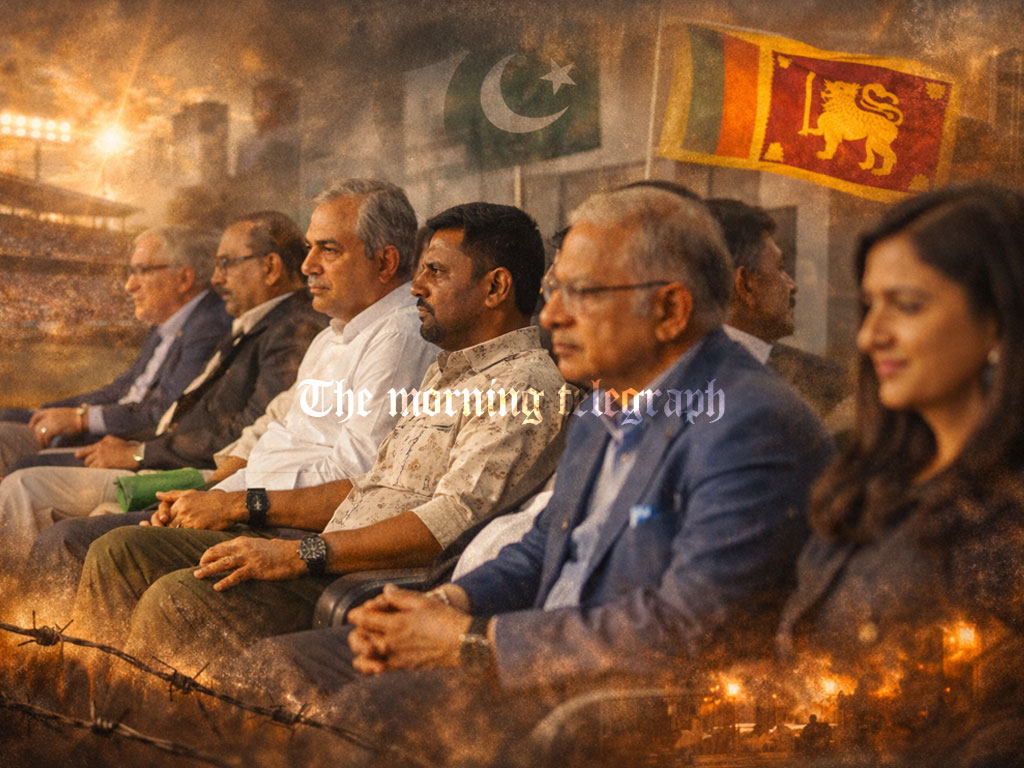
After Premadasa, Anura Kumara became the next non elite president. When he recently went to watch the India Pakistan cricket match, perhaps he did so believing that the game is no longer played only by ‘fools from elite schools.’ Even in Jaffna, he chose to speak about cricket, about building stadiums and promoting the sport.
Unlike the JVP, the LTTE never branded cricket as an elitist pastime to be despised. Even during the war, they put up giant screens at junctions across the North and cheered for the Sri Lankan team. Cricket transcended conflict. It became a rare unifying force.
If not for J.R. and Gamini during the so called 76 year ‘curse’ the JVP talks about, Sri Lankan cricket would never have risen to global acclaim. The journey from associate status to Test cricket powerhouse was shaped by political will, institutional reform and strategic vision.
Today, Sri Lanka cricket stands as more than a sport. It is a reflection of social mobility, class negotiation and national identity. The politics of the pitch continues to evolve. Leaders used cricket to shape identity, confront class tensions and claim global recognition. In doing so, they embedded the game into the very fabric of Sri Lankan political history.