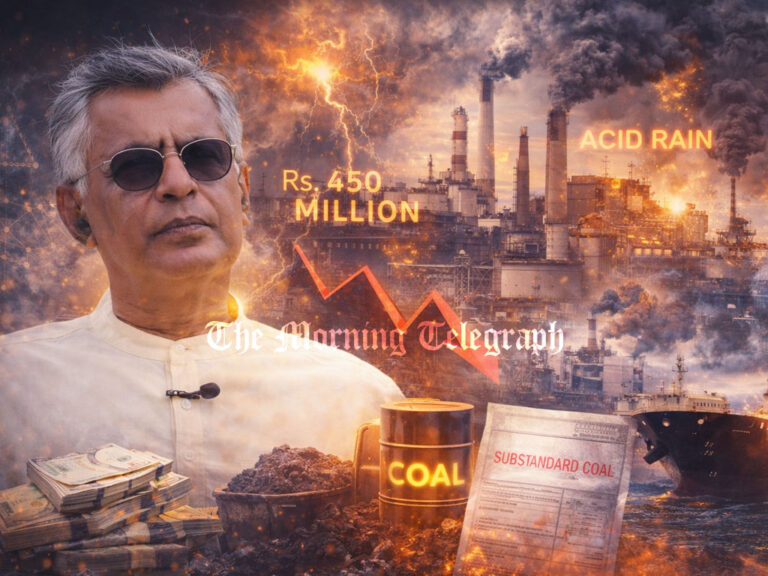
Electricity prices are set to rise as the government warns that poor coal quality and night-time shortages are forcing Sri Lanka to rely on costly oil power, tripling generation costs and straining public finances.
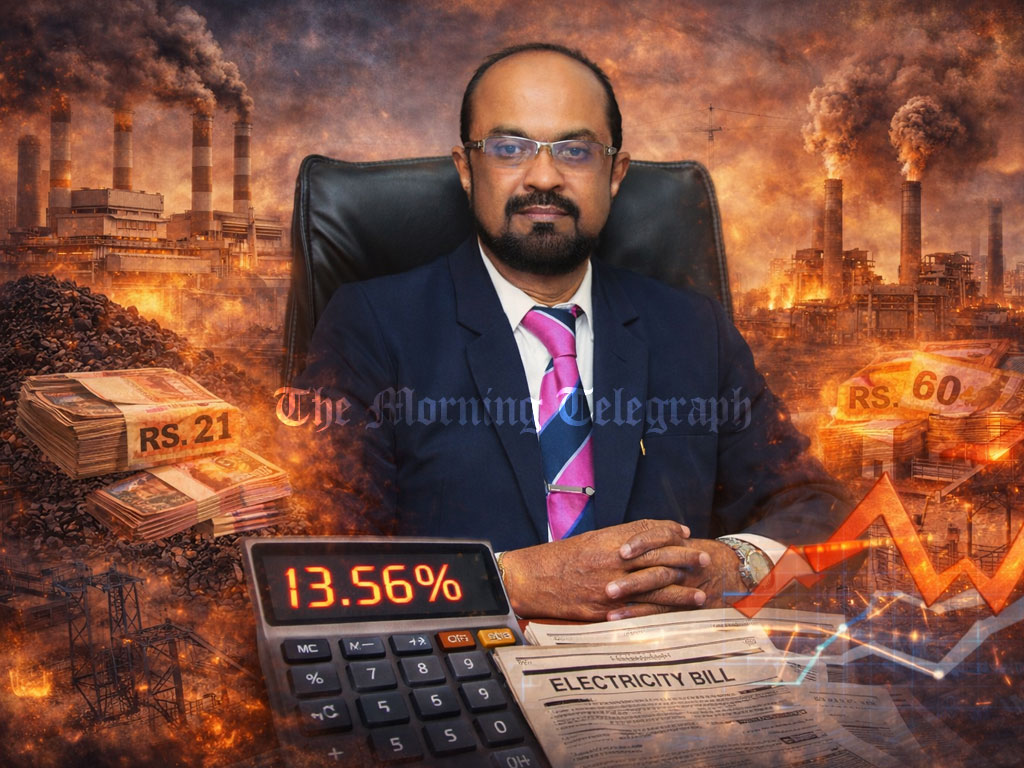
Sri Lanka’s electricity tariff hike is back in focus after Minister of Power and Energy Kumara Jayakody confirmed that the Sri Lanka Electricity Board has sought approval from the Public Utilities Commission for a 13.56 percent increase effective April 1. The request, he said, is based on updated cost forecasts and current power generation realities.

At the heart of the issue lies the Norochchola coal power plant. The Minister explained that energy production at Norochchola depends heavily on coal quality, particularly its calorific value verified at the port during unloading. If coal with lower-than-required calorific value is fed into the boiler, the plant cannot generate the expected electricity output.
This shortfall, especially during peak night demand, must then be covered by petroleum-based power plants. The financial impact is stark. Generating one unit of electricity through coal costs around Rs. 21, while producing the same unit using oil-based power plants exceeds Rs. 60.
Responding to opposition claims about coal procurement losses, the Minister said such figures reflect worst-case assumptions. Of ten coal shipments received so far, only one showed low calorific value in preliminary tests, with independent laboratory verification pending. He added that existing coal stocks remain sufficient until the end of February.