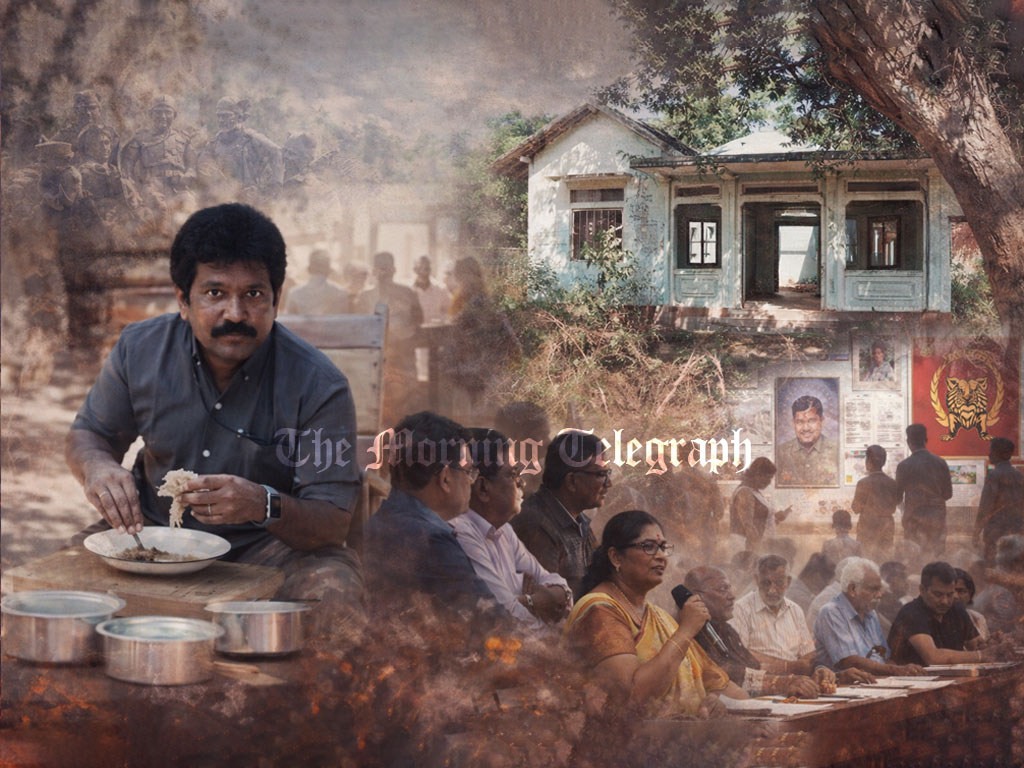
A rejected family handover has transformed Velupillai Prabhakaran’s childhood residence in Valvettithurai into the center of a heated debate on memory, reconciliation, heritage politics, and post war identity in Sri Lanka.
Local authorities in northern Sri Lanka have moved to convert the childhood home of former LTTE leader Velupillai Prabhakaran into a museum after his sister declined to assume ownership of the property. What began as a routine administrative decision has quickly evolved into a broader national conversation about history, collective memory, post war reconciliation, and the politics of heritage in Sri Lanka.

The proposal emerged after earlier plans to renovate the residence and formally transfer it to Prabhakaran’s sister were turned down. Faced with uncertainty over the site’s future, officials from the Valvettithurai Pradeshiya Sabha began exploring alternative uses for the historically sensitive property. Their solution was to redevelop the site into a museum that, according to local representatives, would preserve and showcase regional cultural heritage rather than glorify political militancy.
The house in Valvettithurai is believed to be where Prabhakaran lived until the age of thirteen. During a press briefing at the premises, council officials emphasized that the building holds cultural and historical value for many within the Tamil community. Rather than leaving it abandoned or transferring it to private interests, authorities said the site could serve as an educational and cultural institution that reflects the traditional history and identity of the area.
• Cultural Redevelopment Plan: The proposal envisions a three storey structure that may incorporate or replace the original building. The ground floor would function as an art gallery, while upper levels would host exhibitions on regional history, social transformation, and cultural evolution.
• Community Consultation: Council member Nadaraja Anantharaj stated that consultations were conducted with local and diaspora Tamil intellectuals, architects, historians, and scholars to ensure the design reflects community perspectives and heritage priorities.
• Educational Emphasis: Local leaders insist the museum is not intended as a political monument. Instead, they say it will highlight spirituality, education, art, and cultural preservation, encouraging structured learning and public exhibitions for younger generations.
The initiative unfolds against the complex legacy of the Liberation Tigers of Tamil Eelam, whose armed insurgency ended in 2009 after a prolonged civil conflict that left deep ethnic divisions and social trauma. Memorialization linked to that period remains highly sensitive. For some, transforming the site into a museum risks reopening wounds. For others, it presents an opportunity for reflection, dialogue, and structured historical interpretation.
Supporters argue that the museum could become a cultural landmark and even contribute to regional tourism and economic development in northern Sri Lanka. Critics counter that the narrative framing and curatorial approach will determine whether the site promotes reconciliation or reinforces contested memories. As debates continue, the Valvettithurai project has become a symbol of the broader challenge Sri Lanka faces in balancing remembrance, reconciliation, and national unity in its post conflict era.