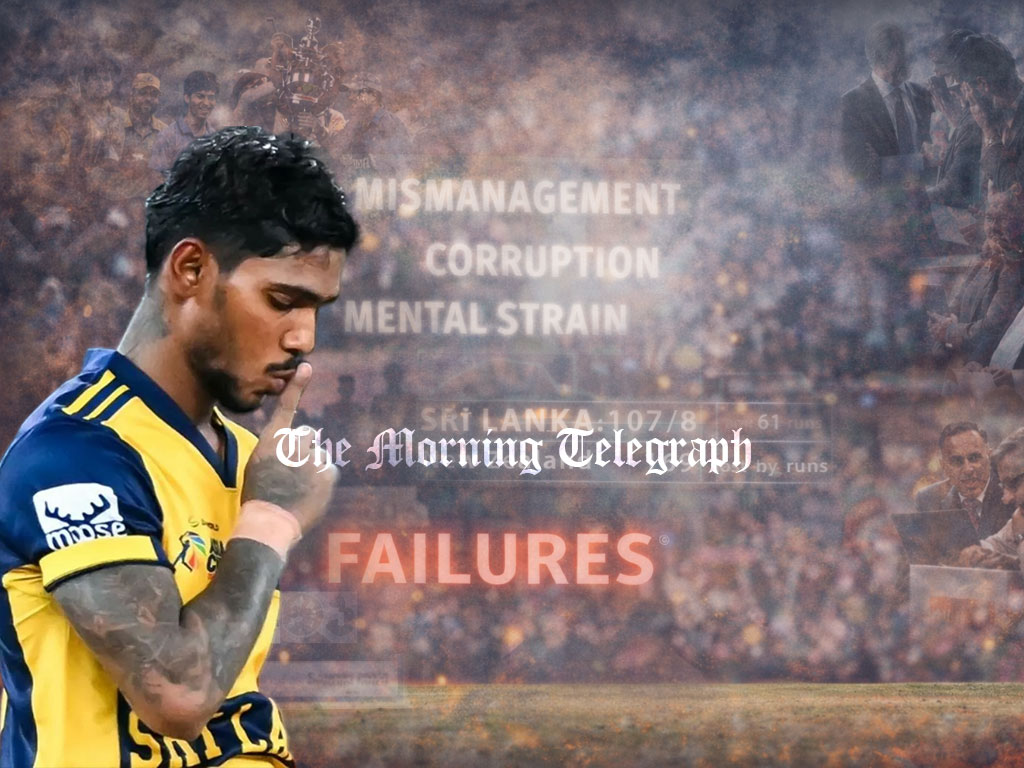
A crushing World Cup defeat, public frustration, and captain Dasun Shanaka’s candid remarks have reignited fierce debate over mismanagement, mental resilience, and accountability in Sri Lanka Cricket.
Sri Lanka’s proud cricketing legacy, once immortalized by the 1996 World Cup triumph, now stands at a troubling crossroads. What was once a symbol of national unity and sporting excellence has increasingly become a reflection of decline, mismanagement, and fading confidence. The latest setback unfolded at the R. Premadasa Stadium in Colombo, where Sri Lanka suffered a heavy defeat to New Zealand in the Super 8 stage of the Twenty20 World Cup. Chasing 169, the team managed only 107 for 8 in 20 overs, falling short by 61 runs in a performance that exposed familiar weaknesses in batting depth and match temperament.

Speaking after the loss, captain Dasun Shanaka addressed the mounting criticism directed at the players. He highlighted the psychological pressure and mental health strain caused by constant public and media scrutiny. Shanaka admitted that the team’s physical and mental preparedness is not at the expected international standard, pointing to what he described as a negative environment affecting performance levels. His remarks shifted part of the conversation from technique and tactics to mindset and resilience.
While supporters and analysts continue to question Sri Lanka Cricket’s governance and selection policies, Shanaka stressed that players are operating under immense pressure. He suggested that external forces and persistent negativity compound the strain on the squad, even hinting that government involvement could help stabilize the situation. Critics, however, argue that deeper structural problems within Sri Lanka Cricket, including leadership failures and inadequate player development pathways, remain unresolved.
This defeat adds to a growing list of international disappointments. Once celebrated as World Cup heroes, Sri Lanka now faces urgent questions about accountability, reform, and long term rebuilding. Whether this moment becomes a turning point or another chapter in decline will depend on leadership, transparency, and a renewed commitment to restoring the nation’s cricketing pride.