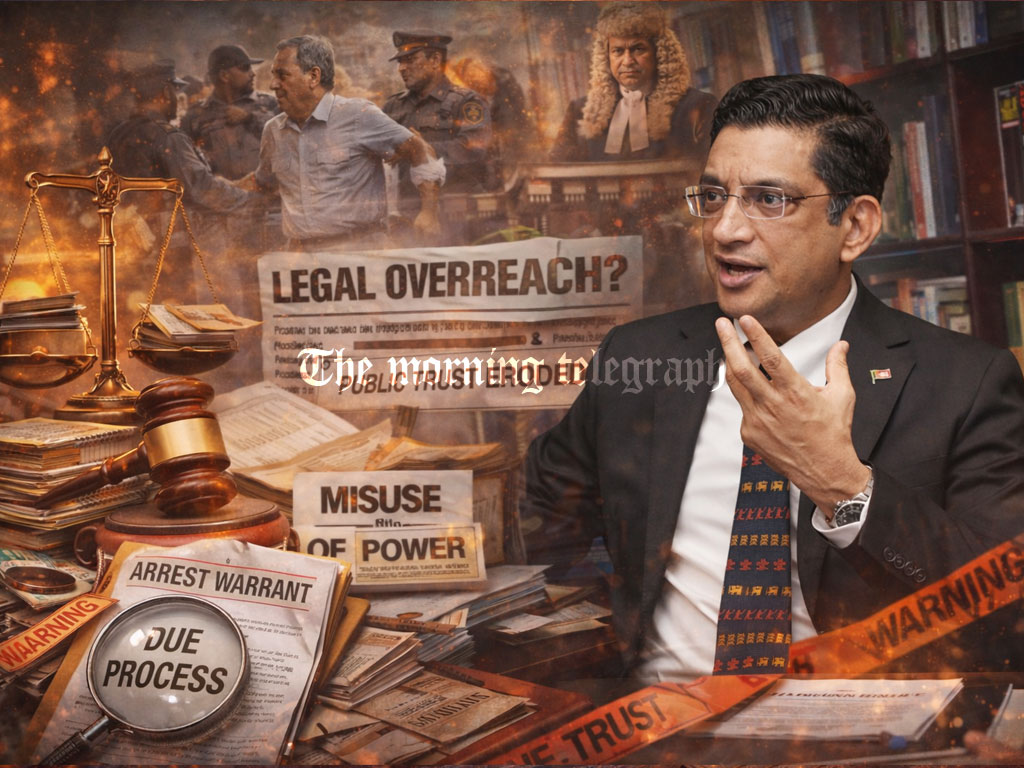
A sharp warning from Ali Sabry reignites debate over rule of law, due process, and the growing fear that arrest powers could be misused for political ends in Sri Lanka.
Former Foreign Minister Ali Sabry has issued a pointed caution about the misuse of state arrest powers, describing them as one of the most intrusive tools available to any government. In his view, the power to detain an individual must always remain tightly bound to the rule of law, constitutional safeguards, and clear legal standards. Anything less, he suggests, risks weakening public trust and eroding institutional credibility.

Drawing on established legal principles, Sabry emphasized that arrests cannot be justified on vague suspicion or speculative claims. The foundation of criminal justice, he argued, is concrete evidence and reasonable suspicion, not assumption or political convenience.
• Landmark Legal Precedents: Sabry cited Piyasiri and Others v. Vimal Fernando, ASP, and Others [1988] 1 SLR 173, where Sri Lankan courts made clear that an arrest requires a specifically identified offence. He also referenced Dumbell v. Roberts [1944] 1 All ER 326, highlighting the principle that personal liberty and the presumption of innocence demand lawful justification before detention.
• Political Neutrality of Law Enforcement: He warned against transforming investigations into fishing expeditions or tools of political leverage. According to Sabry, law enforcement must operate independently, guided by due process and judicial oversight.
• Concerns Over Recent Arrests: Referring to the arrest of Field Marshal Sarath Fonseka, Sabry said such actions raise legitimate questions about institutional integrity, public confidence, and the balance between accountability and political motivation.
Sabry concluded that safeguarding democracy requires restraint, fairness, and equal application of the law. When principle yields to expediency, he cautioned, the long term damage extends beyond any single case, affecting national stability and the credibility of justice itself.