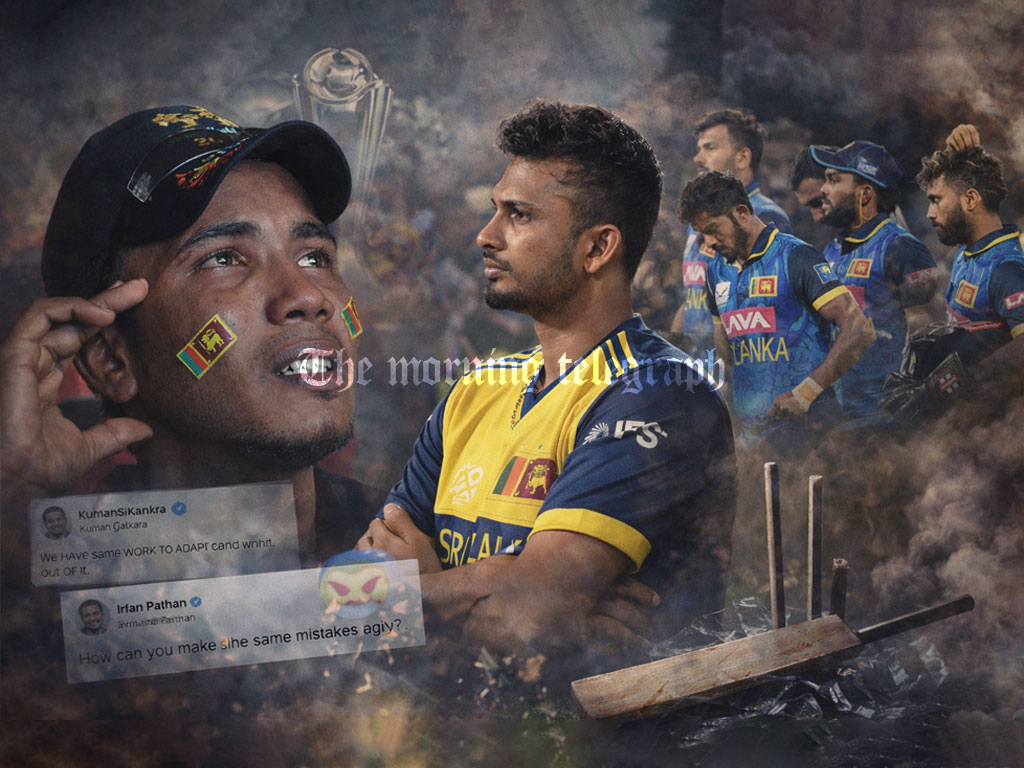
After a humiliating World Cup exit, skipper Dasun Shanaka breaks his silence on negativity, tactical blunders, mental health struggles and calls for sweeping structural reform within Sri Lanka Cricket.
Sri Lanka’s dream of reaching the semi finals of the Twenty20 World Cup 2026 collapsed in dramatic and disappointing fashion after a decisive defeat to New Zealand on February 25. For a team that entered the tournament with ambition, belief and home support, the early exit felt like a national setback. Losses to Zimbabwe, England and New Zealand sealed their fate, exposing deep cracks in performance, planning and confidence within Sri Lanka Cricket.

The warning signs had appeared even before the global event began. A 3-0 T20 series defeat to England ahead of the World Cup raised serious questions about form, adaptability and match temperament. Sports fans across social media voiced frustration, criticism and anger. The pressure mounted rapidly. By the time the team stepped onto the field in Colombo at the R. Premadasa Stadium, the atmosphere carried more anxiety than optimism.
On match day, supporters gathered in large numbers, but their mood was tense. Many expressed dissatisfaction with the team’s playing style and decision making. Some even argued that cricket had deteriorated to such a degree that it required the direct attention of the President. For a nation that reveres cricket as a symbol of unity and pride, such statements reflected the depth of disappointment.
Government should intervene
At the post match press conference following the Super 8 defeat to New Zealand, captain Dasun Shanaka made remarks that stunned observers. Responding to questions about mounting negativity, he suggested that government intervention might be necessary to address the toxic environment surrounding Sri Lanka Cricket.
“As players, it is very difficult for us to control the outside noise,” Shanaka said. “Most of the time we hear and see negative things. No matter how positive we are as players, a negative environment has been created in many places outside. It is a loss for Sri Lankan cricket.”
His words hinted at the psychological burden carried by players. Shanaka acknowledged that a World Cup had been lost and that the team bore responsibility. Yet he questioned why negativity had grown to such an extent that it affected mental health and team morale. He argued that if external pressures were managed and criticism channelled constructively, younger players could perform with greater clarity and confidence.
“I think we will play as support for the upcoming players,” he added, “and if those things are stopped by the government, it will be easier for the mental health.”
Why did you decide to chase again?
Beyond emotional reactions, tactical decisions also came under scrutiny. Veteran Indian cricketer Irfan Pathan questioned the logic behind Sri Lanka’s decision to field first against New Zealand after failing to chase 146 against England in their previous match.
“After failing to chase down 146 runs against England, why win the toss and choose to field at RPS Colombo?” Pathan asked publicly. His critique resonated with fans who felt the team had repeated a strategic error.
At the press conference, Shanaka defended the call. He explained that the team anticipated a better batting surface and did not expect excessive spin from the new pitch. “Before the match we thought the pitch would be very good,” he said. “We did not think there would be so much spin. We took a collective decision to win the toss and bowl. Unfortunately, what we wanted did not happen.”
The explanation highlighted another recurring theme: misreading conditions. Once again, Sri Lanka struggled on slower surfaces. Bowlers initially reduced New Zealand to 84 for 6 but failed to execute plans effectively, allowing the opposition to rebuild. Batting frailties during the power play and against spin resurfaced. Tactical misjudgment combined with execution errors created a familiar narrative.
Need to adapt to change soon
Former captain Kumar Sangakkara offered a broader reflection. In a thoughtful message, he acknowledged the emotional turmoil affecting both fans and players.
“There is a lot of pain everywhere,” Sangakkara wrote. “The audience is deeply disappointed as well as angry. The players are also in severe pain. I have had the same experience.”
He reminded Sri Lankans that representing the country carries immense responsibility. Yet he also emphasised the urgent need for adaptation. The global cricket landscape has evolved rapidly, with data analytics, flexible strategies and fearless brand of T20 cricket reshaping competition. Sri Lanka, he suggested, risks irrelevance if it continues repeating outdated methods.
“There is a lot of work to be done to get back to normal,” Sangakkara stated. “We cannot do the same thing and expect different results.”
His message carried weight. It was not merely about one tournament. It was about structural evolution, player development and strategic modernisation within Sri Lanka Cricket.
How can you make the same mistake again?
Veteran commentator Roshan Abeysinghe echoed similar concerns. He described Sri Lanka’s exit as deeply saddening and posed pointed questions about recurring mistakes.
“Very sad to see Sri Lanka knocked out after a disappointing performance,” he noted. “No player wants to fail the country.”
Abeysinghe questioned why the team chose to field first at a venue where batting first had often proven advantageous. He also highlighted lapses in bowling discipline and batting struggles against spin. His most pressing concern was repetition.
“How can a team with so much experience keep repeating the same mistakes?” he asked. “If problems are discussed and plans are made, why are they not implemented?”
His criticism reflected frustration shared by thousands of supporters who felt that lessons from past defeats had not translated into meaningful change.
I know your pain and anger very well
Amid public debate, Shanaka addressed fans directly through social media. His tone was apologetic and reflective.
“Like all of you, I am deeply saddened that this World Cup did not end as we expected,” he wrote. He acknowledged challenges leading into the tournament but insisted the team entered with clear plans and confidence as hosts.
“I know all too well the disappointment, pain and anger you feel,” he added. “I humbly request you not to lose faith in Sri Lankan cricket or the players who are dedicated to carry forward our cricketing heritage.”
Shanaka accepted criticism and framed it as an expression of passion. He reiterated his commitment to representing Sri Lanka with pride and apologised for failing to deliver the hoped for success. His message attempted to rebuild trust between team and supporters.
Change the constitution… blaming the players will not make it right
While emotions dominated immediate reactions, former cricketer Sidath Wettamuni shifted focus to governance reform. He argued that blaming players alone ignores systemic flaws.
“We cannot blame these players,” he said. “There should be a change in the system. Our cricket constitution needs to change.”
Wettamuni criticised the long tenure of board officials and advocated structural reform similar to other international cricket boards that include independent directors. He suggested that without constitutional change and transparent governance, performance improvements would remain limited.
“This is not just watching a cricket match and blaming it,” he emphasised. “Nothing can be done without changing our cricket constitution.”
His perspective aligns with ongoing debates about administration, accountability and long term planning within Sri Lanka Cricket. Repeated tournament failures often trigger emotional reactions, but sustainable success demands deeper institutional reform.
A moment of reckoning
Sri Lanka’s World Cup exit has sparked an intense national conversation. It is not simply about one defeat or one captain’s remarks. It is about the future of Sri Lanka Cricket, mental resilience, tactical awareness, youth development and governance reform.
Shanaka’s confession about negativity and mental health exposed the psychological strain faced by players in the modern digital era. Pathan’s critique emphasised strategic clarity. Sangakkara’s reflections highlighted the need for adaptation. Abeysinghe’s questions underscored accountability. Wettamuni’s comments brought attention to structural reform.
Together, these voices form a portrait of a cricketing nation at crossroads. Sri Lanka has a proud heritage built on legends who transformed adversity into triumph. Yet history alone cannot guarantee future success. Modern cricket demands innovation, data driven planning, fearless execution and transparent administration.
The disappointment of the Twenty20 World Cup 2026 may ultimately serve as a catalyst. Painful defeats often precede renewal. If lessons are internalised, if governance evolves and if mental health and tactical discipline are prioritised, Sri Lanka Cricket can rebuild credibility.
For now, the exit remains a bitter memory. Fans feel anger, players feel regret and administrators face scrutiny. The question is whether this moment becomes another cycle of blame or the beginning of genuine transformation. Sri Lanka’s cricketing journey depends on the answer.