Explosions over Tehran and a nationwide emergency in Israel signal a dangerous new chapter in Middle East tensions, raising fears of regional war and global energy shockwaves.
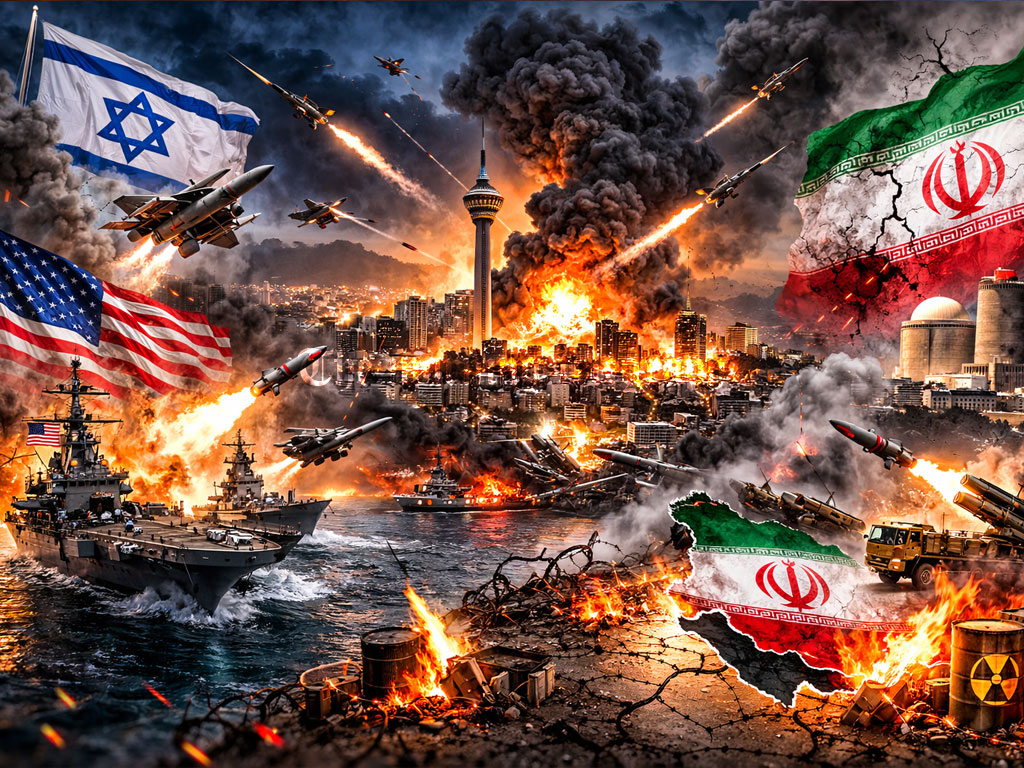
Israel carried out a daylight airstrike on Iran’s capital, Tehran, dramatically escalating Middle East tensions and placing the region on high alert. Thick plumes of smoke were seen rising from central Tehran, while residents reported hearing multiple explosions across the city. Almost simultaneously, Israel declared a nationwide state of emergency, underscoring fears of immediate retaliation.

Foreign media reports indicated that the United States provided support for the operation, though official confirmation from Washington remained limited. Israeli Defense Minister Israel Katz described the strike as a necessary action to eliminate emerging threats. Iranian state television acknowledged that an explosion had occurred but stopped short of detailing the precise target or cause.
Air raid sirens sounded across Israel as military officials warned citizens to brace for potential Iranian missile attacks. The atmosphere of uncertainty intensified amid already strained diplomatic ties. Earlier this year, US President Donald Trump had issued a firm warning urging progress on Iran’s nuclear program. Several rounds of negotiations in Switzerland aimed at curbing Iran’s nuclear and ballistic missile development had collapsed, leaving diplomacy at a standstill.
Iran had previously informed the UN Secretary-General that it would respond decisively to any military aggression. The memory of last June’s exchange remains fresh, when US forces struck three Iranian nuclear facilities and Iran retaliated by targeting a US air base in Qatar.
Global markets reacted swiftly. Crude oil prices surged to a six month high as investors assessed the risk of disruption near the Strait of Hormuz, a strategic chokepoint through which roughly 20 percent of the world’s oil supply passes. The US military has reinforced its regional presence with additional warships and fighter jets, though it has yet to comment directly on operational details.
The unfolding confrontation has intensified geopolitical risk, raising urgent questions about regional stability and the global economic fallout.