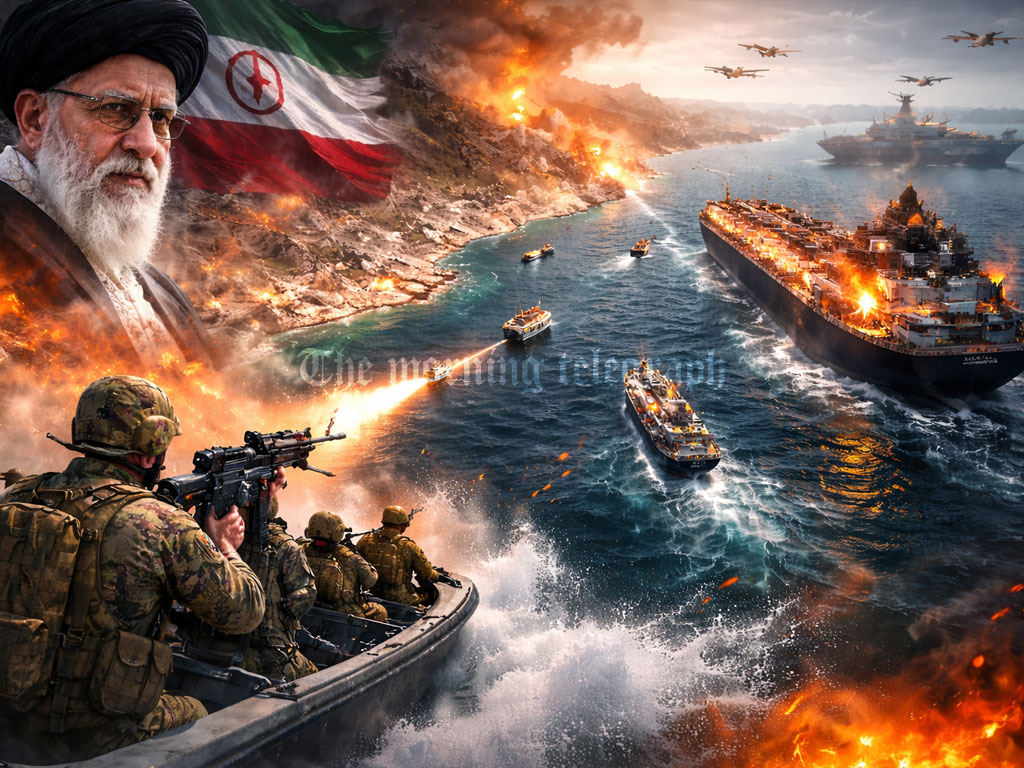
As tensions explode between Iran, the US, and Israel, the Strait of Hormuz once again stands at the center of a global energy storm that could rattle oil prices, shipping lanes, and financial markets worldwide.
The Strait of Hormuz has long been one of the world’s most sensitive geopolitical flashpoints. For decades, Tehran has used the narrow waterway as strategic leverage, repeatedly warning that it could shut it down if attacked or cornered over its nuclear program. With fresh military escalation involving the United States and Israel targeting Iranian regime and military sites, those warnings have resurfaced with renewed urgency.

A senior commander of Iran’s Revolutionary Guards recently threatened closure of the strait in response to any direct assault. Although Iran has never fully carried out such a blockade, it has periodically restricted movement during military drills, citing safety concerns. Each threat sends tremors through global energy markets because the Strait of Hormuz is not just another shipping lane. It is a vital oil chokepoint.
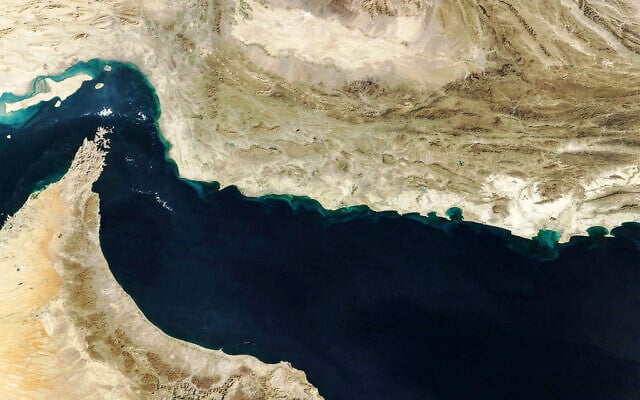
Here are the key points to know about this strategic waterway.
Gateway to the Gulf
The Strait of Hormuz links the Gulf to the Indian Ocean, positioned between Iran and Oman’s Musandam exclave at the tip of the Arabian Peninsula. At its narrowest point, it is roughly 50 kilometers wide, with shipping lanes far tighter. Its shallow depth, no more than 60 meters in many areas, makes it vulnerable to mines, missile strikes, and naval blockades.
The strait is surrounded by strategically significant islands. Among the most important are Iran’s Hormuz, Qeshm, and Larak islands, which offer commanding positions over maritime traffic. Also located in the area are the disputed islands of Greater Tunb, Lesser Tunb, and Abu Mussa. These islands, under Iranian control since 1971 but claimed by the United Arab Emirates, provide critical vantage points over Gulf shipping routes.
Satellite imagery from NASA has repeatedly highlighted how compact and exposed this corridor is, reinforcing why military planners consider it one of the world’s most fragile energy arteries.
Oil transit hotspot
The Strait of Hormuz connects the oil rich Gulf region with major markets in Asia, Europe, and North America. According to the US Energy Information Administration, it is one of the most important oil chokepoints globally.
Roughly one fifth of global oil and petroleum consumption passed through the strait in 2024, averaging about 20 million barrels per day. Around one fifth of global liquefied natural gas trade also transited this corridor, much of it from Qatar.
Saudi Arabia and the United Arab Emirates maintain pipeline infrastructure that can bypass the strait, but combined capacity stands at approximately 2.6 million barrels per day, far below the volumes that normally flow through Hormuz. In the event of closure, there are few viable alternatives.
More than 80 percent of oil and gas moving through the strait heads toward Asian markets. China alone purchases over 90 percent of Iran’s oil exports, making Beijing a critical stakeholder in any disruption scenario.
Military presence
Control of naval operations in the Gulf and the Strait of Hormuz rests with Iran’s Revolutionary Guard. Tehran frequently criticizes the presence of foreign forces in the region, including the US Fifth Fleet based in Bahrain and major American installations in Qatar.
Western navies have repeatedly warned commercial vessels to avoid straying into Iranian waters amid rising seizure risks. Tensions have escalated since 2018, when Washington withdrew from the nuclear agreement and reimposed sanctions on Iran.
The strait has witnessed conflict before. During the Iran Iraq War in the 1980s, attacks on oil tankers damaged or destroyed hundreds of vessels in what became known as the Tanker War. In 1988, the USS Samuel B. Roberts struck an Iranian mine. That same year, the USS Vincennes shot down an Iran Air Airbus A300, killing 290 civilians after misidentifying it as a hostile aircraft.
Maritime incidents
Ship seizures and confrontations remain common in the Strait of Hormuz. In 2019, tanker attacks, drone incidents, and vessel detentions raised fears of open confrontation between Tehran and Washington.
In 2021, a tanker linked to an Israeli owned company was attacked in the Gulf of Oman, resulting in fatalities. In 2024, Iran’s Revolutionary Guards seized the container ship MSC Aries, alleging links to Israel. Earlier this year, Iranian gunboats approached a US flagged tanker before allowing it to proceed.
Each episode underscores why the Strait of Hormuz remains a nerve center of global energy security and a pressure point in the unfolding Iran crisis.