Tehran moves swiftly to install a new leadership council after the assassination of Ayatollah Ali Khamenei, as missile exchanges and regional retaliation push the Middle East toward a wider confrontation.
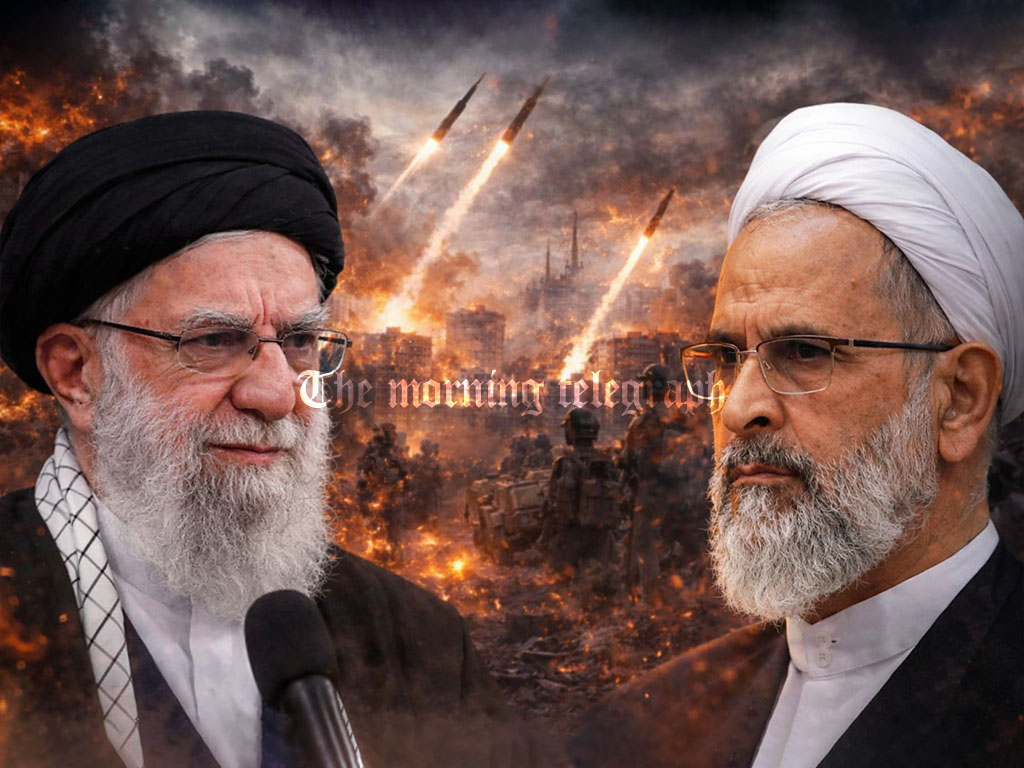
Iran has appointed a new leader to assume authority following the assassination of Supreme Leader Ayatollah Ali Khamenei, marking a dramatic turning point in the country’s political and military trajectory. According to foreign media reports, Shia fundamentalist cleric Alireza Arafi has been selected to head the ruling council. Other members of the council include former Iranian President Hassan Rouhani, signaling an effort to preserve institutional continuity amid national crisis.

Iranian state outlets reported that Khamenei was killed in a targeted strike allegedly carried out by Israel with support from the United States. The attack reportedly struck his office in Tehran, and his body was later recovered from the rubble. Authorities declared a forty day period of national mourning, underscoring the magnitude of the loss for the Islamic Republic.
Khamenei, aged eighty six, had ruled Iran since 1989, serving as Supreme Leader, head of state, and commander in chief of the armed forces, including the powerful Islamic Revolutionary Guard Corps. His tenure followed that of Ruhollah Khomeini, who seized power in the 1979 Islamic Revolution and reshaped Iran under strict Islamic governance. Together, their leadership defined the ideological direction of modern Iran.
Following confirmation of his death, Iran launched retaliatory strikes on United States military bases and regional targets, widening the conflict. US President Donald Trump warned Tehran of severe consequences if further attacks continued, heightening fears of a broader Middle East war.
The long standing confrontation over Iran’s nuclear programme intensified dramatically when the United States and Israel carried out large scale missile strikes on Tehran, Isfahan, Qom, Karaj, and Kermanshah. Iran responded with missile launches toward Israel, although Israeli defense systems reportedly intercepted most incoming projectiles.
Subsequent Iranian attacks targeted United States facilities and strategic locations across the region, including the United Arab Emirates, Bahrain, Qatar, Saudi Arabia, Kuwait, Jordan, and parts of Iraq. The Israeli military operation, reportedly backed by Washington, was named Operation Roaring Lion, underscoring its strategic intent.
Scenes inside Iran reflected deep division. Crowds gathered at religious shrines to mourn Khamenei, while other groups reportedly took to the streets in celebration, revealing a complex domestic reaction to the assassination.
More than forty senior Iranian military figures were reportedly killed in the strikes, including Defense Minister Aziz Nasserzadeh, Chief of Staff Abdulrahim Mousavi, and top Revolutionary Guard commanders. Reports also indicated casualties within Khamenei’s family. The Iranian Red Crescent confirmed more than two hundred deaths overall, including one hundred and eight in a strike on a girls’ school.
In the aftermath, President Massoud Peskov, alongside judiciary officials and a panel of judges, assumed interim authority while the eighty eight member Assembly of Leaders prepares to appoint a permanent spiritual successor.
Regional instability continued, with reports of attacks in Sharjah and maritime incidents near Oman. Tehran has insisted it retains both the legal right and responsibility to retaliate, framing its response as national defense.