The February 2026 US-Israel strike on Iran has lit a fuse that runs directly through Sri Lanka’s fuel pumps, kitchen tables, and bank accounts. For an island nation still trembling from the 2022 collapse, this is not distant geopolitics. It is an economic ambush that threatens to undo three years of painful progress in a matter of weeks.
The morning of February 28, 2026, arrived like any other in Colombo. The humidity was building steadily as it always does this time of year, wrapping the city in a blanket of moisture that left office workers fanning themselves and three-wheeler drivers wiping sweat from their brows. The three-wheelers were honking in their familiar symphony of chaos outside the Pettah market, their drivers competing for passengers with the aggressive enthusiasm that defines Colombo’s informal transport sector. But when the news alerts flashed across phone screens announcing coordinated American and Israeli military strikes against Iranian strategic assets, a different kind of chill settled over the island despite the tropical heat. It was the cold dread of recognition. Sri Lankans have seen this movie before. They have lived through the petrol queues of 2022 that stretched for kilometers and required overnight camping at filling stations. They have watched their savings evaporate as the rupee collapsed from 200 to 370 against the dollar in a matter of months. They have gone without cooking gas for weeks and waited hours for kerosene to light their stoves. They know exactly how geopolitical fire in the Middle East translates directly into economic pain at home, and the memories are still raw enough to cause sleepless nights.

For a country that had just begun to breathe normally after the suffocating economic crisis of 2022, the flames now consuming parts of Iran feel dangerously close, closer than geography would suggest. This is not a distant conflict playing out on television screens between people with unfamiliar names in places most Sri Lankans cannot locate on a map. It is a direct threat to the fuel that moves the buses carrying children to school in every corner of the island. It is a threat to the food that fills the plates of families in Jaffna and Galle alike, food that must be transported on roads that run on diesel. It is a threat to the remittance money that sustains entire villages across the island’s twenty-two million population, money sent home by mothers and fathers working in distant Gulf kitchens and construction sites, money that pays for weddings and funerals and everything in between.
Sri Lanka currently exists in what economists are calling a fragile waiting zone, a term that captures both the progress made and the vulnerability that remains. The February inflation data had offered a rare moment of relief, with headline inflation dipping to a manageable 1.6 percent after years of double-digit nightmares that destroyed household budgets and forced families to skip meals. Families were starting to plan again after years of simply surviving day to day, unsure what the next month would bring. Businesses were tentatively restocking shelves that had stood bare during the worst of the crisis, when empty shelves in supermarkets became symbols of national humiliation. But this geopolitical explosion threatens to blow those fragile figures apart with the force of a bomb, sending inflation soaring and confidence plummeting. From the misty tea estates in Nuwara Eliya where Tamil women pluck tea leaves for wages that barely cover rice and dal, their fingers stained green from decades of labor, to the cramped expatriate dormitories in Kuwait where Sri Lankan men sleep ten to a room dreaming of sending money home to build houses they may never live in, the island is now bracing for a double-edged crisis that could dismantle its hard-won stability piece by piece.
The warning signs are everywhere for those who know how to read them, and Sri Lankans have become expert readers of economic warning signs after years of crisis. Global oil prices are spiking with the volatility of a fever chart. Shipping companies are recalculating routes and adding war risk surcharges that will ultimately be paid by consumers. Banks are freezing transactions involving Middle Eastern currencies, leaving exporters unsure when or if they will be paid. Recruitment agencies are reporting cancelled job orders from Gulf employers who had been eager to hire Sri Lankan workers just weeks ago. And in the kitchens and three-wheeler stands of Colombo, ordinary people are doing what they always do when crisis looms on the horizon. They are tightening their belts another notch, counting their rupees twice before spending, and praying that this time the storm passes them by even as the clouds grow darker.
The Middle East Erupts Into Uncharted Territory
The situation in the Middle East has escalated into genuinely uncharted territory, territory that geopolitical analysts spent decades warning would lead to catastrophe if ever entered. Following weeks of shadow boxing and rhetorical brinkmanship between Washington and Tehran, with threats and counter-threats filling the airwaves, the direct kinetic engagement between the US-Israeli coalition and Iranian infrastructure has effectively paralyzed the Strait of Hormuz. This narrow waterway represents the world’s most vital oil artery, through which approximately twenty percent of global petroleum consumption flows daily on any given day when peace prevails. Its closure sends shockwaves through every import-dependent economy on the planet, but for small nations like Sri Lanka with limited buffers and fragile reserves, those shockwaves feel more like tsunamis that overwhelm all defenses.
Iran has signaled a crushing response is forthcoming, and the rhetoric coming out of Tehran suggests this will not be another round of calibrated retaliation designed to save face while avoiding all-out war, the kind of limited strikes that have characterized previous confrontations. Already, proxy groups across Lebanon, Iraq, and Yemen have begun retaliatory strikes on Western assets throughout the region, launching drones and missiles at targets that had previously been considered safe. American bases in Qatar have reported incoming fire that triggered air raid sirens and sent personnel scrambling to bunkers. Saudi oil facilities are on high alert, with workers evacuated from vulnerable installations. The shipping lanes of the Persian Gulf, already among the most militarized waters on earth with navies from a dozen countries patrolling constantly, have become potential kill zones for any vessel flying the wrong flag or suspected of supporting the wrong side.
For Sri Lanka, which maintains delicate diplomatic ties with both Tehran and Washington dating back decades, the conflict forces a perilous neutral stance that satisfies neither side while exposing the island to the wrath of both. The island cannot afford to anger either capital, given the economic relationships involved and the diaspora communities connected to each. Yet its economy remains acutely sensitive to every ripple of regional volatility, and those ripples are rapidly becoming waves that threaten to swamp small boats far from the epicenter.
The current situation has entered a period of unprecedented volatility following the massive, coordinated military operation by the United States and Israel against Iran. Codenamed Operation Epic Fury by the US and Roaring Lion by Israel, names chosen to project strength and determination, the strikes targeted multiple Iranian cities including Tehran, Isfahan, and Qom with a ferocity that surprised even seasoned Middle East observers who thought they had seen everything. The assault specifically aimed at dismantling Iran’s nuclear facilities, missile infrastructure, and political leadership structures in what Pentagon officials described in background briefings as a decapitation strategy designed to set back Iranian military capabilities by a decade or more, buying time for a new strategic architecture to emerge.
Former President Donald Trump, speaking from his Mar-a-Lago residence with the confident tone that characterized his public appearances, announced that the strikes were a preemptive move designed to eliminate imminent threats to American personnel and assets in the region. His language was characteristically direct, promising that the United States would respond to any retaliation with force that the world has never seen before, a threat that sent shivers through diplomatic circles already worried about escalation. Unconfirmed reports have circulated wildly across social media and news channels, creating a fog of information that makes accurate assessment difficult, though not yet officially corroborated by all international agencies, that Iran’s Supreme Leader Ali Khamenei was killed during the bombardment of his compound in Tehran. If confirmed, this would represent a seismic shift in Middle Eastern power dynamics with consequences impossible to predict, potentially plunging Iran into a succession crisis even as it fights an external war, creating a power vacuum that multiple factions would race to fill.
In immediate retaliation that demonstrated both capability and will, Iran launched a wide-ranging wave of ballistic missiles and drones across the region that overwhelmed defensive systems in some areas and struck targets with unnerving precision in others. Unlike previous conflicts where responses were carefully calibrated to avoid all-out war while demonstrating resolve, using proxies and limited strikes to send messages without crossing thresholds, this retaliation has bypassed traditional red lines entirely. The strikes have directly targeted not only Israel but also US military bases and civilian infrastructure in Kuwait, Qatar, Bahrain, Saudi Arabia, and the United Arab Emirates, hitting airports, military installations, and population centers. The message from Tehran is clear and terrifying in its simplicity. If Iran burns, the entire region burns with it, and no country will be spared the consequences.
Reports indicate drone and missile strikes near major transit hubs like Dubai International Airport and Kuwait International Airport, sending thousands of panicked travelers scrambling for shelter as explosions echoed in the distance. This has led to widespread airspace closures and the suspension of commercial flights across the Gulf, stranding hundreds of thousands of travelers and disrupting global supply chains in ways that will take months to unravel even if peace returns tomorrow. The geopolitical fallout has reached a critical flashpoint with the closure of the Strait of Hormuz, a move that Iran had threatened for decades but never actually implemented until now, recognizing that it would turn every shipping nation into an enemy. International bodies including the United Nations have condemned the escalation in the strongest possible terms, warning of destruction on an unimaginable scale if hostilities do not cease immediately. But in the fog of war, with missiles already in the air and casualties mounting, diplomatic pleas often go unheard by those with power to stop the fighting.
For nations like Sri Lanka, this conflict represents a system shock that threatens to destabilize energy prices, trade routes, and the safety of millions of expatriate workers stationed throughout the Gulf region. The island is now navigating the most dangerous international environment since the 1991 Gulf War, and this time the stakes are higher because the domestic economy is weaker and the buffers are smaller. Sri Lanka has no buffers left after years of crisis. No reserves to fall back on that could cushion the blow. No friendly central banks ready to extend swap lines as they did in better times. The country is navigating these treacherous waters in a leaky boat with no life jackets, hoping to reach calm seas before the vessel sinks.
Fuel Prices Surge As Energy Security Crumbles
The most immediate heart attack to the Sri Lankan economy came from the energy sector, striking with the suddenness of a coronary event that leaves victims gasping for breath. Within hours of the attack, global Brent crude prices surged by over seven percent, crossing the psychological ninety dollar per barrel barrier that economists had hoped would not be breached this year given the fragile state of global demand. For the Sri Lankan layman waiting in line at the filling station, watching the digital displays tick upward with each passing minute, this translated instantly at the pump, and the translation was painful in ways that will be felt throughout the economy.
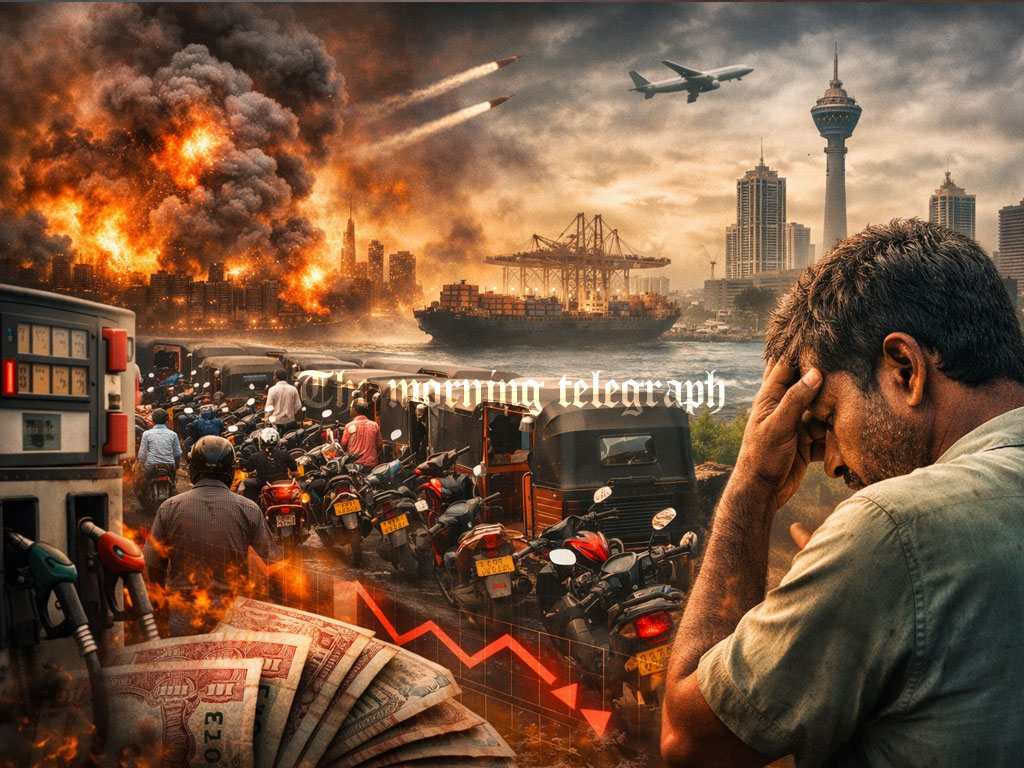
On February 28, the Ceylon Petroleum Corporation announced a price hike that sent groans across the island from Colombo to Trincomalee. Auto Diesel rose by four rupees and Super Diesel by six rupees, increases that might seem small to wealthy nations where fuel is relatively cheap but represent significant burdens for Sri Lankan families already counting every rupee and cutting every possible expense. While the CPC technically based this adjustment on a predetermined fuel price formula that adjusts automatically based on global prices, rather than the latest Middle East tension specifically, the timing could not have been worse from a psychological perspective. It led to vehicle queues snaking outside oil retailers in Colombo and other towns across the country within hours of the announcement, reviving traumatic memories of the 2022 fuel lines that stretched for kilometers and lasted for days, memories that are still fresh enough to cause anxiety when any hint of shortage appears.
For Sri Lanka, the escalating Middle East tension poses a direct threat to national energy security primarily through its impact on crude oil imports and global pricing structures that determine what the country pays for every barrel. Although Sri Lanka has diversified its sources for refined products like petrol and diesel in recent years, increasingly relying on India, Singapore, and Malaysia to reduce freight costs and dependency on any single supplier, the state-run Sapugaskanda refinery remains heavily dependent on Middle Eastern crude oil to maintain domestic production of the refined products that keep the economy moving. This dependency represents a critical vulnerability that no amount of diversification can fully eliminate, because Middle Eastern crude has specific characteristics that refineries are designed to process.
Any prolonged disruption to the Strait of Hormuz would immediately jeopardize these shipments, cutting off the flow of crude that keeps the refinery operational and forces the country to rely entirely on more expensive refined imports. The Sapugaskanda refinery, aging but essential, could be forced to halt operations within approximately one month once existing reserves are exhausted, according to petroleum industry experts who have modeled various scenarios based on previous disruptions. While the Sri Lankan government claims to have thirty-seven days of fuel stocks in reserve, a figure that provides some comfort on paper during press conferences, the geopolitical risk premium means the next shipment will be exponentially more expensive than the last, assuming shipments can even get through the Strait and past the naval forces now operating there.
This triggers a domino effect that touches every sector of the economy with the precision of a spreading fire, jumping from fuel to transport to food to everything else. When diesel prices rise, the cost of transporting vegetables from the Dambulla economic hub to Colombo markets rises correspondingly, and those increased costs get passed directly to consumers who can least afford them in the form of higher prices for everything from tomatoes to potatoes. The proposed electricity tariff cuts that households were promised during election campaigns, cuts that would have provided meaningful relief to struggling families, suddenly fall into jeopardy as the cost of generating power rises with fuel prices. Non-Food inflation, which was already creeping up at 2.3 percent in February as demand recovered, could spike dramatically in the coming months, eating away at the purchasing power of salaries that have not kept pace with rising costs.
Beyond the physical supply of oil, the economic fallout for the average Sri Lankan is driven by the geopolitical risk premium that inflates global benchmark prices far beyond what supply and demand fundamentals would justify in peaceful times. When global prices surge due to conflict and the threat of supply disruptions, the state-owned CPC is often forced to implement price hikes to manage its import bills and prevent the sort of losses that bankrupted the organization in previous years when it sold fuel below cost. For a country already navigating a delicate post-crisis recovery, these external shocks threaten to reignite inflation and diminish the living standards of households that were just beginning to see price stability return after years of turmoil that saw their purchasing power cut in half.
The energy crisis also has psychological dimensions that are harder to quantify but equally important in shaping economic behavior. Every time fuel prices rise, Sri Lankans remember 2022 with painful clarity. They remember sleeping in three-wheelers to hold their place in line overnight, taking turns with family members to ensure the vehicle didn’t lose its spot. They remember walking kilometers to work because buses weren’t running or were too crowded to board. They remember the fights that broke out at filling stations when accusations of queue jumping escalated into violence between strangers who had been peaceful neighbors just hours before. Those memories are not easily erased by government assurances, and they shape economic behavior in ways that amplify the actual impact of price increases. People hoard when they fear scarcity, creating the very shortages they fear. They cut discretionary spending when they fear harder times ahead, slowing the economy further. And those behavioral changes create the very slowdown that everyone fears, becoming self-fulfilling prophecies.
Trade Faces Disruption Across Multiple Fronts
Sri Lanka’s export sector, the engine of its recovery and the primary source of the foreign exchange that keeps the economy functioning, is now facing a logistical nightmare that threatens to choke off the progress of recent months. The escalating tension in the Middle East poses a significant threat to the country’s trade balance, specifically affecting key commodities that serve as the backbone of both foreign exchange earnings and domestic food security in ways that will ripple through the entire economy for months to come.
Because the Middle East functions simultaneously as a primary destination for Sri Lankan exports and a vital source of essential imports, any disruption to the safety of Indian Ocean shipping lanes acts as a tax on every single transaction, a tax that ultimately gets paid by Sri Lankan workers and consumers in the form of lower prices for their products and higher prices for what they buy. Tea represents Sri Lanka’s most critical agricultural export to the Middle East, accounting for hundreds of millions of dollars in annual revenue and supporting the livelihoods of over two million people directly and indirectly through the complex supply chain that stretches from highland estates to Colombo auctions to foreign ports. Iran, Iraq, and the UAE rank among the top buyers of low-grown tea, which is prized in the region for its strong flavor and dark color that produces the robust cups favored throughout the Arab world for hospitality and daily consumption.
The conflict has caused the Iranian Rial to plummet on unofficial markets, wiping out purchasing power and making Sri Lankan tea suddenly unaffordable for many Iranian consumers who had been loyal customers for generations. It has led to a freeze in new orders as Middle Eastern buyers face banking hurdles and currency instability that make international trade nearly impossible under current conditions. Letters of credit that once flowed smoothly between Colombo and Tehran, backed by decades of trust and established relationships, are now stuck in compliance departments of banks terrified of running afoul of US sanctions that carry massive penalties. If the Middle Eastern market contracts significantly, as now seems likely, thousands of smallholder tea farmers in southern Sri Lanka will face a collapse in prices that could push them back into the poverty they had only recently escaped through hard work and rising global demand. There is no immediate alternative market capable of absorbing such high volumes of these specific tea grades with their particular flavor profiles, leaving the sector dangerously exposed to a demand shock that could take years to recover from even after peace returns.
On the import side, crude oil and refined petroleum products remain the most critical concern, accounting for a significant portion of Sri Lanka’s monthly import bill and representing a strategic vulnerability that keeps policymakers awake at night. With likely increased war risk surcharges on shipping through the region, insurance costs that will be passed on to buyers, the government will be forced to spend more of its limited foreign exchange reserves on oil, money that was budgeted for other purposes like education, healthcare, and infrastructure development. This directly leads to domestic fuel price hikes, fueling inflation across all sectors of the economy in a vicious cycle that is difficult to break once established. Sri Lanka also imports significant quantities of bitumen used for road construction and other petroleum-based industrial chemicals from the UAE, supplies that are essential for maintaining and expanding the transport network. Regional instability threatens the logistics of these heavy commodities, which are expensive to transport under the best circumstances and nearly impossible to reroute quickly when disruptions occur. Disruptions in importing these materials could stall national infrastructure projects and increase the cost of maintaining the country’s road network, further straining the national budget at a time when every rupee counts and borrowing is expensive.
Beyond specific goods, the tension affects the Suez Canal route which connects Sri Lanka to its major markets in Europe and the United States, the destinations for high-value apparel and rubber products that generate significant foreign exchange and employ hundreds of thousands of workers in export processing zones. As shipping companies reroute vessels around the Cape of Good Hope to avoid the combat zone, adding thousands of kilometers to each journey and weeks to delivery times, transit times for Sri Lankan apparel and rubber exports increase by ten to fourteen days on average, disrupting carefully timed supply chains. These delays, combined with higher freight rates as shipping lines adjust to longer routes and higher insurance costs, make Sri Lankan products less competitive on the global stage where buyers have alternatives. European buyers who need just-in-time delivery to minimize inventory costs may shift orders to suppliers in closer locations like Eastern Europe or North Africa. American importers facing shorter fashion seasons and fast-changing consumer preferences may look elsewhere for reliability and speed. The result threatens the island’s hard-won export-led recovery just as it was gaining momentum after years of stagnation, potentially undoing the market share gains achieved through difficult negotiations and quality improvements.
The trade impacts extend beyond the obvious sectors as well, creating a web of consequences that will take time to fully map. Coconut exports to the Middle East, a growing market for Sri Lankan desiccated coconut and coconut oil used in Middle Eastern cooking, face similar disruptions to shipping and payment. Spice exports that had been gaining traction in Gulf supermarkets, particularly cinnamon and pepper, now confront logistical barriers that make them uncompetitive. Even the fisheries sector, which had begun exporting high-value tuna to Middle Eastern markets through air freight arrangements, faces uncertainty as air freight options dwindle and sea freight becomes more complicated with longer transit times affecting freshness. The diversity of the impact makes it harder to address through policy, because no single government response can protect all affected sectors simultaneously, and resources for support are limited.
Labour Markets Contract As Gulf Economies Stall
For decades, the Middle East has served as the safety valve for Sri Lankan unemployment, absorbing hundreds of thousands of workers who could not find opportunities at home and sending back billions in remittances that kept the economy afloat through wars, tsunamis, and civil conflict. The escalating tension now casts a shadow of uncertainty over the Gulf region, which has traditionally absorbed the island’s surplus labour with seemingly inexhaustible demand for domestic workers, drivers, construction labourers, and retail staff who keep the Gulf economies functioning.
With over 1.5 million Sri Lankans currently employed in Gulf Cooperation Council countries, representing nearly seven percent of the island’s total population and a much higher percentage of the working-age population when children and elderly are excluded, the region represents the single largest destination for the island’s migrant workforce by a significant margin. These are not just statistics in government reports that officials cite during press conferences. They are fathers missing their children’s birthdays and graduations, calling home on weekends with voices full of longing. They are mothers working in stranger’s kitchens for twelve hours a day to pay for their own children’s education back home, saving every possible rupee. They are brothers and sisters sending money home to build houses and start businesses, transforming family fortunes through sacrifice. Their presence in the Gulf represents both individual sacrifice and collective economic strategy, a system that has worked for decades despite its human costs.
A full-scale regional conflict, particularly one involving direct strikes on infrastructure in countries like Kuwait, Qatar, and the UAE where Sri Lankans are concentrated, would likely lead to an immediate hiring freeze across the Gulf as employers assess risks and reduce exposure. Private sector projects would stall as uncertainty prevails and investors wait to see which way the wind blows before committing capital to new developments. Governments in these countries would divert budgets toward defense and emergency readiness rather than development and expansion, meaning fewer infrastructure projects requiring foreign labour and fewer service sector jobs requiring Sri Lankan workers with their reputation for reliability and English language skills.
For many prospective Sri Lankan migrants who had paid recruitment agencies, taken loans at high interest to cover processing fees and travel costs, and said emotional goodbyes to families they may not see for years, this means the petro-dollar dream is effectively on hold with no clear timeline for resumption and debts that continue accumulating. Recruitment agencies in Colombo are likely to report a sharp decline in new job orders from Gulf-based employers in the coming weeks, and those who have already paid for placements may find themselves trapped between debts they cannot repay and opportunities that have vanished overnight. For Sri Lanka’s domestic economy, a contraction in Gulf job opportunities translates directly into a surge in youth unemployment that could have social and political consequences far beyond the economic numbers, consequences that could manifest in protests and unrest. The island’s youth already face significantly higher unemployment rates than the national average, a source of frustration that has boiled over into protest before when the Arab Spring reminded the world what happens when young people have no future. The ability to export this labour surplus has been crucial for maintaining social stability during the difficult post-crisis period when domestic opportunities remained scarce and the private sector was not creating enough jobs.
If the Gulf exit remains blocked for an extended period, potentially lasting years if the conflict becomes protracted, thousands of school leavers and graduates will be forced into a saturated domestic job market that is still in the early stages of recovery and cannot absorb them given current growth rates. This bottleneck creates a pressure cooker effect that worries sociologists and police alike, as frustrated youth with education but no opportunities become receptive to radical messages. Without the prospect of high-paying overseas work that could transform family fortunes and provide a path to marriage and independence, the risk of brain drain to other regions increases as educated youth seek opportunities in Canada, Australia, and Europe through any means available, taking their skills and ambition with them. Social frustrations among the youth could reignite, potentially leading to the kind of civil unrest seen during previous economic downturns when hope evaporated and anger filled the void left behind, anger that can turn destructive.
Furthermore, the tension threatens the re-integration of returning workers who may find themselves caught between worlds, neither fully belonging to the Gulf where they spent years nor to Sri Lanka which has changed in their absence. Should the conflict necessitate the mass evacuation of citizens, similar to the 1990 Gulf War crisis when Sri Lanka had to bring home tens of thousands of workers on short notice, the country would face a double-edged crisis of enormous proportions that would test administrative capacity to the limit. The country would suffer the sudden loss of billions in remittances that keep the balance of payments stable and the rupee from collapsing. At the same time, it would need to provide jobs, housing, healthcare, and support for hundreds of thousands of returning workers who had built their lives and expectations around Gulf employment and may struggle to readjust. Many of these returnees possess specialized skills in construction, hospitality, and domestic services that the current Sri Lankan economy may not be able to absorb given its current structure and growth trajectory, leaving them unemployed despite their skills.
The Middle East tension is not just a threat to those currently abroad, worrying as that is for their families. It represents a structural threat to the career aspirations of an entire generation of Sri Lankans who view the Gulf as their primary path to financial independence and upward mobility, the only route out of poverty they can see. For young people in rural areas where local opportunities remain scarce and connections determine success, the Gulf dream has sustained hope through difficult years when nothing else offered promise. If that dream dies, killed by conflict thousands of miles away, something important dies with it in the villages of Sri Lanka.
Remittances Under Threat As Families Face Uncertainty
Remittances form the lifeblood of the Sri Lankan economy, pumping over six billion US dollars annually into the financial system and supporting millions of households directly through monthly transfers that arrive like clockwork. In 2025, the country recorded a record high exceeding eight billion dollars, a testament to the resilience and sacrifice of Sri Lankan workers abroad who continued sending money home even as global inflation eroded their own living standards and made saving more difficult. This money does not simply sit in banks accumulating interest for wealthy account holders who already have enough. It flows directly into the real economy where it builds houses in rural villages, transforming mud huts with leaky roofs into concrete homes with tin roofs that keep families dry during monsoon rains. It pays for local school fees and medical expenses, keeping children in classrooms and families healthy when illness strikes. It keeps small shops in business and grandmothers fed with money that circulates through local economies multiple times. It is, in many ways, the invisible thread that holds the social fabric together across the island.
The risk here is both humanitarian and economic, threatening to tear that fabric in ways that will take years to repair and leave scars that may never fully heal. The escalating tension poses a systemic threat to Sri Lanka’s economic recovery primarily through the potential disruption of worker remittances, the single largest source of foreign exchange and a critical buffer against balance of payments crises that could destabilize the entire economy. If the conflict escalates further, drawing in more countries and lasting longer, the primary concern shifts from sending money to saving lives, and that shift has profound implications for families dependent on monthly transfers that may suddenly stop.
Any large-scale evacuation of Sri Lankan workers from the Gulf would not only cost the state millions in repatriation expenses, straining a budget already stretched thin by competing demands for limited resources. It would also permanently sever the monthly cash flow that keeps the Rupee stable against the US dollar and provides the foreign exchange needed for essential imports like medicine, food, and industrial raw materials. The evacuation of the 1990s cost Sri Lanka dearly in both financial and human terms, with workers returning to find their jobs gone and their savings inadequate. A similar evacuation today, with a much larger diaspora spread across more countries, would be orders of magnitude more expensive and disruptive, potentially overwhelming the capacity of the state to respond effectively.
Currently, over 1.5 million Sri Lankans representing nearly seven percent of the population are employed in the Gulf region across a range of sectors and skill levels. The money they send home constitutes the single most important source of foreign exchange for the island, exceeding earnings from tourism, tea, and garments combined in most months and providing a stable foundation for the balance of payments. If the conflict widens to include direct strikes on infrastructure in countries like Kuwait, Qatar, and the UAE, it could lead to massive displacement of these workers as employers close down operations and countries declare states of emergency that prioritize citizens over foreign workers. In a worst-case scenario that keeps aid workers and diplomats awake at night, Sri Lanka would face a dual humanitarian and economic crisis of unprecedented proportions. The government would need to evacuate hundreds of thousands of citizens from a war zone stretching across multiple countries while simultaneously absorbing the permanent loss of the monthly cash inflows that sustain millions of rural households. The logistical challenge alone would overwhelm existing systems and require international assistance. The economic shock would be incalculable in its effects on growth, stability, and poverty.
For the broader Sri Lankan economy, a sharp drop in remittances would be catastrophic for the post-2022 recovery that has been fragile at best and could easily be reversed. Remittances act as a buffer that stabilizes the Sri Lankan rupee against the US dollar, providing the supply of foreign currency needed to meet demand from importers, travelers, and investors. Without this steady supply of foreign currency flowing in every month, the rupee would likely depreciate rapidly as demand outstrips supply, making essential imports like fuel, medicine, and food exponentially more expensive for ordinary Sri Lankans who have no control over global prices. This would reignite the cost-of-living crisis that had only recently begun to ease after years of pain, undoing the progress seen in February 2026 where headline inflation had dipped to a manageable level and families could finally budget with some certainty about what the next month would bring.
The impact on debt repayment is equally severe and threatens Sri Lanka’s hard-won credibility with international financial institutions that took years to rebuild after the default. Sri Lanka is currently navigating a delicate debt restructuring process under an IMF-supported program that requires the country to maintain a specific level of foreign exchange reserves and meet strict performance criteria monitored quarterly. If remittance inflows, a primary pillar of these reserves and a key assumption in the program’s projections, are severed or significantly reduced due to Middle East instability, the government may struggle to meet its international obligations and maintain the confidence of creditors who are watching closely. A shortfall in foreign exchange would not only jeopardize future debt servicing but could also lead to a funding gap that delays the release of IMF tranches, potentially pushing the country back toward the brink of another sovereign default that would undo years of painful adjustment and send the economy into another tailspin.
The human dimension of this crisis is what makes it truly devastating, transforming statistics into suffering in ways that policymakers must remember. Behind every remittance statistic in government reports is a family story of sacrifice and hope. A mother in Kilinochchi who receives money from her daughter in Dubai every month, money that pays for the medication that keeps her alive despite chronic illness. A father in Matara whose son in Doha sends home half his salary every month, money that is slowly building a small house where the family can live with dignity. A grandmother in Badulla who depends on her grandson in Kuwait for money to buy food and medicine, who calls every Sunday without fail to hear her voice. When remittance flows are disrupted by forces beyond anyone’s control, these are the people who suffer most directly, and their suffering ripples through communities in ways that cannot be captured in economic models or addressed by policy alone.
Tourism Faces Uncertainty As Travel Becomes Complicated
The escalating Middle East tension could become a significant threat to Sri Lanka’s tourism industry, which has emerged as the primary engine of post-crisis economic recovery and a rare bright spot in an otherwise challenging economic landscape. The Gulf region, specifically hubs like Dubai, Doha, and Abu Dhabi with their world-class airports and extensive route networks, serves as the critical transit point for over sixty percent of Sri Lanka’s high-spending tourists from Europe and North America who cannot easily reach the island without a convenient connection point that offers reasonable flight times and frequencies.
With the closure of Iranian and Iraqi airspace to commercial traffic and the suspension of flights by major carriers like Emirates, Qatar Airways, and Etihad due to safety concerns following missile strikes near airports, the bridge connecting the West to the island is effectively broken for the foreseeable future. For a tourist in London or Berlin who had booked a long-awaited holiday to Sri Lanka’s beaches and cultural sites, spending months saving and planning, a flight that once took eleven hours with a seamless connection in Dubai now faces indefinite delays or complex rerouting through India or Southeast Asia that adds hours and expense to the journey. This leads to a wave of cancellations during what was expected to be a record-breaking winter season that hoteliers and tour operators had been counting on to recover from years of losses and invest in improvements.
Beyond the logistics of transit, the tension impacts the high-spending segment directly in ways that will take time to fully measure but are already visible in booking data. Travelers from the Middle East itself, particularly from Saudi Arabia and the UAE, represent a lucrative market for Sri Lanka’s luxury villas and wellness retreats, often spending significantly more per day than European visitors on accommodation, dining, and experiences. During times of regional conflict, these travelers tend to stay home or travel to ultra-safe short-haul destinations within their own region, avoiding any destination that might be affected by instability. This means Sri Lanka loses not only transit passengers passing through but also direct visitors from the Gulf who had been a growing market segment with substantial spending power.
Furthermore, the global perception of regional instability often spills over onto Sri Lanka in ways that are deeply unfair to the country but economically significant in their effects. Even though the island sits thousands of miles from the combat zone, separated by the Arabian Sea and Indian Ocean with no direct connection to the conflict, Western travelers frequently perceive the entire Indian Ocean and Middle Eastern belt as a single risk zone in their mental maps of the world. Travel advisories from Western governments, often cautious to the point of paranoia in their risk assessments, may lump Sri Lanka together with the conflict region in their warnings despite obvious geographical and political differences that should distinguish them. This guilt by association can lead to a sharp decline in arrivals regardless of the actual safety levels on the ground in Colombo or Galle, and reversing those perceptions once they take hold requires months of marketing campaigns and reassurance that may not be affordable during a crisis.
The economic consequences of a tourism slump are immediate and severe, hitting the economy in ways that are hard to offset with other sectors given the speed at which tourism dollars circulate. Tourism is a fast-cash industry that brings in vital foreign exchange daily through credit card transactions and currency exchange at hotels and restaurants. A drop in arrivals means lower occupancy for hotels, which means layoffs for staff and losses for owners who borrowed to invest. It means reduced income for thousands of tour drivers who invested in vehicles based on expected earnings from tourist seasons. It means empty tables at restaurants and vacant rooms at guesthouses that had expanded to meet growing demand. It means a decline in the non-food inflation relief the country was beginning to enjoy as tourism dollars strengthened the rupee and increased confidence. If the tourism sector, the country’s third-largest foreign exchange earner, stalls due to Middle East hostilities, the government will find it increasingly difficult to maintain the Rupee’s stability and fund essential imports that keep the economy functioning. The country could slide back into a cycle of scarcity and high prices that everyone hoped was behind them, and this time the recovery might take even longer given the damage to confidence.
The tourism impact extends beyond the immediate loss of arrivals to affect investment and employment in related sectors. Investment in the sector, which had been picking up as international hotel chains showed renewed interest in Sri Lanka and local entrepreneurs expanded capacity, will likely pause as investors wait to see how the conflict evolves and whether tourism recovers. Employment in related sectors like transport, handicrafts, and food processing will suffer as demand falls. The government’s tax revenues from tourism-related activities will fall short of projections, creating budget gaps that must be filled elsewhere or result in service cuts. The ripple effects touch every corner of the economy, from the airport taxi driver to the souvenir seller to the coconut farmer supplying hotels.
The Economic Slowdown Threat Looms Large
Ultimately, the Middle East tension represents a massive tax on recovery that Sri Lanka can ill afford to pay given its limited fiscal space and vulnerable population still recovering from previous crises. The conflict threatens to derail Sri Lanka’s fragile economic progress in ways that will be measured not just in GDP statistics and inflation reports but in human suffering and lost opportunities that affect real people. For a nation that recently emerged from a sovereign default, the worst in its history with consequences still being felt, the Middle East is not just a geographical region on the other side of the map with strange names and distant concerns. It is the primary source of its energy, the fuel that keeps factories running and homes lit and businesses operating. It is the destination for its surplus labour, the outlet that prevents unemployment from becoming explosive and destabilizing. It is a critical buyer of its exports, the market that sustains tea smallholders and garment workers and their families.
The conflict acts as a multifaceted tax on the Sri Lankan economy, creating a perfect storm where rising import costs for oil and essential goods meet a sudden contraction in foreign exchange inflows from remittances and tea exports. This imbalance puts immediate pressure on the Sri Lankan rupee, threatening to undo the price stability achieved in early 2026 through months of painful monetary policy and fiscal discipline that required sacrifice from everyone. If the rupee depreciates significantly, as seems likely if foreign exchange inflows fall, it will reignite the cost-of-living crisis for millions of households who had only just begun to see some relief after years of soaring prices that destroyed savings and forced changes in consumption.
From a growth perspective, the tension stifles both domestic consumption and international investment in ways that create a self-reinforcing cycle of stagnation that is difficult to break without external support. Core inflation was already trending upward at 3.7 percent according to Central Bank observations, driven by demand pressures that were actually a sign of recovery and returning confidence. The Middle East crisis accelerates this trend by forcing the government to maintain high interest rates to combat imported inflation and defend the currency from speculative attacks. High interest rates in turn discourage local businesses from borrowing and expanding their operations, meaning fewer jobs created and less economic activity generated. The very medicine needed