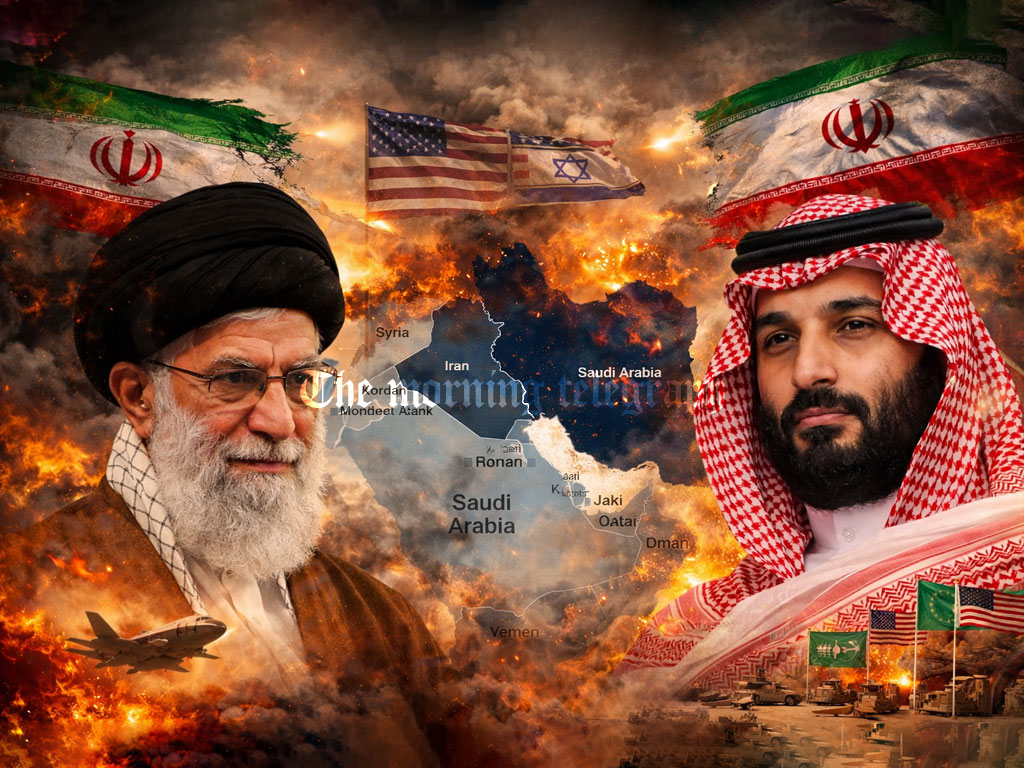
Beneath the Sunni–Shia divide lies a far deeper geopolitical contest, as pro-American Gulf states and Shia-majority Iran navigate a volatile struggle for regional dominance, oil leverage, and military influence.
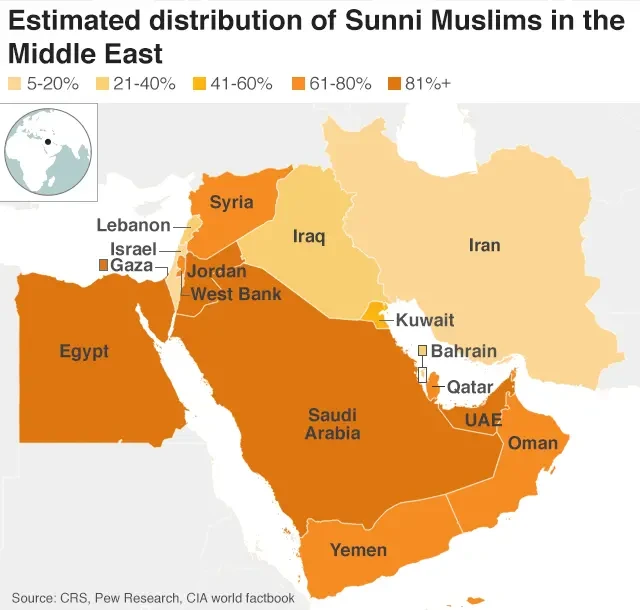
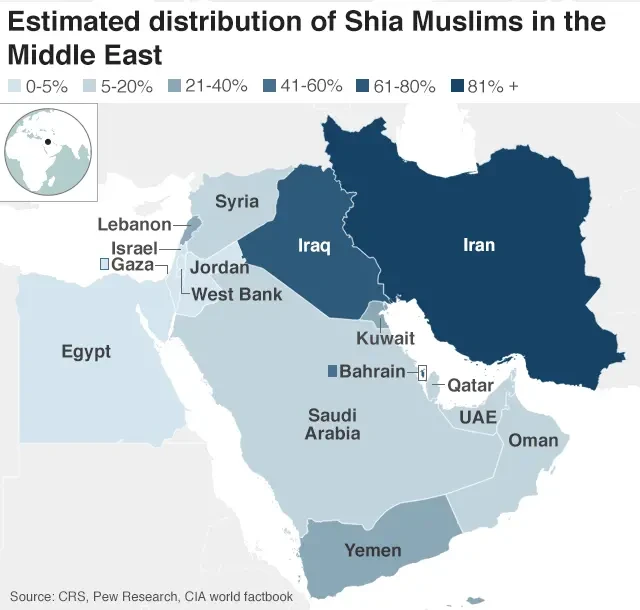
Around 85 to 90 percent of the world’s Muslims follow Sunni Islam, while roughly 10 to 15 percent identify as Shia. Iran stands as the most prominent Shia-majority state, where nearly 85 to 90 percent of Muslims belong to the Twelver or Ithna Ash’ari branch, the country’s official doctrine. Iran’s Sunni minority, estimated between 7 and 10 percent, is largely drawn from Kurdish, Baluch, Turkmen, and certain Arab communities. Beyond these two main traditions, Ibadi Islam survives in Oman and parts of North Africa, while many Muslims across Africa, Central Asia, and the Balkans describe themselves as non-denominational.

Several Middle Eastern states reflect similar sectarian patterns. Azerbaijan’s Muslim population is estimated at 65 to 75 percent Shia. Iraq ranges between 60 and 70 percent Shia, and Bahrain has a comparable majority. Lebanon’s population includes 45 to 55 percent Shia or Shia-aligned communities. Yemen is estimated at 35 to 40 percent Shia, primarily Zaidi. Syria’s Shia-related communities account for roughly 15 to 20 percent, while Kuwait holds between 20 and 25 percent. Even Sunni-majority powers such as Saudi Arabia, Pakistan, Turkey, and Egypt maintain notable Shia minorities, highlighting that sectarian identity rarely aligns perfectly with state boundaries.
This Sunni–Shia divide influences politics and security alliances, but the deeper reality is geopolitical competition. Iran leads what analysts call the Axis of Resistance, which includes the Shia-led government of Iraq, the Assad administration in Syria, Hezbollah in Lebanon, and the Houthis in Yemen. On the other side stands a pro-American Sunni bloc led by Saudi Arabia, with the United Arab Emirates, Bahrain, Egypt, and Jordan forming a strategic alignment that views Iran as its primary regional rival. Yet major global powers such as China, Russia, and India maintain economic and diplomatic ties with both camps, underscoring that energy security and trade frequently outweigh sectarian narratives.
The rivalry between Iran and Saudi Arabia is often described as a regional cold war. While religious symbolism fuels rhetoric, the core contest revolves around regional dominance, control of oil markets, maritime security, and relations with Western powers. Proxy conflicts in Syria, Yemen, Iraq, and Lebanon have become arenas where both states project influence. Historical turning points such as the 1979 Iranian Islamic Revolution and the Iran-Iraq War deepened mistrust and institutionalized rivalry. Competition over OPEC leadership, oil production levels, and strategic access to the Persian Gulf further sharpened tensions.
The latest escalation emerged from joint Israeli-American military operations launched on February 28, 2026 and continuing into March 1. These strikes reportedly targeted Iranian nuclear facilities, missile infrastructure, and senior leadership, including Supreme Leader Ayatollah Ali Khamenei. In response, Iran launched missile and drone attacks toward Israeli targets and Gulf states hosting US military bases, including Bahrain, Kuwait, Qatar, Jordan, the United Arab Emirates, and Saudi Arabia. Analysts emphasize that this confrontation is not a religious war rooted in fourteen centuries of doctrinal division. Rather, it reflects a geopolitical clash between Iran and a US-Israeli security alliance. Israel did not initiate attacks on Saudi Arabia or the UAE, and Iranian strikes on those territories were framed as retaliation against American military installations.
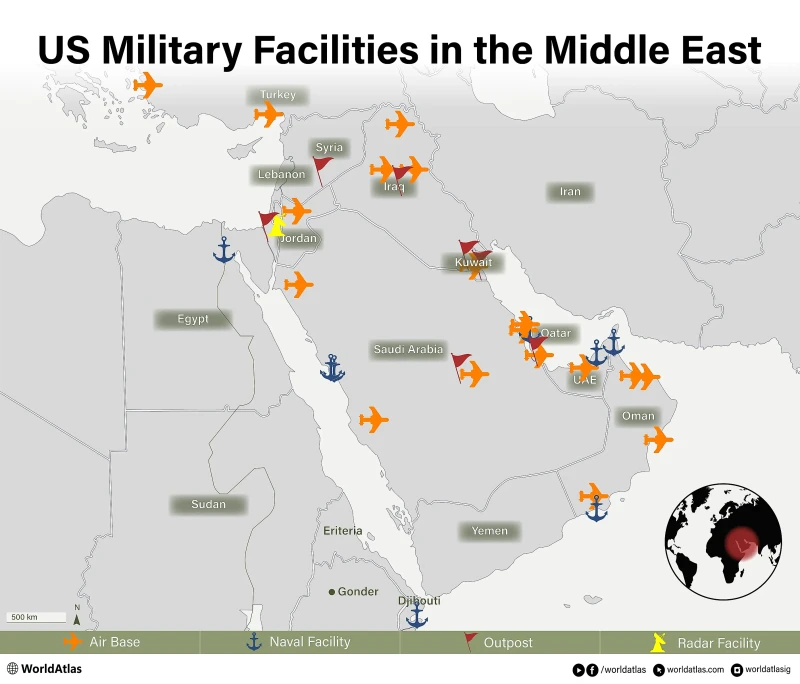
The United States maintains an extensive military footprint across the Mediterranean and Persian Gulf regions. Analysts estimate between 16 and 19 American installations across Bahrain, Egypt, Iraq, Jordan, Kuwait, Qatar, Saudi Arabia, and the United Arab Emirates. These bases host thousands of troops, advanced fighter jets, drones, missile defense systems, and naval forces, forming the backbone of US Central Command operations.
Al Udeid Air Base in Qatar functions as the forward headquarters of CENTCOM and houses approximately 10,000 personnel. It coordinates air operations, intelligence gathering, and regional security planning. Kuwait’s Camp Arifjan and Camp Buehring serve as major logistics hubs supporting operations in Iraq and Syria. In Bahrain, the US Fifth Fleet headquartered in Manama oversees maritime security across the Persian Gulf, parts of the Red Sea, and the Indian Ocean, protecting vital oil shipping lanes.
Al-Dhafra Air Base near Abu Dhabi in the United Arab Emirates hosts advanced aircraft such as the F-22 and supports aerial surveillance missions. In Iraq, bases such as Ain Al Asad and Erbil support counterterrorism operations and advisory roles. Jordan’s Muwaffaq Salti Air Base provides supply and air support functions, while additional facilities in Saudi Arabia and Syria strengthen American air power and special operations capabilities.
The strategic question is not simply whether Sunni-majority states will oppose Shia-majority Iran. Many already align against Tehran due to strategic calculations, security concerns, and alliances with Washington. Yet the conflict transcends sectarian identity. It is a multilayered geopolitical contest over influence, deterrence, energy corridors, and military dominance.
Ultimately, the Middle East crisis reflects a complex web of religious identity, strategic rivalry, oil politics, and global power competition. The Sunni–Shia divide shapes perceptions, but the driving force remains state interests and geopolitical leverage. As tensions escalate, the region stands at a crossroads where diplomacy, deterrence, and strategic recalibration will determine whether rivalry hardens into broader confrontation.