Beijing condemns Washington and Tel Aviv, but strategic caution, energy security calculations, and global power balancing explain why China stops short of military intervention.
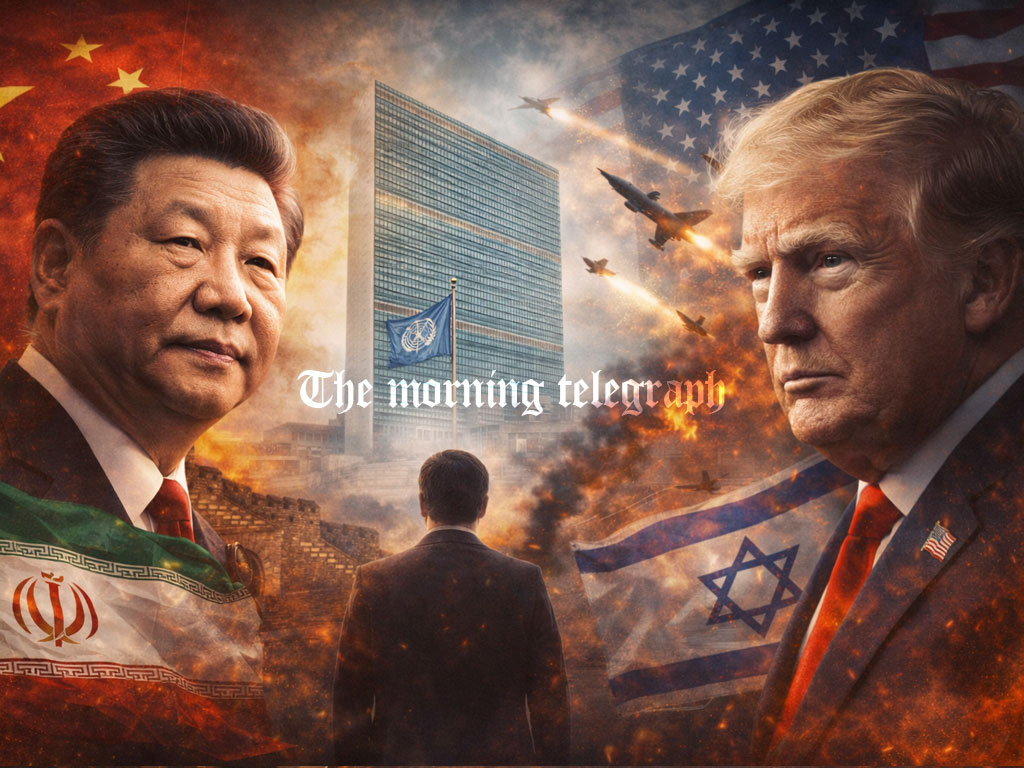
China has reacted sharply to the escalating conflict involving Iran, the United States, and Israel, yet it has drawn a clear line between diplomatic condemnation and direct military involvement. Beijing has strongly criticized the attacks on Iranian targets, including the reported assassination of Supreme Leader Ayatollah Ali Khamenei, calling them violations of international law and dangerous acts of regime change. Still, despite fiery rhetoric and firm language at the United Nations, China has not signaled any intention to provide military assistance to Tehran.

A Chinese Foreign Ministry spokesperson denounced what Beijing described as unilateral military action and interference in the internal affairs of a sovereign state. In a phone conversation with Russian Foreign Minister Sergei Lavrov on March 1, Chinese Foreign Minister Wang Yi emphasized that targeting a national leader and inciting regime change were unacceptable under international norms. He also criticized the timing of the attacks, noting that Washington and Tehran were engaged in negotiations over Iran’s nuclear program when hostilities intensified. According to Wang, the escalation risks pushing the Middle East into deeper instability, particularly across the Persian Gulf region.
China and Russia both voiced opposition at an emergency meeting of the United Nations Security Council, reinforcing their shared stance against what they see as American and Israeli aggression. Beijing called for an immediate ceasefire, urging the international community to prioritize dialogue and negotiations. It also reiterated its opposition to military action undertaken without United Nations authorization. These statements underscore China’s consistent emphasis on sovereignty, non interference, and multilateral diplomacy as pillars of its foreign policy.
The relationship between China and Iran has grown steadily over the past decade. In 2016, President Xi Jinping’s visit to Tehran elevated ties to a comprehensive strategic partnership. Iran later joined China’s Belt and Road Initiative in 2019, the Shanghai Cooperation Organization in 2023, and BRICS the following year. These frameworks bind Tehran more closely to Beijing within a network of economic and geopolitical cooperation. China has also become Iran’s largest oil customer, purchasing more than 80 percent of Tehran’s crude exports in 2025 at discounted rates. Yet for China, Iranian oil represents only a fraction of its total energy imports, accounting for about 13.4 percent of seaborne oil purchases.
Energy security remains central to Beijing’s calculations. China imported nearly three quarters of its oil consumption in 2024, with about 44 percent coming from the Middle East. Any disruption to the Strait of Hormuz, through which a significant share of global oil flows, would have implications for Chinese supply chains and global energy markets. Chinese analysts such as Dr. Jody Wen of Tsinghua University have warned that prolonged instability could impact China’s oil access and push up energy prices. At the same time, China has diversified its reserves and increased crude imports, creating buffers that reduce its immediate vulnerability.
Despite these strategic and economic ties, experts do not expect China to provide military support to Iran. Professor Cui Shujun of Renmin University argues that direct military or security assistance would contradict longstanding principles of Chinese foreign policy, particularly non intervention and opposition to entangling alliances. Instead, Beijing is likely to respond through diplomatic channels, coordinating with Russia and leveraging international institutions to advocate de escalation.
Dr. Yun Sun of the Stimson Center similarly suggests that while China might offer non military or dual use assistance if the conflict becomes prolonged, it will avoid direct confrontation with the United States. Beijing has little interest in triggering a broader clash with Washington over Iran. The broader context of US China relations is also relevant. President Trump is scheduled to visit China from March 31 to April 2, marking the first US presidential visit to Beijing in nine years. The two leaders last met in Busan in October and reached a preliminary trade agreement expected to be finalized this year. Maintaining a workable relationship with the United States remains a priority for China’s economic stability.
Another dimension influencing Beijing’s caution is precedent. Chinese analysts have drawn parallels between the Iran crisis and the earlier US special forces operation in 2026 to capture Venezuelan President Nicolas Maduro. Professor Cui notes that Beijing fears a pattern of targeted regime change operations against governments viewed as hostile by Washington. From China’s perspective, such actions challenge the principle of state sovereignty and could one day be directed at other adversaries. This concern explains Beijing’s strong rhetorical opposition to assassination and regime change tactics.
At the same time, China appears realistic about American power. Dylan Low of Nanyang Technological University observes that Beijing recognizes the willingness of the United States under President Trump to use force to advance its interests. These actions serve as reminders that American military capability remains formidable and unpredictable. China may calculate that confronting such power directly in the Middle East would stretch its own strategic priorities and undermine its broader global agenda.
Ultimately, China’s approach reflects strategic pragmatism. Beijing condemns attacks, defends principles of sovereignty, and aligns diplomatically with partners like Russia. Yet it stops short of military engagement because doing so would conflict with its foreign policy doctrine, jeopardize economic ties with the United States, and expose it to costly geopolitical risk. Iran is an important partner in energy and regional influence, but it is not worth a direct military confrontation with Washington.
China’s position in the Iran crisis illustrates the balance it seeks to maintain as a rising global power. It wants to shape international norms, protect energy security, and expand strategic partnerships without being drawn into wars that do not serve its core interests. In this sense, Beijing’s restraint is not weakness but calculation. Condemnation carries little cost. Military intervention carries enormous risk. China has chosen the safer path.