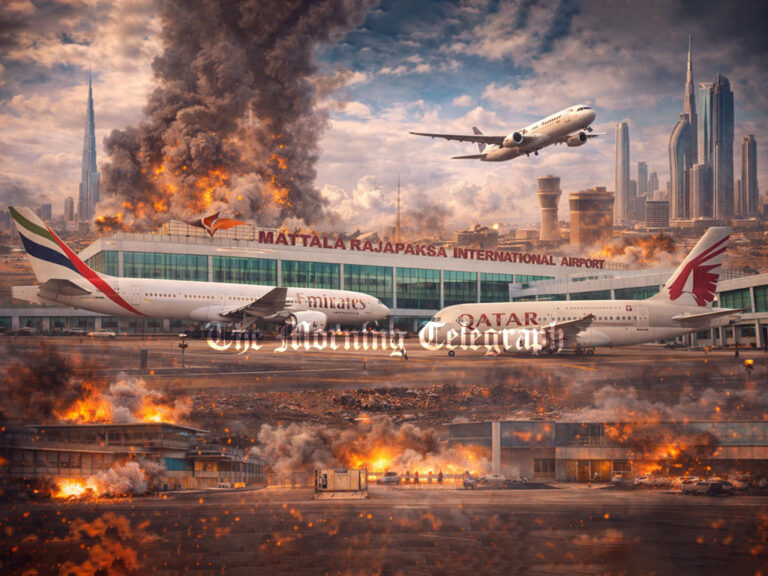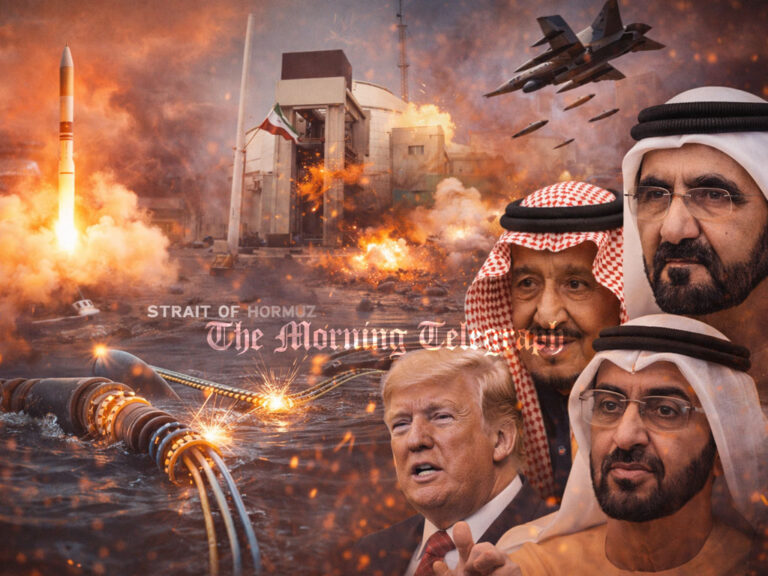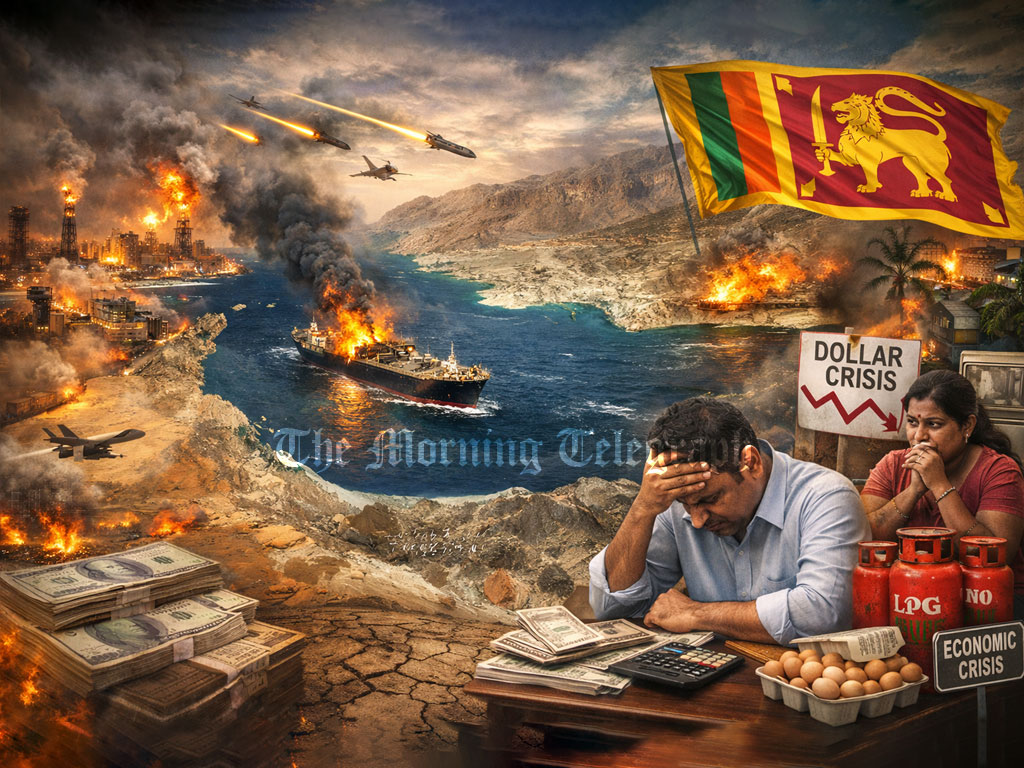
A sudden escalation in the Middle East and the closure of the Strait of Hormuz threaten to trigger a new economic shock for Sri Lanka, exposing the island’s deep dependence on Middle Eastern energy, migrant remittances, and fragile post crisis recovery.
In the latest escalation of tensions in the Middle East, Iran’s decision to close the Strait of Hormuz has sent shockwaves through global energy markets and raised serious concerns for countries heavily dependent on imported fuel. Sri Lanka stands among the most vulnerable. The island nation imports nearly all of its oil and gas requirements, relying primarily on suppliers from the Middle East including Oman, Iraq, the United Arab Emirates, and Bahrain. This structural dependence has long been known within economic policy circles, yet the closure of one of the world’s most critical maritime chokepoints now places Sri Lanka’s energy security and economic stability under immediate strain.

Sri Lanka’s domestic energy infrastructure further amplifies this vulnerability. The country operates a single aging refinery at Sapugaskanda that relies largely on imported crude oil. At the same time, the country purchases a significant share of its refined petroleum products such as diesel and petrol through the international spot market. Much of this supply chain ultimately traces back to crude shipments that travel through the Strait of Hormuz. Even fuel imported from regional hubs like India and Singapore depends on Middle Eastern crude passing through the same narrow passage. If the Strait remains blocked or restricted, global oil supply disruptions could quickly translate into soaring refined fuel prices, placing additional pressure on Sri Lanka’s already fragile economic recovery.
Energy market disruptions rarely remain confined to the oil sector alone. Rising fuel prices inevitably feed into transportation costs, electricity generation, food production, and industrial activity. For Sri Lanka, which has only recently emerged from a severe economic crisis and debt default, the timing of such a shock could be particularly damaging. Inflationary pressures could intensify once again, eroding the fragile gains made under recent stabilization efforts. A prolonged disruption in global energy flows could force the country to confront another period of rising living costs and fiscal stress.
The country’s foreign exchange reserves provide an important lens through which to understand the potential severity of the situation. Sri Lanka currently holds reserves of approximately 6.8 billion US dollars, a level that covers just over three months of essential imports including food, fuel, and medicines. While this represents an improvement compared to the darkest period of the 2022 crisis, it remains a thin buffer against prolonged external shocks. If energy prices surge while global supply chains remain disrupted, the country could see its reserves depleted rapidly.
Compounding these economic risks is the deep human connection between Sri Lanka and the Middle East. More than one million Sri Lankans are employed across Gulf countries and other Middle Eastern states. Their remittances have become one of the most critical sources of foreign exchange for the country. In 2025 alone, remittance inflows exceeded eight billion dollars, providing a vital financial lifeline to the national economy as well as to millions of households across the island. A regional conflict that destabilizes employment opportunities or triggers economic slowdown in host countries could significantly disrupt this flow of income.
Sri Lanka’s export sector also maintains strong commercial ties with the Middle Eastern region. Key industries such as tea exports and certain manufacturing segments rely on demand from Gulf markets. The Middle East forms an important component of the country’s total export earnings, which reached approximately 17.2 billion dollars in 2025. Should regional instability escalate into a prolonged geopolitical conflict involving the United States, Israel, and Iran, trade routes, consumer demand, and logistics networks could all be affected. The resulting economic consequences could extend well beyond the energy sector.
Recent economic indicators had suggested that Sri Lanka was gradually rebuilding its financial stability. According to Central Bank data, worker remittances increased by 22.8 percent in 2025 compared with the previous year. Exports also grew by 6.32 percent during the same period. These improvements signaled that the country was beginning to regain economic momentum after years of crisis. However, the geopolitical turmoil now unfolding in the Middle East introduces a new layer of uncertainty that could quickly reverse these gains.
The potential closure of the Strait of Hormuz is particularly alarming because approximately twenty percent of the world’s oil supply flows through this narrow corridor. A prolonged disruption would likely push global crude prices sharply upward. Sri Lanka’s Sapugaskanda refinery, which depends heavily on Middle Eastern crude oil, could face operational difficulties if supply routes are disrupted. Even if alternative suppliers are identified, transportation costs and global price increases could significantly raise the cost of refined petroleum imports.
The ripple effects of such disruptions would spread across multiple sectors of the Sri Lankan economy. Rising fuel prices would increase electricity generation costs and transportation expenses. Inflation could reemerge as a serious threat, affecting food prices and household purchasing power. Businesses already struggling with high borrowing costs could face additional financial pressure. Economic uncertainty might also trigger capital flight, currency depreciation, and reduced investor confidence.
Beyond economic considerations, there are also immediate social risks. The safety and wellbeing of Sri Lankan migrant workers in the Middle East remains a major concern if the conflict intensifies. The government may need to prepare contingency plans for large scale repatriation of expatriate workers should instability spread across the region. Such an operation would place enormous financial and logistical demands on the state while also reducing remittance inflows that sustain many local communities.
The political implications of such an economic shock cannot be ignored. Economic hardship often creates fertile ground for political polarization and opportunistic criticism. In Sri Lanka’s volatile political landscape, opposition groups may attempt to exploit rising living costs or supply shortages to challenge the government’s economic management. Yet the external nature of this crisis means that many of the forces shaping the situation lie beyond the control of any single administration.
At the same time, Sri Lanka faces a delicate diplomatic challenge. The country has historically maintained a non aligned foreign policy posture while cultivating relationships with multiple global powers. Navigating a geopolitical conflict involving the United States, Iran, Israel, China, India, and Russia will require careful diplomacy. Sri Lanka must manage its international relationships without becoming entangled in broader strategic rivalries that could further complicate its economic recovery.
Security concerns also arise in this context. Joint military exercises or regional security partnerships could be interpreted through geopolitical lenses that heighten tensions. A cautious approach that emphasizes stability and neutrality may help Sri Lanka avoid unnecessary diplomatic friction while protecting its economic interests. Several international policy research organizations have previously recommended strategic stability frameworks for small states facing geopolitical uncertainty.
Domestic economic management will therefore become critical in the months ahead. Maintaining adequate strategic reserves of fuel and essential goods could help prevent the kind of supply shortages that triggered social unrest in previous years. Targeted subsidies and careful energy pricing policies may also be necessary to protect vulnerable households from sudden spikes in fuel driven inflation.
Export diversification represents another key strategy. Expanding into sectors such as information technology, agricultural technology, and renewable energy industries could reduce the country’s exposure to regional trade disruptions. Moving beyond reliance on traditional exports like tea and garments would strengthen Sri Lanka’s long term economic resilience.
Governance reforms also play an important role in maintaining public trust during periods of economic uncertainty. Strengthening the independence of financial institutions such as the Central Bank and anti corruption bodies could reinforce confidence in economic management. Greater transparency in public debt reporting and fiscal policy decisions may also help prevent misinformation and political manipulation during times of crisis.
At the social level, protecting vulnerable populations must remain a priority. IMF backed social protection programs and targeted welfare initiatives can help shield low income households from the harshest effects of inflation and fiscal tightening. Retaining skilled professionals in key sectors such as healthcare and information technology is equally essential to maintain public services and prevent further brain drain.
Ultimately, the immediate challenge for Sri Lanka lies in assessing the full economic impact of the Middle East conflict while building long term resilience against global shocks. Strategic planning that transcends short term political cycles will be necessary. Economic governance frameworks that prioritize stability, investment, and policy continuity could help reassure both domestic citizens and international investors.
Sri Lanka’s long term development goals must also remain in focus. The country’s GDP was projected to reach around 87 billion dollars in 2025, with per capita income approaching 4,000 dollars. Achieving sustained annual growth of eight percent over the next decade could raise GDP to approximately 200 billion dollars and lift per capita income to around 9,000 dollars. Such progress would move Sri Lanka toward upper middle income status, but reaching these targets requires consistent economic policy and strong institutional governance.
Strengthening foreign exchange reserves will be central to this strategy. Current reserves covering just over three months of imports leave the country vulnerable to external shocks. Building larger reserve buffers similar to financial models used by countries like Singapore would improve long term economic stability.
The role of the banking sector is also significant. Sri Lankan banks hold deposits exceeding 16 trillion rupees, representing a large pool of financial resources that could support private sector investment and innovation. Redirecting some of these funds toward productive economic sectors could stimulate growth while providing better returns to depositors.
In the end, Sri Lanka’s future depends on shifting from a debt management mindset toward an asset building strategy. Building national wealth, expanding productive industries, and strengthening institutions will determine whether the country can withstand future global disruptions. The Strait of Hormuz crisis may serve as a stark reminder of how interconnected global events shape the destiny of small economies. Whether Sri Lanka can turn this moment of risk into an opportunity for structural reform remains one of the most important questions facing the nation today.