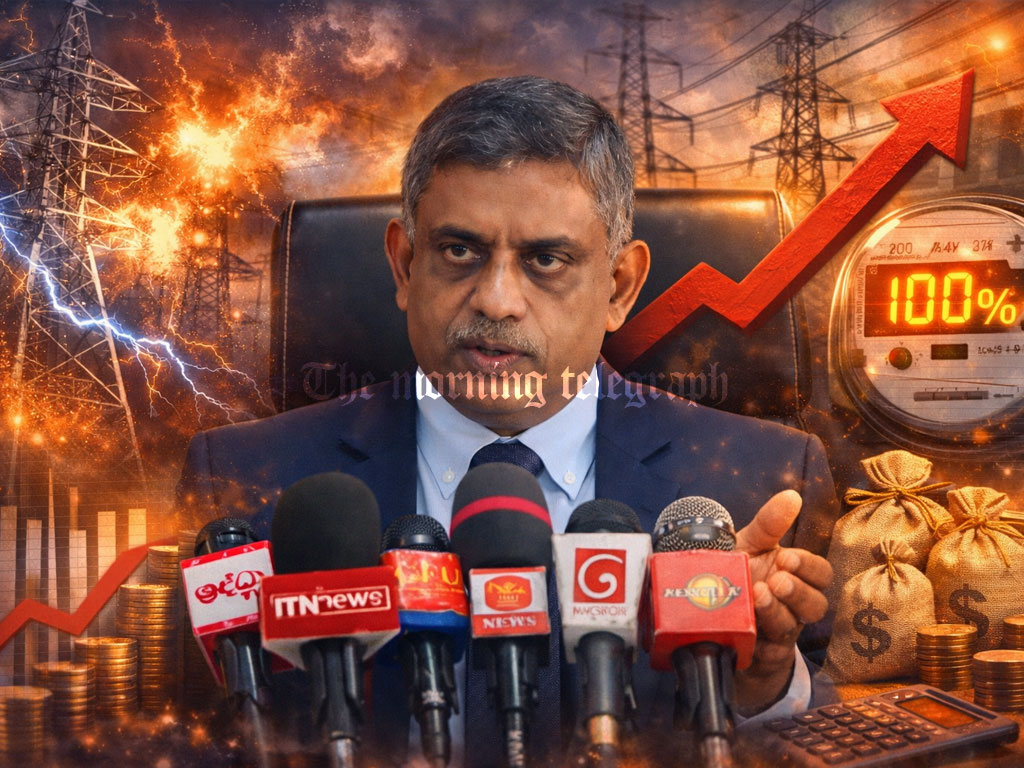
Sri Lanka’s electricity leadership warns that meeting sweeping trade union salary demands could force a dramatic tariff surge, placing additional pressure on households, businesses and the already fragile national economy.
The chairmen of Sri Lanka’s newly structured electricity companies have issued a stark warning during a media briefing in Colombo. According to the officials, if all the demands presented by electricity workers’ unions are fully accepted, electricity tariffs may have to increase by nearly one hundred percent. The statement immediately triggered concern among consumers and businesses already struggling with rising living costs and economic uncertainty.

During the briefing, the chairmen explained that electricity trade unions had submitted a total of sixty four demands related to salaries, benefits and working conditions. Authorities say that action has already been taken to address sixty two of these requests. The remaining two issues are expected to be discussed directly with the President in the coming days as the government attempts to prevent further industrial tension within the power sector.
Financial pressure appears to be the central concern. Officials revealed that implementing the unions’ demand for a one hundred and forty percent salary increase would add approximately Rs. 1.8 billion to monthly operational costs. That translates to nearly Rs. 22 billion annually. This is particularly alarming because the Electricity Board’s projected loss for 2025 is already estimated at around Rs. 34 billion.
The chairmen emphasized that such financial commitments would ultimately burden the entire country. They argued that increasing electricity tariffs to cover wage demands would negatively impact households, industries and small and medium enterprises that rely heavily on stable energy prices.
They also noted that adding the cost of living allowance to the basic salary is legally complex under the current framework and could create inequality among Sri Lanka’s 1.5 million public servants. Meanwhile, the pension fund reportedly faces a deficit of Rs. 29.5 billion due to past financial mismanagement.
Officials say they remain puzzled as to why union actions continue despite most demands being addressed.