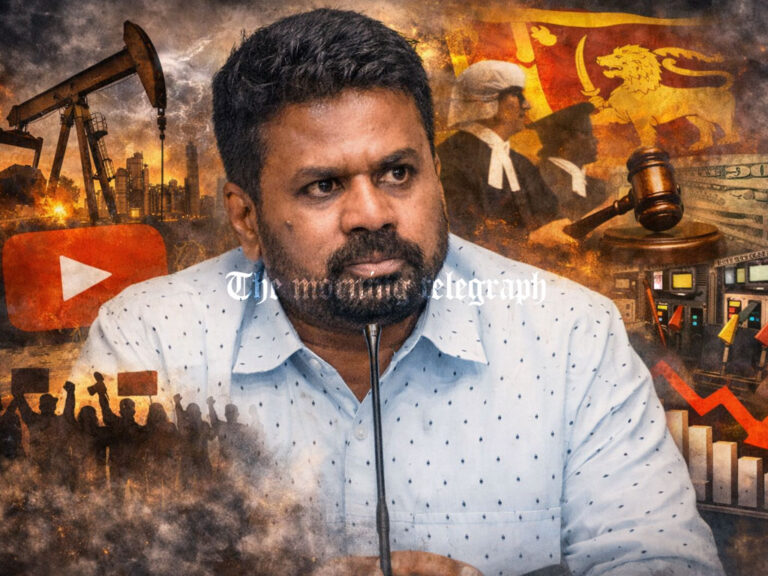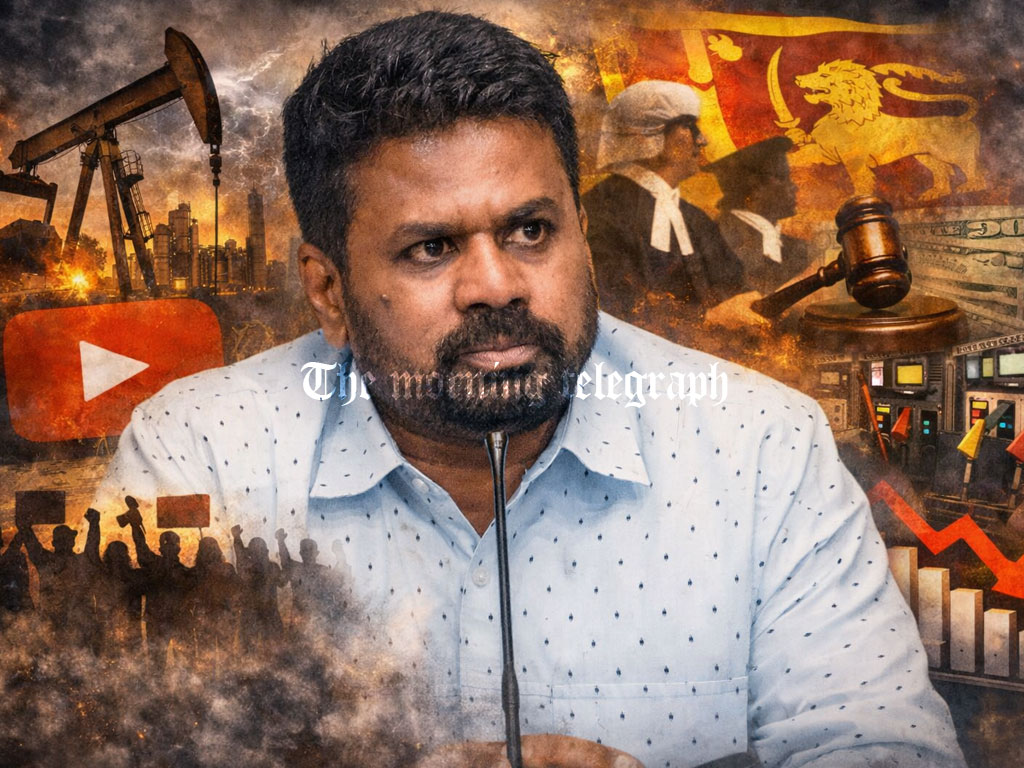
A growing storm of criticism surrounds President Anura Kumara Dissanayake as analysts question whether rhetoric, propaganda, and social media narratives are replacing real economic policy while Sri Lanka faces a volatile global fuel crisis.
“I do not own oil wells,” President Anura Kumara Dissanayake declared recently, repeating the statement as if the mere act of saying it could calm public anxiety. For many observers, the remark sounded strange and unnecessary. The issue was never about whether the President personally owned oil wells. The real concern is whether Sri Lanka’s leadership has a clear strategy to navigate the severe economic pressures created by the global energy crisis.
Sri Lanka is already struggling with inflation, rising energy costs, and economic fragility after years of financial turmoil. In this context, critics argue that such statements appear disconnected from the real questions citizens are asking. Instead of outlining detailed policy responses, the President’s comments have become a talking point across political debates and social media platforms.

The international energy market is currently unstable. The ongoing geopolitical tensions involving the United States, Israel, and Iran have pushed global oil prices upward, creating ripple effects across the world economy. Governments everywhere are trying to protect consumers from sudden fuel price increases and supply disruptions.
For Sri Lanka, these shocks are particularly dangerous. The country relies heavily on imported fuel and remains vulnerable to fluctuations in international markets. Rising fuel prices inevitably lead to higher electricity costs, transportation expenses, and the price of essential goods.
In such a fragile environment, citizens expect decisive economic leadership. Yet critics say that instead of presenting long term energy planning or a comprehensive fuel policy, the government has focused heavily on messaging and public explanations.
President Dissanayake recently met with Colombo business leaders to discuss the fuel situation. However, many observers felt the discussion focused more on defending the government’s position than presenting a detailed strategy. His repeated insistence that he does not own an oil well, and that the government will not profit from the public, raised eyebrows among analysts.
No serious critic had accused the President of owning oil resources. The repetition of this argument therefore appeared to some as a classic political distraction tactic. By shifting attention toward a symbolic issue, leaders can redirect public debate away from policy shortcomings and toward rhetorical narratives.
Political communication specialists describe such moves as narrative management. By framing the conversation around loyalty, fairness, or personal integrity, governments can sometimes avoid deeper scrutiny about economic planning.
Another controversial element in this debate is the increasing role of social media influencers and YouTube commentators in shaping public perception. Critics claim that individuals aligned with the government are presenting themselves as independent commentators while defending official narratives about investigations, law enforcement activities, and political controversies.
These commentators often discuss ongoing investigations involving the Criminal Investigation Department and other institutions. Some legal experts warn that this practice risks undermining the credibility of the justice system if public opinion is influenced by selectively presented information rather than verified legal proceedings.
Sri Lanka’s democratic framework depends on transparency, judicial independence, and fair legal processes. When political messaging and online commentary blur the boundaries between opinion and fact, public trust can weaken.
Another point of criticism relates to the government’s energy management strategy. The President has promised uninterrupted fuel supplies for approximately two months, but analysts say this timeframe is short term reassurance rather than a long term policy framework.
A significant portion of Sri Lanka’s fuel supply is handled by foreign companies operating in the local market. This reality limits the government’s direct control over supply chains and pricing structures. Even with monitoring committees or coordination efforts, Sri Lanka remains exposed to global market fluctuations.
Critics argue that without stronger domestic planning, the country could face renewed shortages or price shocks if international tensions escalate further.
President Dissanayake has also urged citizens to reduce consumption and prepare for economic uncertainty. His message encourages unity and collective sacrifice during difficult times.
However, opponents say that appeals for public patience cannot replace structural reforms. Citizens facing rising living costs often want clear economic strategies rather than motivational speeches.
Leadership, they argue, must combine empathy with practical action. Policy credibility grows when governments demonstrate concrete plans to manage energy imports, diversify power generation, and stabilize national finances.
The broader criticism emerging from political commentators is that Sri Lanka risks turning governance into performance. In an era dominated by digital media, political narratives can spread quickly through online networks, sometimes overshadowing detailed policy debates.
Some observers worry that if propaganda or digital messaging becomes more influential than institutional processes, democratic accountability may weaken.
Sri Lanka continues to navigate a difficult economic recovery while facing volatile global conditions. Citizens expect transparency, competent governance, and policies capable of protecting them from external shocks.
Whether President Dissanayake’s leadership can deliver such stability remains the central question. Critics say rhetoric and public messaging alone will not solve fuel shortages, stabilize markets, or restore economic confidence.
In the end, Sri Lanka’s challenge is not about whether its President owns an oil well. The real challenge is whether the country has the leadership, planning, and institutional strength needed to confront a global energy crisis and secure a stable future for its people.