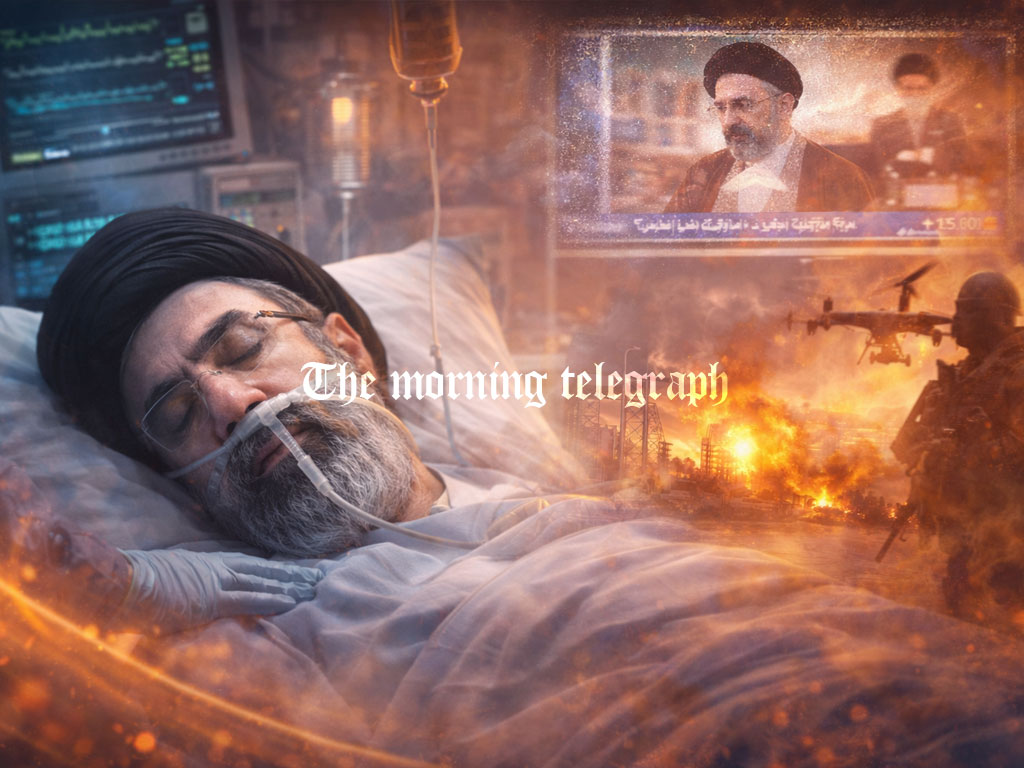
- Note that the above image is AI generated
Conflicting reports about Iran’s newly appointed Supreme Leader have triggered global speculation, with rumors of critical injuries, secret hospital treatment, and threats of retaliation raising fears of a dramatic escalation in Middle East tensions.
Iran’s newly appointed supreme leader, Ayatollah Khamenei, delivered his first official message on state television while intense speculation circulated about his health condition. Reports emerging from confidential sources claim that the 56 year old leader may already be in a coma after suffering serious injuries during recent attacks.

Khamenei assumed leadership following the assassination of his father, Ayatollah Ali Khamenei, who was reportedly killed in a United States and Israeli drone operation known as Operation Epic Fury. The strike was said to have been authorized by President Donald Trump.
Despite the significance of the announcement, the new leader did not appear on camera when the message was delivered. Instead, the statement was read aloud by a state television news anchor who sources say was also injured during the February 28 attacks.
Sources with knowledge of the situation claim the Iranian leader sustained severe internal injuries affecting his stomach or liver and may have lost one leg. They also suggest that he is currently receiving treatment in the intensive care unit of Tehran’s Sina University Hospital. Medical care is reportedly being supervised by Dr. Mohammad Reza Saffargandi under heavy security arrangements and strict communication restrictions due to the ongoing internet blackout.
However, Iranian officials have strongly rejected the reports. Yousef Peseshkian, the son of Iran’s president and a senior government adviser, dismissed the claims and stated that the new supreme leader is safe and in stable health.
Officials who spoke to the New York Times also said that although the leader suffered a leg injury, he is not in a coma and is instead being kept in a secret secure location with limited contact for security reasons.
In the statement broadcast on national television, the Iranian leader emphasized that avenging the deaths of Iranians killed in the attacks would be a national priority. The message warned that enemies would face serious consequences and suggested that Iranian forces would not hesitate to target enemy assets if retaliation became necessary.
The statement also warned that American military bases across the region should be withdrawn immediately. Regional governments were informed that Iran intends to continue restricting access to the Strait of Hormuz, a critical maritime route through which nearly one fifth of global oil supplies move.
In addition, the statement warned that Iran could escalate its response by targeting strategic economic hubs such as Dubai if pressure against the country continues.
These developments have intensified concerns about a wider regional conflict and raised fresh questions about Iran’s political stability, leadership succession, and the potential impact on global energy markets.