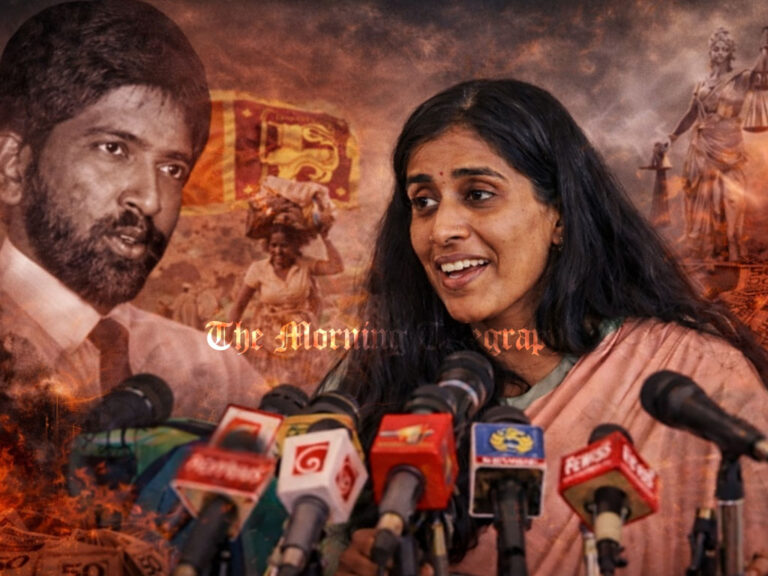
A new fiscal monitoring report reveals that nearly 87% of Sri Lanka’s government budget for 2025 has already been utilized, sparking debate about spending efficiency, policy implementation, and the real impact of political promises on the nation’s economic management.
The PAFFREL organization together with the March 12 Movement revealed that about 87% of the Government’s total budget expenditure had been utilized by the end of 2025, describing it as a notable step in fiscal implementation and public finance management.

This information was presented during the launch of the second semi annual monitoring report prepared by PAFFREL and the March 12 Movement. The report reviews the progress of implementing the current Government policy statement. The event took place yesterday March 12 at the Bandaranaike Memorial International Conference Hall in Colombo.
According to the report, Sri Lanka’s total Government budget as of December 31, 2025 stands at approximately Rs. 8.8 trillion. Out of that amount, about Rs. 7.6 trillion has already been spent. This indicates fiscal progress of nearly 87% of the total national budget by the end of the year.
From the Rs. 5.9 trillion allocated for recurrent or daily expenses, about Rs. 5.52 trillion has been spent, representing around 88.9% of the allocated amount. Meanwhile, capital expenditure allocations amounting to Rs. 2.9 trillion have recorded spending of about Rs. 1.4 trillion, which reflects roughly 83% progress. As a result, about Rs. 1.2 trillion, nearly 13% of the total budget, remains unspent.
Deputy Minister of Industry and Entrepreneurship Development Chaturanga Abeysinghe, who attended the event, stated that over the past decade civil society organizations and activists have worked together to introduce improved political standards and accountability mechanisms.
He explained that as part of these efforts the National People’s Power alliance introduced a policy statement built on scientific research and expert consultation. According to him, more than 1,300 policy proposals were developed using data driven research and professional expertise.
Abeysinghe emphasized that these policy proposals were not randomly compiled political pledges. Instead they were prepared through systematic study and consultation. For example, the Industry and Entrepreneurship Policy alone took nearly four years of discussions, research, stakeholder meetings and expert analysis before it was finalized.
He further noted that implementing policy proposals is often constrained by practical limitations. Budget allocations, tax collection capacity, legal reforms and institutional culture within the state sector can influence how quickly policies are implemented. For this reason, the policy framework was designed with a five year implementation period.
Member of Parliament Dr. Harsha de Silva also addressed the gathering and highlighted the need to evaluate election promises carefully. He explained that not all political commitments carry the same level of importance or national impact.
According to him, some reforms have greater policy significance than others. Measures such as reducing parliamentary pensions and major constitutional reforms like abolishing the Presidential system cannot be evaluated on the same scale. Therefore he suggested the need for a structured system that assigns weight and priority to political commitments when assessing their implementation.