Sri Lanka’s tourism industry faces a sudden setback as Middle East tensions force hundreds of flight cancellations, cutting visitor arrivals and raising new concerns for both tourism and export sectors.
Deputy Minister of Tourism Ruwan Ranasinghe has revealed that Sri Lanka’s tourism sector has experienced a sharp setback after hundreds of international flights carrying tourists were cancelled due to the ongoing military tensions in the Middle East.
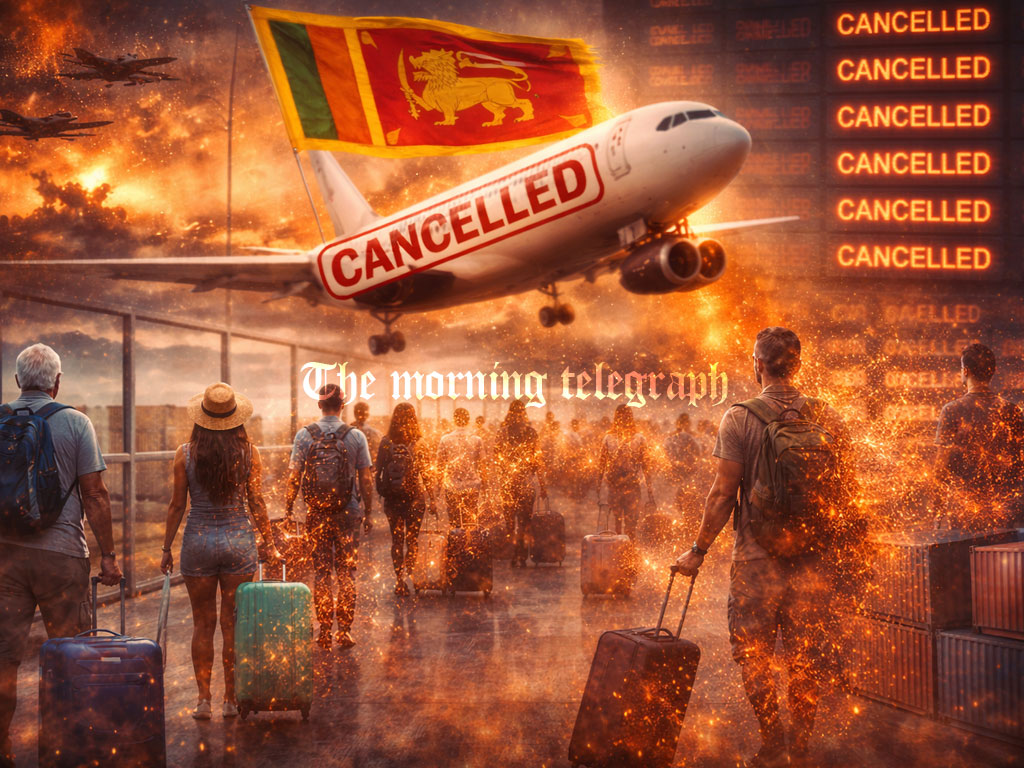
According to the Deputy Minister, a total of 768 scheduled flights that were expected to bring tourists to Sri Lanka have been cancelled as a direct consequence of the unstable geopolitical situation in the Middle East region.

He explained that the cancellation of these flights has had an immediate impact on the country’s tourism industry, resulting in a decline of nearly 30 percent in tourist arrivals to Sri Lanka during the affected period.
Deputy Minister Ruwan Ranasinghe stated that the government is now focusing on strengthening tourism infrastructure and expanding alternative travel strategies to recover from the sudden drop in visitor numbers.
As part of these efforts, he noted that plans are underway to further develop Mattala International Airport in order to promote tourism and attract more international flights to Sri Lanka.
Authorities believe that improving the capacity and connectivity of Mattala Airport could help distribute tourist arrivals more efficiently while supporting long term tourism growth in the southern region of the country.
Meanwhile the Sri Lanka Export Development Board has also warned that the ongoing conflict in the Middle East is beginning to impact the country’s export sector as well.
Chairman of the Export Development Board Mangala Wijesinghe explained that the Middle East remains an important market for Sri Lankan exports and accounts for approximately 8 percent of the country’s total export revenue.
He pointed out that continued instability in the region could disrupt established trade routes and reduce demand for certain export products, particularly agricultural commodities and tea exports.
Mangala Wijesinghe further revealed that discussions are currently underway to redirect around 35 percent of Sri Lankan tea exports that were previously shipped to Iran toward alternative international markets if the crisis continues.
Export authorities are therefore exploring new trade partnerships and market diversification strategies to minimize the economic impact on Sri Lanka’s export industry.