National People’s Power General Secretary Nihal Abeysinghe says Sri Lanka’s government cannot control global economic forces and calls on citizens to support the country by reducing the use of goods and services during the ongoing cost of living pressure.
Despite earlier political discussions about reducing the prices of goods while the party was in opposition, the government currently does not have the power to control the complex global processes affecting the economy, says National People’s Power General Secretary and Member of Parliament Nihal Abeysinghe.

He explained that the administration must now deal with international economic realities such as global fuel price fluctuations, supply chain pressures, and economic conditions that are beyond the control of any single government. According to him, these external factors are directly influencing Sri Lanka’s cost structure and the availability of essential goods and services.
Abeysinghe pointed out that under the present economic circumstances the government was compelled to increase fuel prices to a certain extent. He said that if such adjustments had not been made, there was a serious risk that the supply of goods and services across the country could have been disrupted in the future.
He further noted that fuel pricing policies and economic management decisions must take into account both domestic needs and global market conditions. Without taking such steps, the stability of essential supply systems including transportation, distribution, and national logistics could face significant challenges.
Therefore the MP stated that he expects the public to understand the current economic situation and cooperate with the government by limiting the use of goods and services whenever possible. According to him, responsible consumption and careful use of resources will help the country manage economic pressures more effectively.
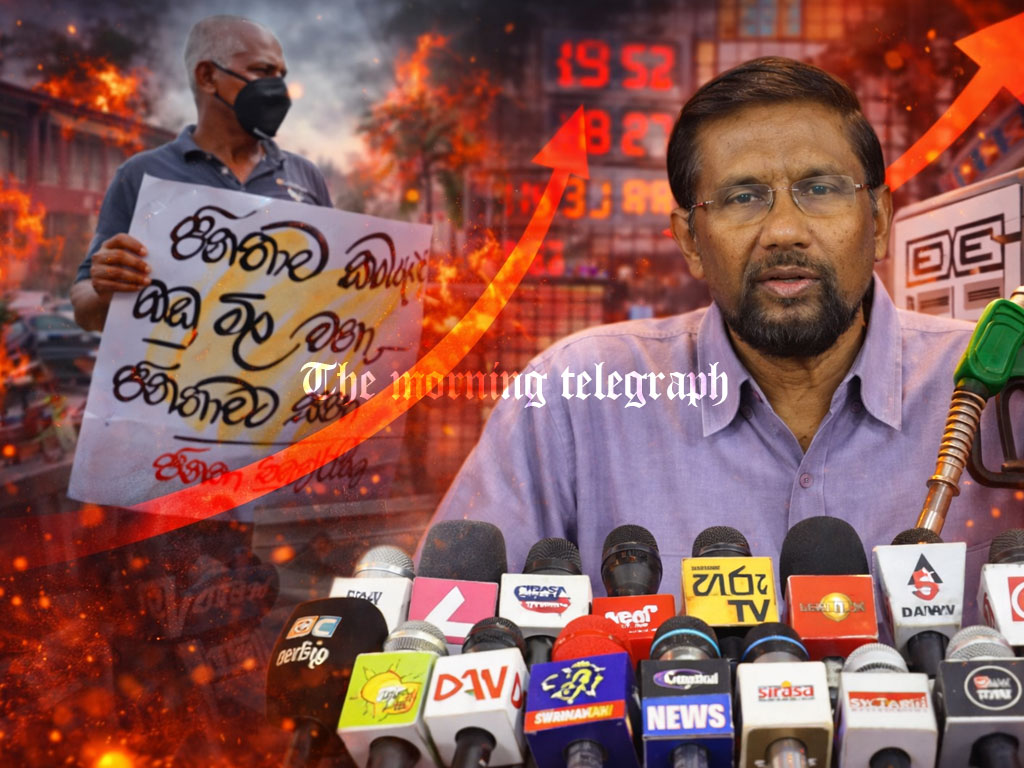
Abeysinghe made these remarks while addressing the media after participating in a public program where he discussed the current economic environment, government policy responses, and the need for public support during a period of economic adjustment.