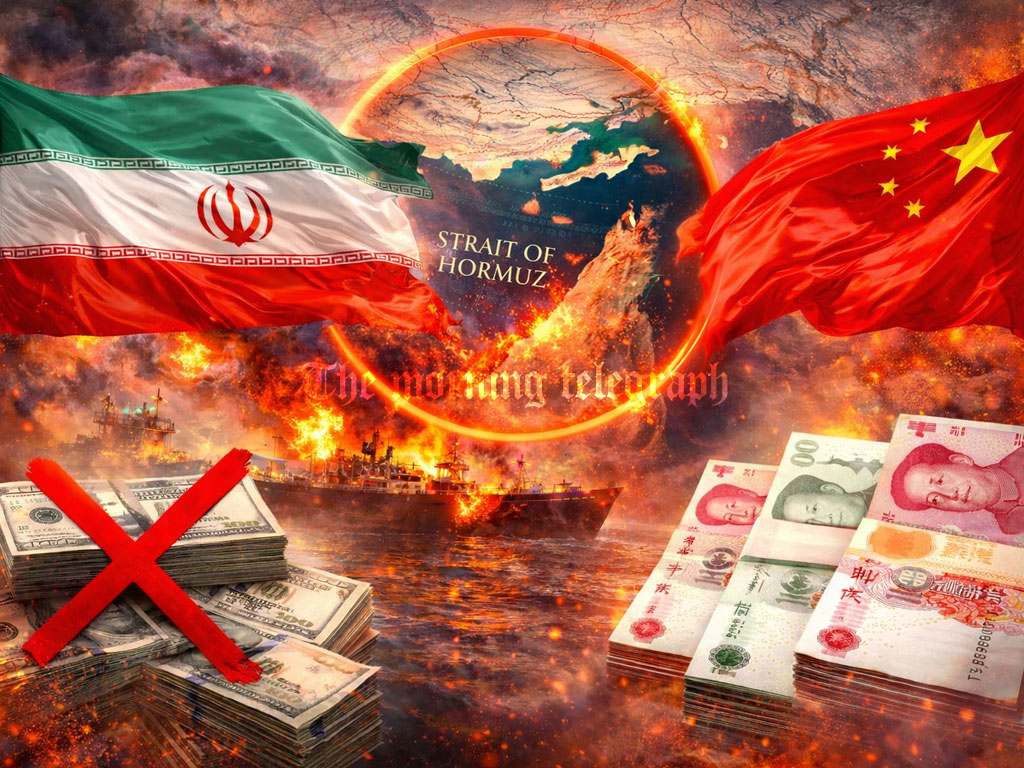
As tensions explode across the Strait of Hormuz, Iran is reportedly pushing a dramatic shift in global oil trade by demanding payments in Chinese yuan instead of US dollars, a move that could reshape energy markets and intensify the geopolitical battle over currency dominance.
Iran is reportedly considering allowing a limited number of oil tankers to pass through the strategically critical Strait of Hormuz, one of the world’s most important maritime oil corridors. However, Iranian authorities have attached a controversial condition to this arrangement. According to emerging reports, Iran has insisted that payments for oil transported through the waterway must be made in Chinese yuan instead of the traditional US dollar.

This development was revealed by the CNN news service, which cited an Iranian official speaking amid rising tensions in the Middle East. The demand highlights an escalating economic dimension to the ongoing geopolitical conflict in the region.
At present, the majority of global oil transactions are conducted in US dollars through the long established petrodollar system that has dominated international energy markets for decades. However, China has been working for years to promote the wider use of the yuan in global commodity trade, particularly in the oil sector. Analysts say Iran’s proposal could signal a strategic attempt to weaken the dominance of the US dollar in global oil markets.
Regional tensions intensified sharply after US President Donald Trump ordered airstrikes targeting military installations on Kharg Island, one of Iran’s most important oil export terminals. The strikes dramatically increased fears of a wider conflict across the Persian Gulf and the broader Middle East energy corridor.
Following the airstrikes, Trump issued a warning stating that the United States would target Iranian oil infrastructure if Tehran attempted to disrupt international shipping in the Strait of Hormuz, a narrow waterway through which nearly one fifth of the world’s oil supply passes every day.
The growing uncertainty surrounding the Strait of Hormuz has already triggered sharp reactions in global energy markets. Crude oil prices surged to their highest level since July 2022 as traders responded to fears of supply disruptions and possible shipping blockades in the region.
The United Nations has also raised concerns about the potential consequences of any blockade or prolonged disruption in the waterway. According to international observers, such a development could significantly increase the cost of essential goods worldwide, including food supplies, medicines and agricultural fertilizers.
The crisis is especially worrying for countries heavily dependent on imported oil for their energy security. Nations such as India, which rely on stable energy imports to support economic growth, could face significant pressure if oil supplies from the Middle East are disrupted.
Despite the rising tensions, Iran recently allowed two Indian flagged LPG vessels to safely pass through the Strait of Hormuz. This move has been interpreted by analysts as a signal that Iran may be selectively allowing shipping access while using the waterway as strategic leverage in the escalating geopolitical confrontation.