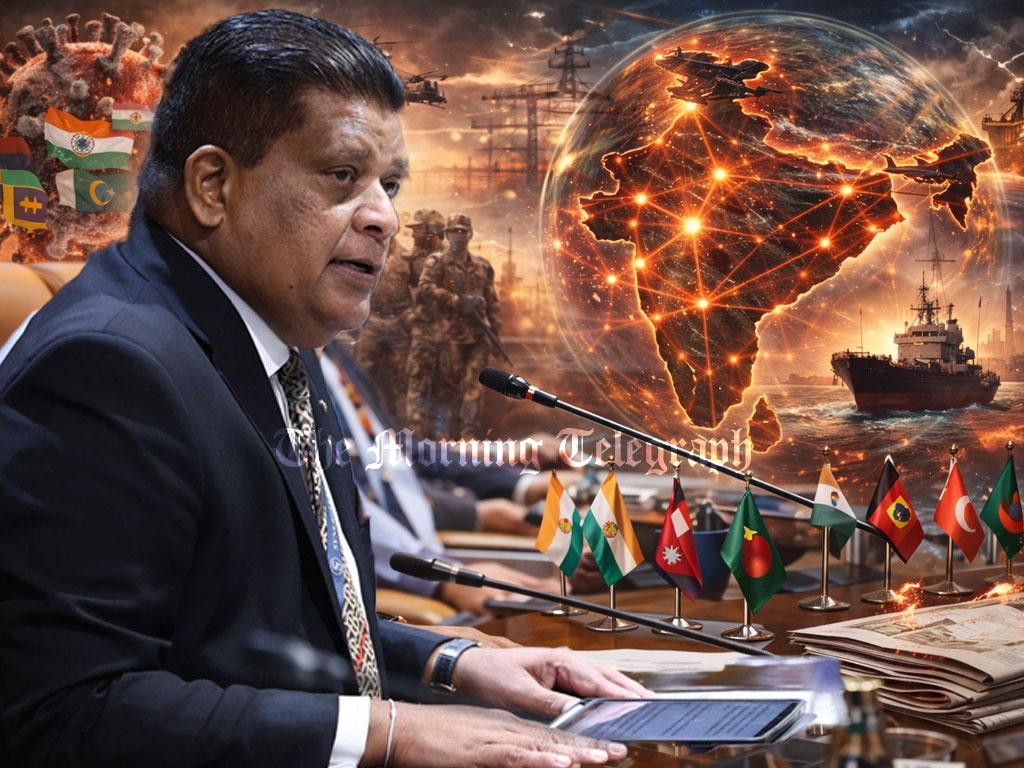
A powerful call to rethink South Asia’s future as military diplomacy emerges as the unexpected bridge between conflict, cooperation, and regional stability.
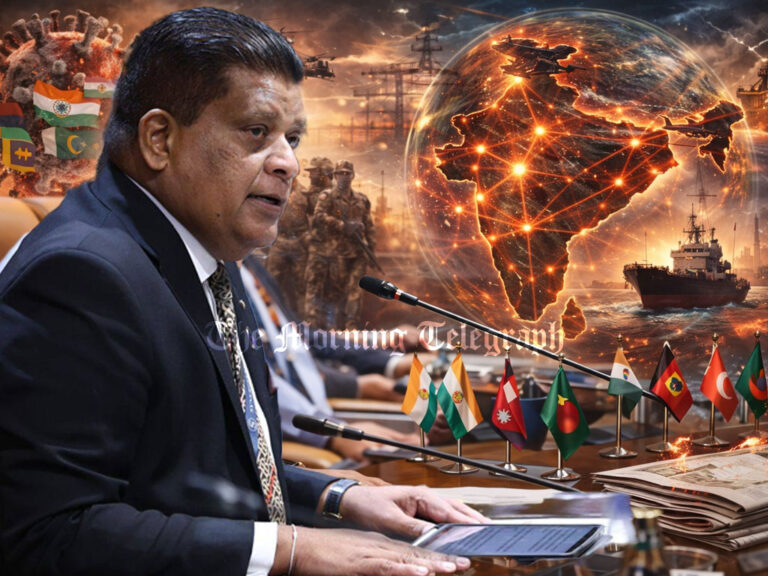
South Asia today stands at a defining crossroads, where its deep cultural unity continues to clash with its weak regional integration, creating a paradox that shapes its geopolitical destiny. At the Synergia Conclave 2026, General Shavendra Silva delivered a thought-provoking address that pushed policymakers to rethink regional cooperation through the lens of military diplomacy. His message, built around the theme of enhancing regional cooperation in South Asia, explored how shared history, geography, and security challenges can evolve into opportunities for long term peace, economic stability, and strategic collaboration.

Speaking to an audience of policymakers, defense experts, and regional stakeholders, Silva emphasized that South Asia should not be viewed as a fragmented cluster of nations but as a deeply interconnected civilizational space. He pointed out that long before modern nation states emerged, the region functioned as a unified socio cultural entity. Historical exchanges, including the spread of Buddhist teachings from India to Sri Lanka over two millennia ago, stand as enduring reminders of this connectivity. Even today, shared religious traditions, cultural practices, and media influence continue to reinforce these deep rooted regional ties.
Despite this strong cultural foundation, South Asia has struggled to achieve meaningful economic integration and political cohesion. Silva noted that the region remains one of the least economically integrated in the world, limiting its collective growth and global competitiveness. He argued that this lack of integration is not merely an economic weakness but a strategic vulnerability. Instability, underdevelopment, and policy failures in one country often spill across borders, affecting neighboring states and undermining regional security and development.
Geography further reinforces this interconnected reality. From the Himalayan river systems to monsoon patterns and the vast Indian Ocean, natural forces operate beyond political boundaries, creating shared dependencies. Environmental disasters, maritime security threats, and climate related risks frequently impact multiple nations simultaneously. Silva stressed that such challenges cannot be effectively addressed through isolated national policies. Instead, coordinated regional responses are essential, making cooperation not just beneficial but necessary for survival and resilience.
He also drew attention to South Asia’s demographic dynamics, highlighting that the region is home to nearly a quarter of the global population and one of the largest youth populations in the world. This demographic advantage has the potential to drive economic growth and innovation. However, Silva warned that without adequate opportunities, it could just as easily fuel instability. Rising unemployment, inequality, and lack of development can lead to migration pressures, organized crime, and extremism, all of which transcend national boundaries and require collective solutions.
Within this complex landscape, Silva positioned military diplomacy as a critical and often underestimated tool for fostering regional cooperation. He challenged traditional perceptions that military engagement is solely about defense or conflict. Instead, he described it as a mechanism for building trust, enhancing interoperability, and ensuring rapid response capabilities during crises. Military diplomacy, in his view, offers a practical pathway for collaboration, even when political differences remain unresolved.
To support his argument, Silva highlighted several real world examples. The 2004 Indian Ocean tsunami demonstrated how military forces could be mobilized for humanitarian assistance, particularly through India’s Operation Rainbow in Sri Lanka. This effort showcased the ability of military assets to serve not only defense purposes but also humanitarian needs, creating what he referred to as trust capital among nations.
Similarly, India’s Operation Maitri during the 2015 Nepal earthquake underscored the value of coordinated disaster response. Military forces played a crucial role in providing airlift, engineering support, and medical aid. More recent responses to cyclones and natural disasters across the region have further reinforced the idea that regional militaries can act as first responders, strengthening cooperation and trust among neighboring countries.
Maritime cooperation has also emerged as a vital area of regional collaboration. Silva pointed to joint initiatives aimed at improving maritime domain awareness and addressing environmental threats. Platforms such as the Colombo Security Conclave, involving India, Sri Lanka, and the Maldives, have enabled countries to tackle shared challenges including terrorism, piracy, and narcotics trafficking. These transnational threats continue to grow in sophistication, making collective action increasingly important.
The COVID 19 pandemic provided another compelling example of how military logistics can support regional cooperation. India’s Vaccine Maitri initiative, which distributed vaccines across South Asia, relied heavily on military capabilities to ensure efficient delivery. Silva emphasized that health security is now inseparable from national security, as global health crises do not respect borders and demand coordinated regional responses.
Beyond crisis management, Silva highlighted the importance of strengthening economic and infrastructure connectivity. Agreements such as the BBIN Motor Vehicles Agreement and energy partnerships like the India Bhutan hydropower collaboration illustrate how interdependence can reduce conflict and promote shared prosperity. By linking economies and infrastructure networks, countries can create long term incentives for stability and regional cooperation.
At the core of Silva’s argument was the idea that military diplomacy contributes significantly to regional stability. It enables rapid crisis response, builds confidence among nations, facilitates information sharing, enhances capacity building, and provides strategic reassurance. These elements collectively create an environment where political leaders are more willing to pursue cooperative policies and long term partnerships.
He further proposed a structured framework for regional cooperation built on four key pillars, people to people engagement, economic integration, technological coordination, and human security. Military diplomacy intersects with all these areas, supporting disaster response, securing trade routes, combating transnational crime, and fostering trust among nations.
In his concluding remarks, Silva made it clear that South Asia’s shared challenges demand shared responsibility. Regional cooperation, he argued, is no longer an idealistic concept but a strategic necessity. The region now faces a critical choice, to remain divided by competition or to evolve into a stable and cooperative community.
The path forward, he suggested, lies in balancing strength with wisdom, exercising restraint, and committing to collaboration. Only through such an approach can South Asia unlock its full economic and strategic potential, ensuring a future defined by peace, resilience, and shared prosperity for its people.