A sharp fuel price hike driven by global conflict has triggered a chain reaction across Sri Lanka, pushing up transport costs, goods prices, and daily living expenses while exposing deep vulnerabilities in the country’s energy and supply systems.
Sri Lanka is now witnessing a sweeping wave of price increases across almost every sector of the economy following the latest fuel price hike, a development that is directly linked to the ongoing Middle East conflict and rising global oil prices. What began as a necessary adjustment in fuel pricing has quickly evolved into a broader economic shock, affecting transport, food distribution, essential goods, and everyday services.

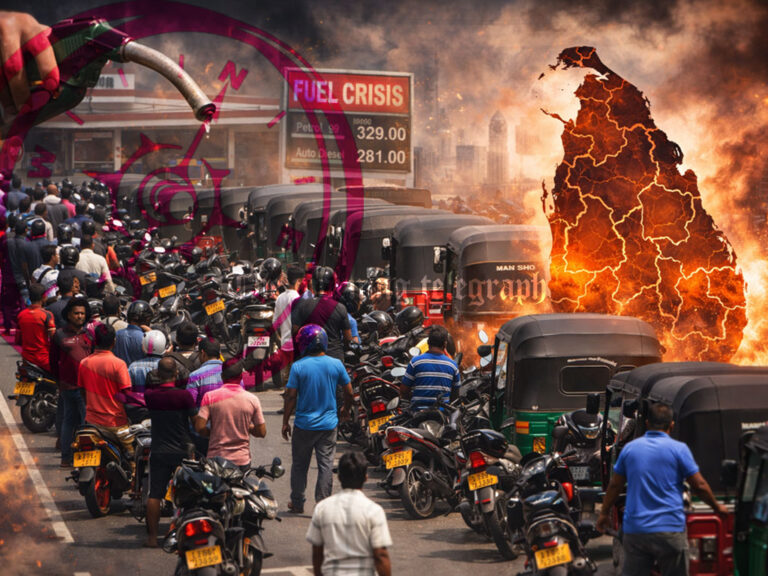
The immediate impact of the price revision has been felt at fuel stations across the country. From midnight on the 21st, fuel prices saw sharp increases, with auto diesel rising by Rs. 79 per litre to reach Rs. 382, super diesel increasing by Rs. 90 to Rs. 443, 95 octane petrol also going up by Rs. 90 to Rs. 455, and 92 octane petrol increasing by Rs. 81 to Rs. 398. Kerosene prices rose by Rs. 60 to Rs. 255 per litre. These adjustments, while significant, reflect only a fraction of the global price escalation that has been unfolding.
Government officials have emphasized that the increases are unavoidable given the global situation. Minister Nalinda Jayatissa explained that although Sri Lanka has sufficient refined fuel stocks to meet demand in the short term, the real challenge lies in securing crude oil supplies. Two expected crude oil shipments failed to arrive due to disruptions caused by the Middle East war, creating uncertainty in operating the Sapugaskanda refinery. Authorities now anticipate the arrival of a crude oil shipment in June, but until then, the situation remains fragile.
The minister also highlighted that global fuel prices have surged dramatically, and Sri Lanka’s adjustments have been relatively moderate in comparison. Despite this, the consequences for the domestic economy have been immediate and widespread. He stressed that public cooperation is essential in managing the crisis, urging citizens to reduce not only fuel consumption but also electricity usage.
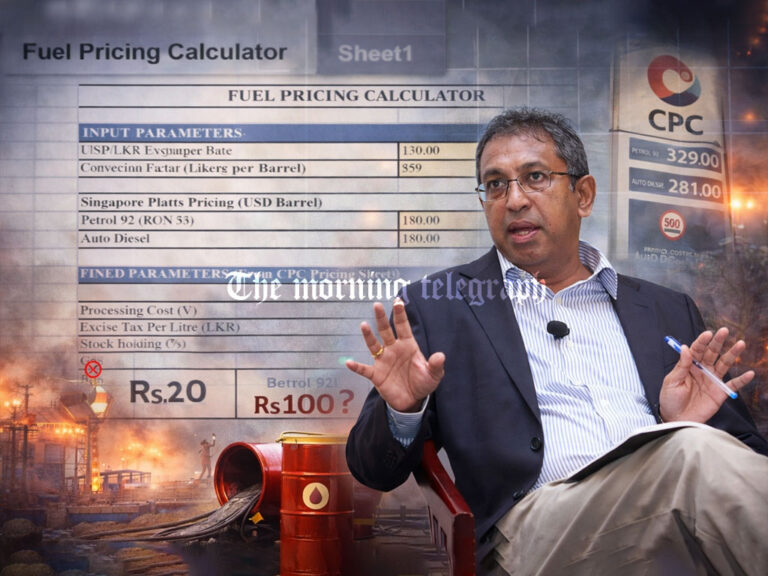
The government has acknowledged that it is currently absorbing significant financial losses in order to cushion the impact on consumers. According to official estimates, diesel is being sold at a loss of approximately Rs. 100 per litre, while petrol is sold at a loss of around Rs. 20 per litre. This translates into a monthly burden of nearly Rs. 20 billion for the state. Officials warn that continuing to absorb losses at this scale could cost the economy an additional USD 1.5 billion, making price adjustments unavoidable.
The private sector also plays a significant role in fuel distribution, accounting for approximately 43 percent of the market. While private companies had reportedly requested a much larger price increase, the government opted for a more gradual adjustment to limit the immediate burden on the public. However, both state and private suppliers are currently operating under financial strain, raising concerns about the sustainability of fuel supply in the coming months.
The fuel pricing issue has also reignited debate over transparency and policy decisions. Officials insist that the QR-based fuel distribution system was introduced not due to a lack of foreign exchange, but as a mechanism to manage limited supplies efficiently. With nearly six million registrations in the system, it has become a central tool in rationing fuel and preventing excessive consumption. Authorities have also taken steps to address technical challenges faced by users.
At the same time, the government has introduced additional measures to reduce demand. These include declaring a weekly working day as a holiday, encouraging carpooling in state institutions, and limiting the use of electricity for non-essential purposes such as decorative lighting and advertising. These measures reflect the broader strategy of managing the crisis while keeping the economy open and functional.
However, the ripple effects of the fuel price increase are being felt across multiple sectors. Transport costs have risen sharply, placing additional pressure on both businesses and consumers. Container transport operators have announced a 20 percent increase in charges, citing higher fuel and spare parts costs. This increase alone is expected to contribute significantly to the rising prices of goods across the country.
Public transport is also under strain. Bus operators have called for a 15 percent increase in fares, warning that services may be suspended if adjustments are not approved. The National Transport Commission is currently reviewing proposals, with a decision expected soon. Three-wheeler drivers have already announced fare increases, with the base fare rising by Rs. 20. These changes will directly impact daily commuters, particularly those in urban areas.
The education sector is not immune to these pressures. School van operators have indicated that fares will likely increase in the coming months if fuel prices continue to rise. While current fares remain unchanged due to the school holiday period, operators have made it clear that adjustments are inevitable if cost pressures persist.
Healthcare transport costs are also expected to increase. Medical professionals have indicated that van charges for patient transport will be adjusted based on distance, adding another layer of financial burden for families seeking medical care.
The impact extends beyond transport into the cost of goods and services. Importers warn that prices of non-essential goods could rise by 5 to 10 percent due to increased shipping costs, insurance premiums, and transport expenses. Although supply volumes remain stable for now, any disruption in shipping schedules could lead to shortages.
The food sector is particularly vulnerable. Vegetable traders in Dambulla have raised concerns about disruptions in distribution due to fuel shortages. While current prices for some vegetables have dropped due to increased supply, the inability to transport goods efficiently could lead to significant wastage and future price spikes.
The Dambulla Specialized Economic Center, which plays a crucial role in distributing agricultural produce nationwide, is facing operational challenges. With hundreds of lorries transporting goods daily, fuel shortages threaten to disrupt the entire supply chain. Traders warn that without a reliable fuel supply, the system could face collapse, affecting both farmers and consumers.
Farmers themselves are under increasing pressure. Rising input costs and transportation challenges are making agricultural activities less viable. There are concerns that many farmers may abandon cultivation if the situation does not improve, which would have long-term consequences for food security.
The hospitality and food service sectors are also feeling the strain. Restaurant owners have so far resisted increasing prices for basic food items, but rising costs of fuel and gas are making this increasingly difficult. Industry representatives warn that price increases may become unavoidable if cost pressures continue.
The bakery industry is facing similar challenges. Rising fuel and gas prices are making operations increasingly difficult, with industry leaders indicating that price adjustments are likely in the near future.
Fuel pricing has also become a subject of broader economic debate. Officials from the Ceylon Petroleum Corporation have pointed out that global fuel prices have increased by as much as 141 percent, while domestic prices have risen by only 36 percent. They argue that if prices were adjusted fully in line with global trends, increases would have been far higher.
Consumption patterns have also shifted in response to the crisis. Fuel demand surged in the early days of the conflict, with significant increases in diesel and petrol consumption. Even after the introduction of the QR system, sales have continued to rise, indicating persistent high demand despite rationing measures.
Electricity generation is another area of concern. The shortage of crude oil has implications for the supply of naphtha, which is used in power generation. While current supplies of furnace oil are sufficient to avoid power cuts, future uncertainties remain. The Ceylon Electricity Board has already proposed a 13 percent increase in electricity tariffs, which would further add to the cost of living.
At the policy level, authorities are attempting to balance economic stability with social impact. The government has reiterated its commitment to avoiding shutdowns and maintaining economic activity. However, this approach requires careful management of limited resources and ongoing public cooperation.
Law enforcement agencies have also been active in addressing irregularities in fuel distribution. Investigations have been launched against individuals who obtained QR codes illegally, and legal action has been taken against those involved in unauthorized fuel storage. These measures aim to ensure fairness and prevent misuse of the system.
Despite these efforts, the broader picture remains challenging. The combination of rising global fuel prices, supply disruptions, and domestic economic pressures has created a complex crisis that requires coordinated action across multiple sectors.
As Sri Lanka navigates this difficult period, the key challenge will be maintaining stability while adapting to rapidly changing global conditions. The fuel price hike has exposed underlying vulnerabilities in the economy, highlighting the need for long-term strategies to reduce dependence on external energy sources and strengthen domestic resilience.
For now, the immediate focus remains on managing the impact of rising costs and ensuring that essential services continue to function. However, the ripple effects of the current crisis are likely to be felt for months to come, shaping the country’s economic trajectory and testing the resilience of its institutions and people.