With fuel imports under threat from the Middle East war, the Essential Services Commissioner General orders all public and private institutions to implement sweeping energy conservation measures, including remote work, carpooling, AC temperature controls, and switching off non-essential lighting.
The Essential Services Commissioner General’s Office has issued a stringent set of guidelines to all public and private institutions to conserve existing fuel and electricity reserves, as the ongoing Middle East conflict threatens future fuel imports. The circular, signed by Commissioner General P. K. Prabath Chandrakeerthi, outlines mandatory measures for fuel management, electricity conservation, and institutional operations.

Fuel and Energy Conservation
The circular states that with potential disruptions to fuel imports due to the escalating war in the Middle East, it is the responsibility of all state and private institutions to use existing fuel stocks sparingly to ensure essential services continue uninterrupted.
Vehicle Transport and Fuel Management
Officials must use public transport or carpooling instead of individual vehicles when traveling to work. Daily transport plans should be arranged to minimize the number of vehicles used for field duties, under the supervision of a designated officer. Remote meetings should be conducted using digital platforms such as WhatsApp, Zoom, Google Meet, or Microsoft Teams instead of calling officials from distant locations. All document and information exchanges should be done electronically via email or WhatsApp to minimize physical document transport.
The circular notes that there are approximately 92,000 operational vehicles in the government sector. If each vehicle saves just one litre of fuel per day, total daily savings would reach 92,000 litres, amounting to 9,200,000 litres monthly and 110 million litres annually. Institutions are instructed to develop work plans to achieve these savings in consultation with officers and drivers.
Electricity and Energy Conservation
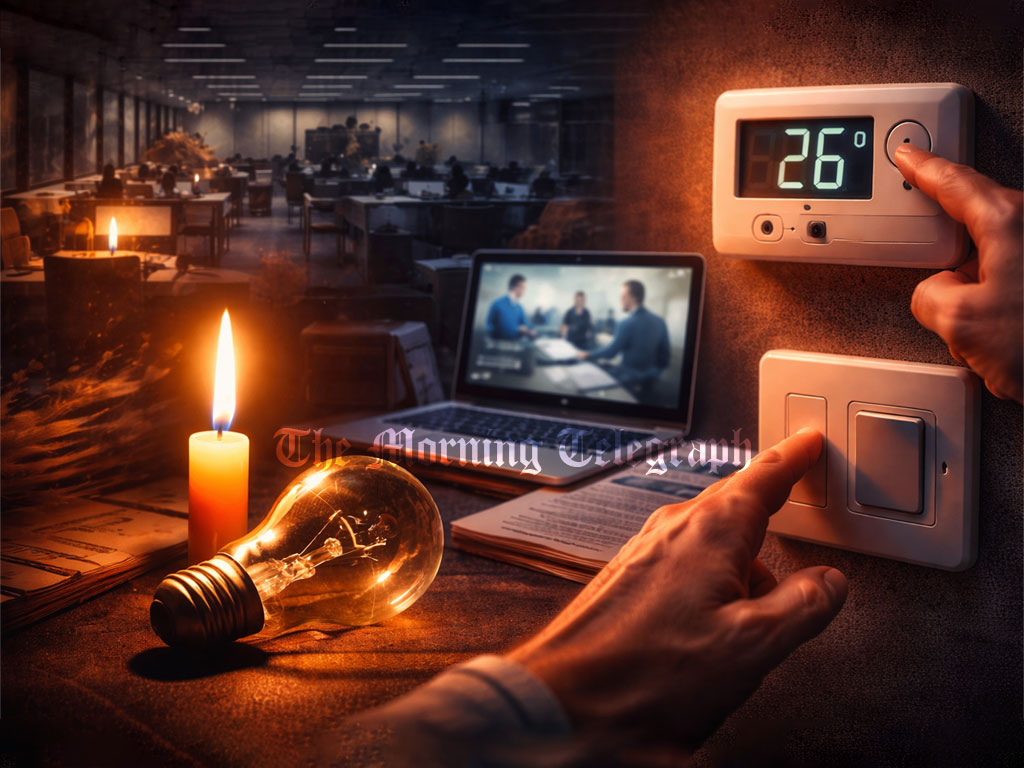
Institutions are directed to maximize the use of natural light through windows or skylights such as solar tubes and prismatic lighting. Table lamps should be used whenever possible to minimize general lighting. Night security staff must be instructed to light only essential areas.
Fans should be used instead of air conditioners wherever possible, with table or pedestal fans noted as more energy efficient than ceiling fans. During cooler morning hours, windows should be opened to allow natural ventilation. Air conditioners must be switched off for at least one to two hours daily during working hours, and turned off completely in areas where they are not needed.
Air conditioner temperatures must be set at 26 degrees Celsius or higher, which the Sustainable Energy Authority and energy efficiency experts have identified as the appropriate setting for Sri Lanka’s tropical climate.
Local government authorities must implement programs to switch off street lighting where unnecessary. Except for roads in high security zones, street lights should be temporarily switched off as a short term measure. Elevator use should be minimized, and stair use encouraged.
Advertising and display lighting should be switched off after 9:00 p.m., and television sets in institutions should be turned off during daytime hours.
Institutional Operations
Where technical facilities permit, heads of institutions should arrange for staff to work remotely via online methods rather than reporting to offices. Offices should remain closed outside regular working hours and on weekends except for essential circumstances.
Every institution must establish a monitoring and evaluation system to track electricity and fuel savings compared to the previous month, with records maintained for submission when required.
The circular concludes by emphasizing that all public officials must act as role models to the public during this external shock and provide their fullest support for national energy conservation and security.