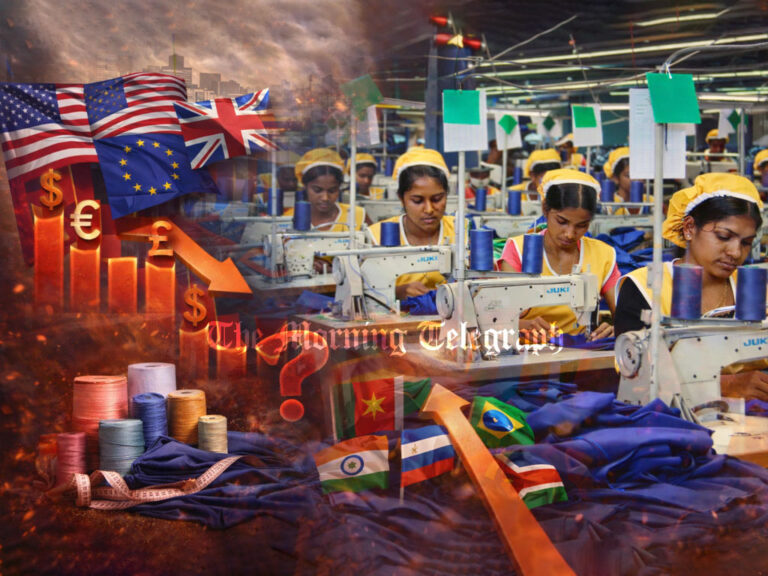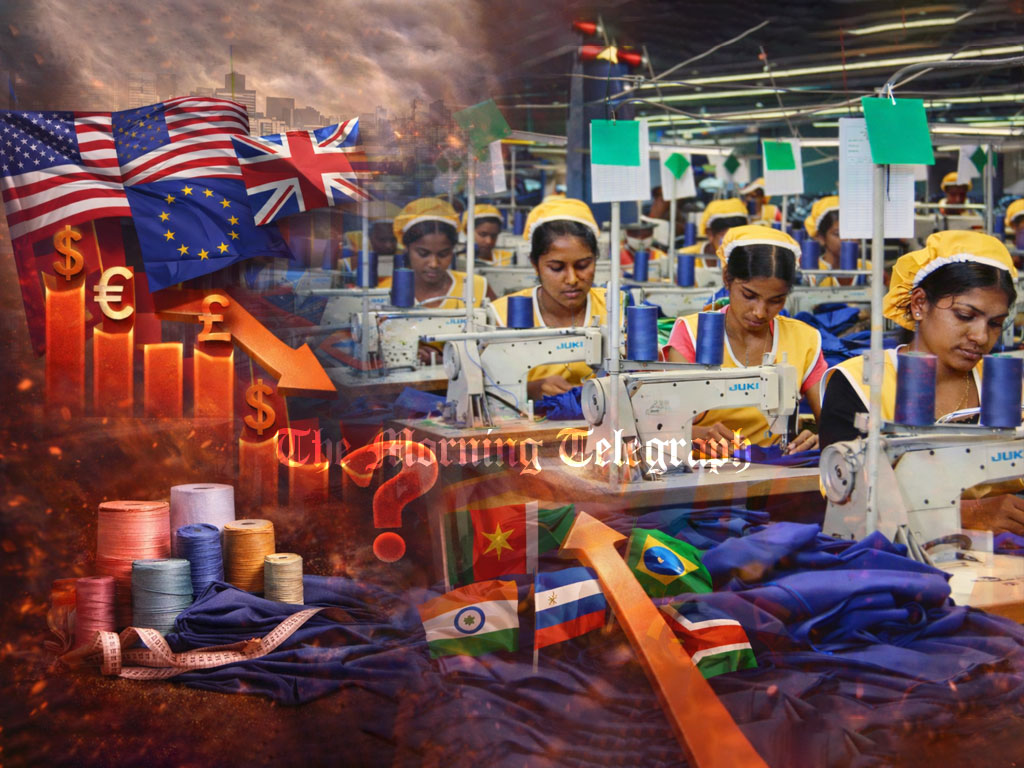
Joint Apparel Association Forum warns that the industry’s 85 percent dependence on the US, EU, and UK markets poses a significant threat, urging diversification into Asia, the Middle East, Africa, and BRICS nations to achieve the $8 billion export target.
The Sri Lankan apparel industry’s heavy reliance on the United States, the European Union, and the United Kingdom has become a significant risk factor in light of recent global developments, according to Joint Apparel Association Forum Chairman Felix A. Fernando. He emphasized that there remains a substantial gap between the industry’s current standing and its ambitious targets, a gap that cannot be bridged by short term, temporary fixes but requires systematic policy changes.

In a statement issued by the association, it was noted that reaching the $8 billion apparel export target would require the Sri Lankan apparel sector to undergo a significant transformation. While the industry has successfully demonstrated its ability to provide valuable service to leading global brands in terms of quality and compliance over the years, the statement cautioned that the industry’s future cannot be built on this reputation alone.
“The $8 billion target is crucial because it provides a common direction for the apparel industry. However, this goal must not remain merely a newspaper headline; it needs to become part of a practical national agenda,” the statement read. According to published export data, Sri Lanka’s textiles and apparel export revenue for 2025 slightly exceeded $5 billion. While this is a commendable achievement in a challenging global environment, the statement pointed out that a significant gap still exists between where the industry currently stands and where it aims to be.
The association noted that the apparel industry has traditionally been heavily dependent on the United States, the European Union, and the United Kingdom, with these three markets collectively accounting for approximately 85 percent of Sri Lanka’s apparel export revenue. When consumer demand weakens in these markets, when tariff policies shift, when regulatory compliance requirements tighten, or when brands alter their sourcing patterns, the impact reverberates across the entire domestic industry.
To achieve the $8 billion apparel export target, the statement emphasized that relying on existing market conditions is no longer sufficient. Chairman Fernando stated that the sector must build a strong export foundation to access markets that Sri Lanka has not previously entered. There is a growing need for a sustainable program to expand apparel export revenue by accessing markets in the Asian region, the Middle East, Africa, East Asian markets, and the BRICS regional markets.
The association urged that the industry must move beyond its traditional comfort zones and embrace diversification as a core strategy for long term resilience and growth.