As Sri Lanka grapples with economic instability and diplomatic uncertainty, critics warn that the growing reliance on digital loyalists and YouTube influencers is undermining institutions, weakening governance, and eroding public trust at a time when strong leadership is needed most.
What Sri Lanka is witnessing today is not a transformation of politics into a modern digital age. It is, instead, a dilution of governance into spectacle. At a moment when the nation is facing one of its most challenging economic and geopolitical crises, the increasing dependence on online personalities and digital loyalists signals something far more troubling than innovation. It suggests a leadership grappling not with solutions, but with perception.
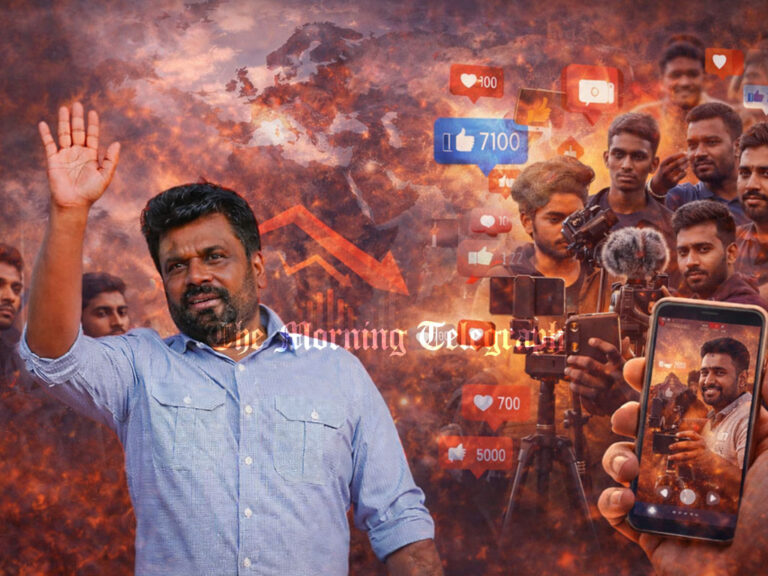
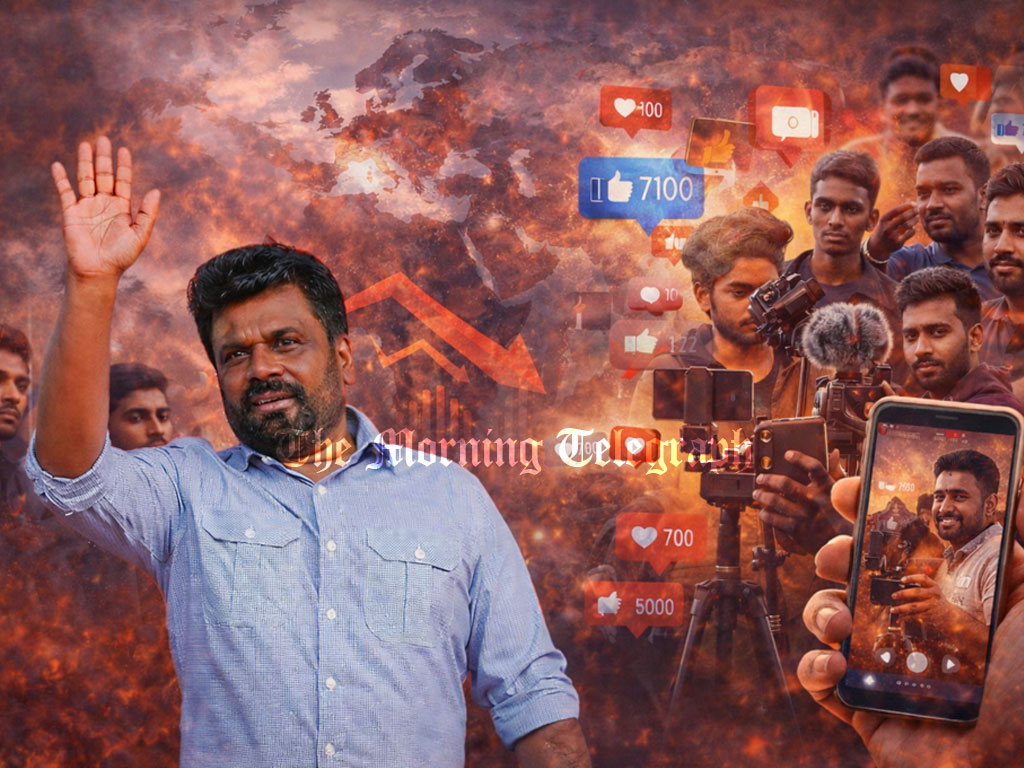
President Anura Kumara Dissanayake’s reported engagement with a selected group of YouTube personalities for extended discussions on national political issues has raised serious questions about priorities. In a country struggling with inflation, debt restructuring, foreign policy balancing, and investor confidence, such engagements appear less like strategic outreach and more like misplaced focus. The optics are concerning. Governance, particularly in times of crisis, demands clarity, decisiveness, and institutional strength. It does not thrive on curated narratives or algorithm-driven approval.

This shift reflects a deeper and more systemic issue within the administration. There appears to be a growing belief that shaping public opinion through digital platforms can substitute for effective governance. However, history and experience suggest otherwise. Governments are judged not by their messaging strategies but by tangible outcomes. Economic stability, policy consistency, and diplomatic credibility are the real indicators of success. Online narratives, no matter how well crafted, cannot compensate for weak execution or inconsistent leadership.
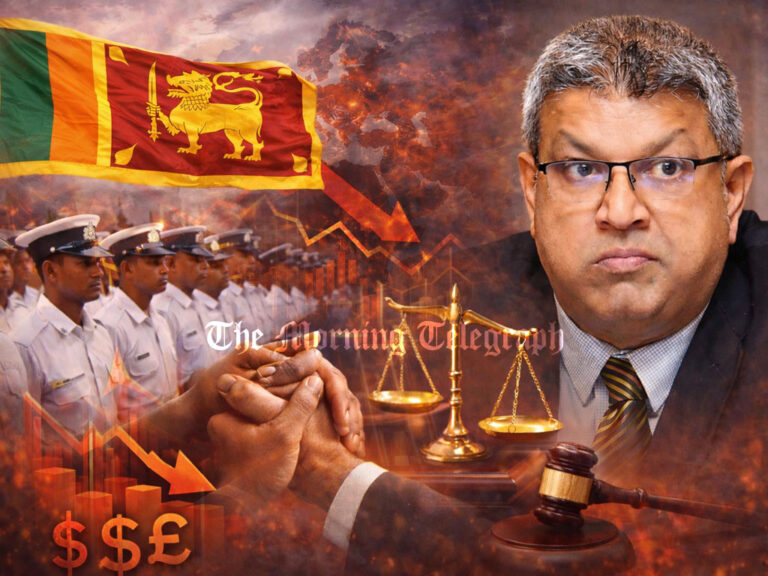
The consequences of this approach are already visible. Recent handling of international matters has exposed gaps in diplomatic discipline and strategic communication. Statements made publicly have lacked coherence and, at times, have revealed sensitive information that should have remained confidential. In global politics, discretion is not optional. It is essential. When state leaders speak carelessly about matters involving foreign governments or military considerations, it undermines trust and complicates relationships that require careful management.
This erosion of trust is not limited to external stakeholders. Domestically, the impact is equally significant. Citizens are left navigating a landscape filled with conflicting narratives and unclear direction. Investors, both local and international, observe these developments closely. They seek predictability and confidence in governance. When leadership appears distracted by optics rather than outcomes, it raises concerns about long-term stability and policy continuity.
There is also a broader geopolitical dimension to consider. Sri Lanka, as a small but strategically located nation, operates within a complex network of international relationships. Decisions made in moments of political pressure can have far-reaching consequences. Alignments, whether economic or diplomatic, must be approached with caution and foresight. History offers numerous examples of smaller states facing significant repercussions when strategic decisions are made without a clear understanding of long-term implications.
The increasing prominence of YouTube personalities within this political environment adds another layer of complexity. While new media platforms have an important role in modern communication, the nature of engagement matters. Many of these digital figures thrive on sensationalism, prioritising engagement over accuracy. Complex policy issues are reduced to simplified narratives designed to provoke reaction rather than understanding. This is not constructive discourse. It is content designed for consumption, not comprehension.
When such voices are perceived to have proximity to power, it alters the dynamics of information and influence. It creates an environment where loyalty and visibility may be valued over expertise and accountability. Institutions that are meant to uphold standards, such as the judiciary, law enforcement, and professional media, risk being sidelined by louder but less credible voices. This shift weakens the very foundations of governance.
The issue of information flow further complicates the situation. There are growing concerns that selective information is being shared with certain content creators, potentially influencing public perception before due process is completed. This raises serious ethical and legal questions. The integrity of investigations and the principle of justice depend on confidentiality and fairness. When information is used prematurely in the public domain, it risks prejudicing outcomes and damaging reputations irreversibly.
Such developments point to a gradual erosion of institutional authority. A state that allows external, unregulated actors to shape narratives on sensitive matters effectively relinquishes part of its control. This creates a parallel system of influence where accountability is unclear and standards are inconsistent. Over time, this can lead to a breakdown in public trust, not just in the government, but in the entire system of governance.
There was an opportunity for leadership to address these challenges constructively. Engagement with new media could have been used to establish guidelines, promote responsible communication, and reinforce the importance of ethical standards. It could have been a moment to bridge the gap between traditional institutions and emerging platforms. Instead, the absence of clear boundaries has allowed existing patterns to continue unchecked.
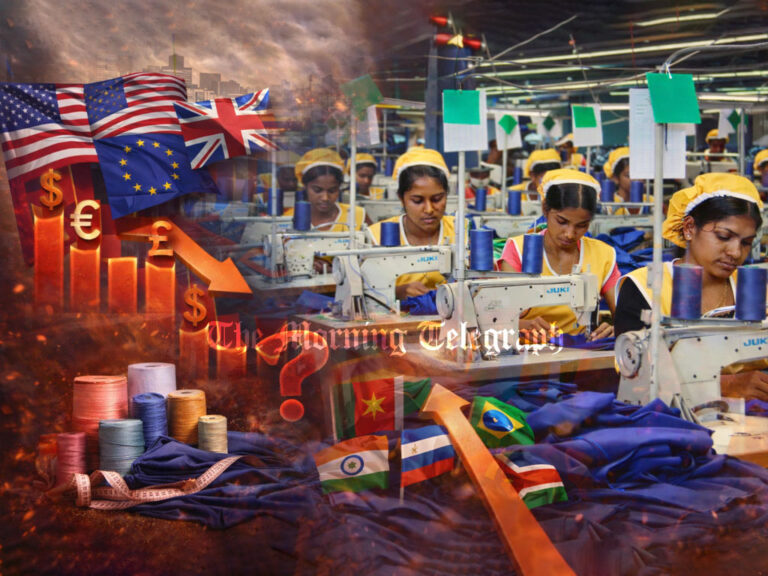
Meanwhile, critical areas of national importance demand attention. Foreign direct investment remains below potential levels. Key markets and partnerships have yet to be fully explored. Structural economic reforms, which are essential for long-term growth, require urgency and focus. These are not peripheral issues. They are central to the country’s future. Yet they appear to receive less attention than managing narratives in the digital space.
This imbalance highlights a fundamental issue within the current approach to governance. Leadership is being measured by visibility rather than effectiveness. The ability to dominate online discourse is being mistaken for control over real-world outcomes. This is a dangerous misconception. Visibility can create the illusion of progress, but it cannot replace the substance required to address complex national challenges.
The role of institutions in this context becomes even more critical. Strong institutions provide stability, continuity, and accountability. They operate based on established principles and processes, ensuring that governance is not dependent on individuals or trends. When these institutions are weakened or bypassed, the system becomes vulnerable to inconsistencies and external pressures.
The reliance on digital loyalists also reflects a degree of insecurity within the political leadership. It suggests a need to control narratives rather than confront realities. This approach may offer short-term advantages in shaping public perception, but it does not address underlying issues. Over time, the gap between perception and reality becomes increasingly difficult to manage.
Sri Lanka’s current situation demands a different approach. It requires leadership that is grounded in policy, informed by expertise, and committed to transparency and accountability. It requires a focus on outcomes rather than optics, on substance rather than style. The challenges facing the country are complex and multifaceted. They cannot be resolved through simplified narratives or selective engagement.
The path forward lies in strengthening institutions, improving governance, and restoring trust both domestically and internationally. It involves making difficult decisions, communicating them clearly, and implementing them effectively. It involves recognising that leadership is not about controlling the narrative, but about shaping the future through responsible action.
At present, there is a growing perception that this balance has been lost. The emphasis on digital engagement, particularly with individuals who operate outside traditional frameworks of accountability, raises concerns about the direction of governance. It suggests a shift away from institutional strength towards personalised influence.
If this trajectory continues, the implications could be significant. A government that prioritises narrative over policy risks becoming disconnected from the realities it must address. It becomes reactive rather than proactive, focused on managing perception rather than solving problems. In such an environment, progress becomes difficult, and trust becomes fragile.
Sri Lanka stands at a critical juncture. The decisions made today will shape the country’s future for years to come. The choice is between reinforcing the structures that support effective governance or allowing them to be overshadowed by short-term strategies. It is a choice that requires clarity, courage, and commitment.
Ultimately, leadership is defined not by how it is perceived, but by what it achieves. In times of crisis, this distinction becomes even more important. The challenges facing Sri Lanka are real and urgent. Addressing them requires more than visibility. It requires judgement, discipline, and a willingness to confront difficult truths.