Sri Lanka stands at a defining moment where geography alone is no longer enough. Without clear strategy, strong governance, and national unity, its Indian Ocean advantage could slip away as global powers tighten their grip on the region.
Sri Lanka’s location in the Indian Ocean has always been described as a major strategic advantage. But in reality, geography alone does not determine a nation’s future. What truly matters is how effectively that advantage is translated into strong national policy, economic direction, and long-term progress. Today, Sri Lanka finds itself at a crucial turning point where global geopolitical competition, economic uncertainty, and evolving security challenges are all converging. Managing this complex environment requires more than reactive governance. It calls for clarity, direction, and a firm commitment to national interest and sovereignty.

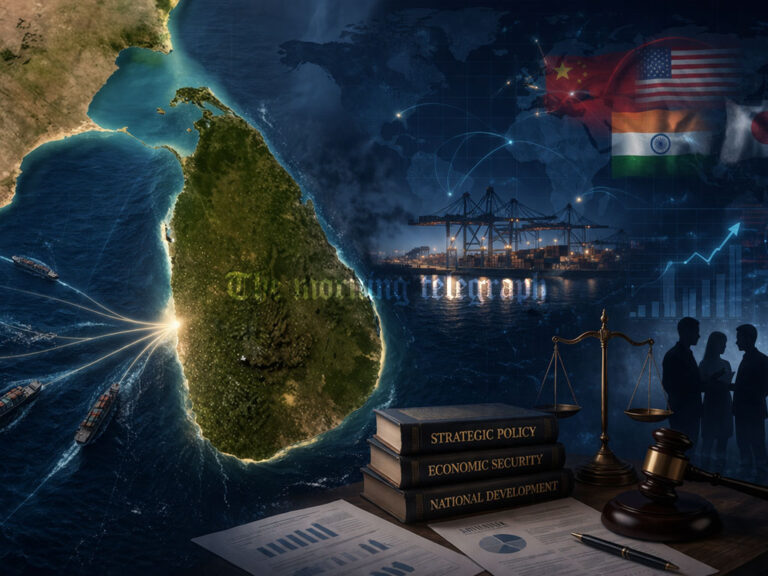
The Indian Ocean region is now at the center of global attention. Major global powers are expanding their presence, aiming to control trade routes, infrastructure, and political influence. For Sri Lanka, this creates both opportunity and risk. Engaging with foreign powers is not new, and it is often unavoidable. However, without a clearly defined national strategy, such engagement can lead to inconsistent policies, over-dependence, and a gradual loss of strategic independence. This is a critical concern in today’s global landscape.
Sri Lanka’s past policy decisions have often been shaped by short-term pressures rather than long-term vision. This pattern of episodic decision-making has provided temporary solutions but has failed to build real resilience. What the country needs now is a shift toward forward-looking governance. This means identifying future risks, understanding emerging global trends, and positioning the nation proactively instead of reacting to crises as they arise. Strategic planning must replace short-term thinking.
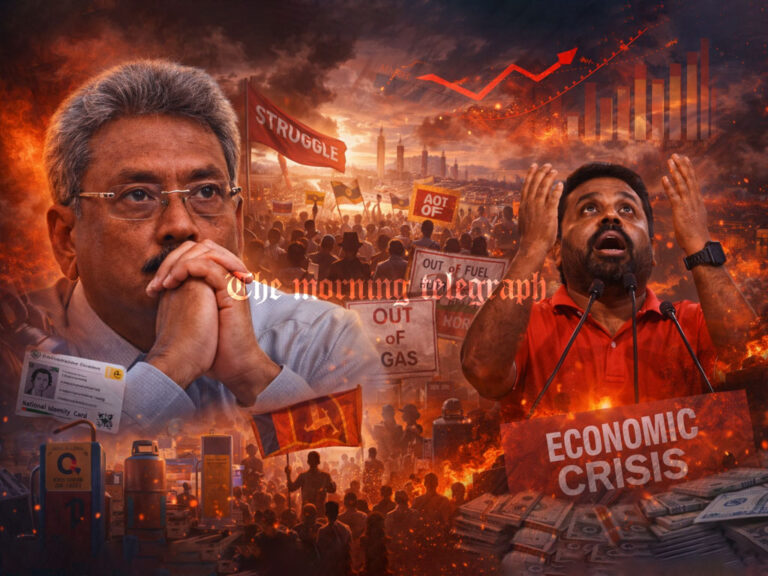
Economic stability remains at the heart of this discussion. The recent economic crisis revealed deep structural weaknesses, including heavy debt reliance, limited economic diversification, and vulnerability to external shocks. Recovery cannot be limited to temporary fixes. Sri Lanka must redefine its economic identity by using its geographic advantage to become a hub for maritime trade, logistics, and regional connectivity. At the same time, national assets must be managed transparently to ensure long-term benefits for the country and its people.
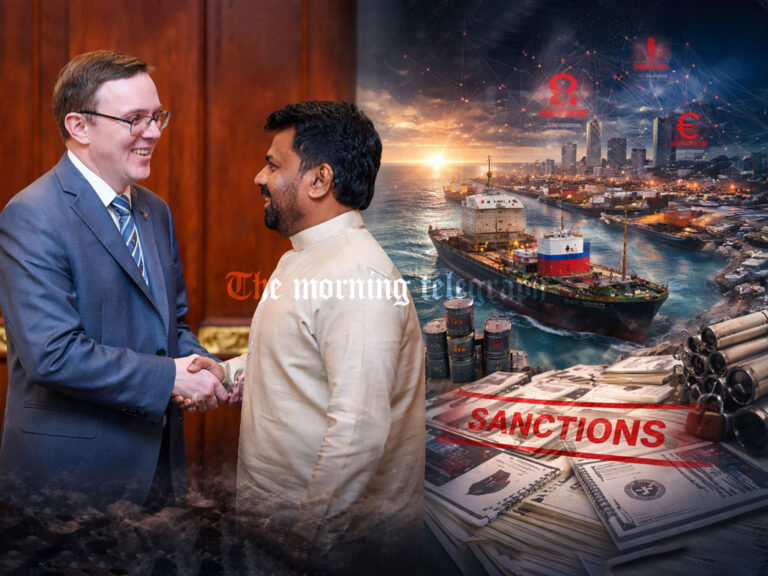
Economic policy cannot be separated from national security. Financial systems, foreign investments, and infrastructure development all have direct implications for national security. Strengthening regulatory frameworks, including anti-money laundering measures, is a step in the right direction. However, these frameworks are only effective if they are enforced consistently, fairly, and without bias. Laws lose their value when applied selectively. Public trust depends on fairness, transparency, and accountability.
Security today goes beyond traditional threats. Modern challenges include cyber risks, misinformation, transnational crime, and economic pressure from global actors. Sri Lanka must adopt a comprehensive approach to national security by integrating intelligence, law enforcement, economic monitoring, and technological capability. Preparedness should be systematic and institutionalized rather than improvised during times of crisis.
At the same time, national resilience is not built by institutions alone. It is shaped by the mindset and actions of society as a whole. A true country-first approach must move beyond slogans and become a shared responsibility across all levels of society. Citizens play a vital role in shaping the nation’s future.
In today’s fast-moving information environment, the public must exercise critical thinking and responsibility. Misinformation, divisive rhetoric, and politically driven narratives can weaken social unity and create opportunities for external interference. Responsible citizenship means staying informed, questioning narratives, and prioritizing national unity over division. Social cohesion is a key pillar of national strength.
Sri Lanka’s youth population represents both an opportunity and a responsibility. Young people must not only participate in national development but also take on leadership roles, especially in areas such as technology, innovation, and social change. A country that fails to engage its youth risks losing its future. Empowering young people with opportunities, education, and purpose is essential for sustainable progress.
Academics and intellectuals also have a critical role to play. Their work should focus on evidence-based research, policy innovation, and constructive dialogue. Universities and research institutions must serve as centers of strategic thinking, contributing ideas that guide national development and informed decision-making. Independent and informed discourse is vital for progress.
Law enforcement and security institutions are central to maintaining order and trust. With increased authority comes greater responsibility. These institutions must operate with professionalism, integrity, and fairness. Enforcement must not only be effective but also seen as fair by the public. Trust in institutions is essential for stability and long-term governance.
Community and religious leaders also play an important role in maintaining social harmony. Sri Lanka’s strength lies in its diversity and coexistence. Leaders within communities must promote dialogue, understanding, and mutual respect. In times of uncertainty, their influence can either unite or divide society. Responsible leadership at the community level is therefore crucial.
Sri Lanka must also approach its international relationships carefully. Strategic partnerships are important for economic growth and development, but they must align with national priorities. The goal should be to diversify partnerships while protecting sovereignty and maintaining independence. No single partnership should compromise the country’s long-term interests or dignity.
The real challenge facing Sri Lanka is not whether it can navigate global competition or recover economically. The question is whether it can do so with clear strategy, confidence, and unity. This requires alignment across government policy, institutions, and society. Short-term actions must support long-term goals.
Patriotism should not be reduced to slogans or emotional appeals. It should be reflected in responsible decision-making that prioritizes the country’s stability, unity, and future. Similarly, sovereignty is not just a concept but a responsibility that must be protected through consistent and strategic action.
Sri Lanka has many strengths. Its location is strategically valuable, its people are resilient, and it has experience navigating complex challenges. What is needed now is clear direction and unity of purpose. This is not a time for reactive decision-making or fragmented thinking. It is a time for deliberate, well-planned action.
A nation that understands its position, strengthens its internal systems, and engages with the world on its own terms will not just survive but will grow with confidence and dignity. Strategic clarity is the foundation of long-term success.
Sri Lanka has already shown resilience in the face of challenges. The next step is to build cohesion with a clear purpose. Moving away from reactive cycles and toward strategic progress is essential for sustainable development.
The way forward is clear. Act with intention, engage with clarity, and place national interest above all else.