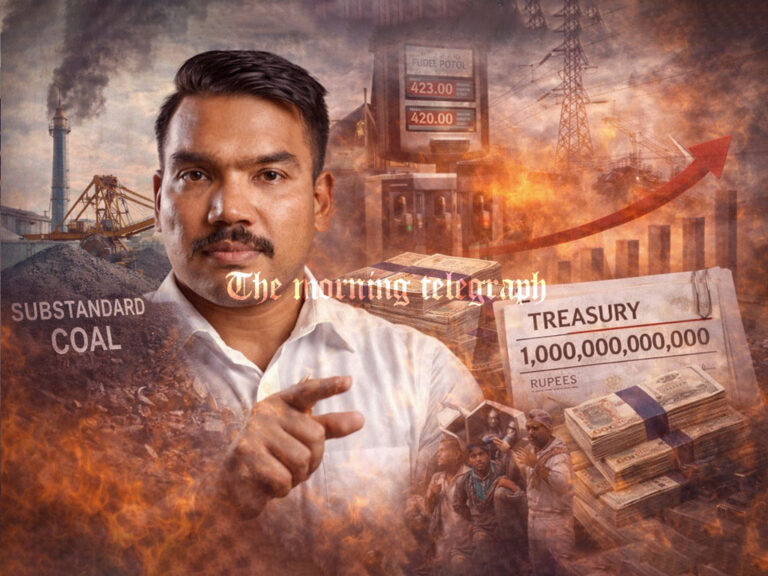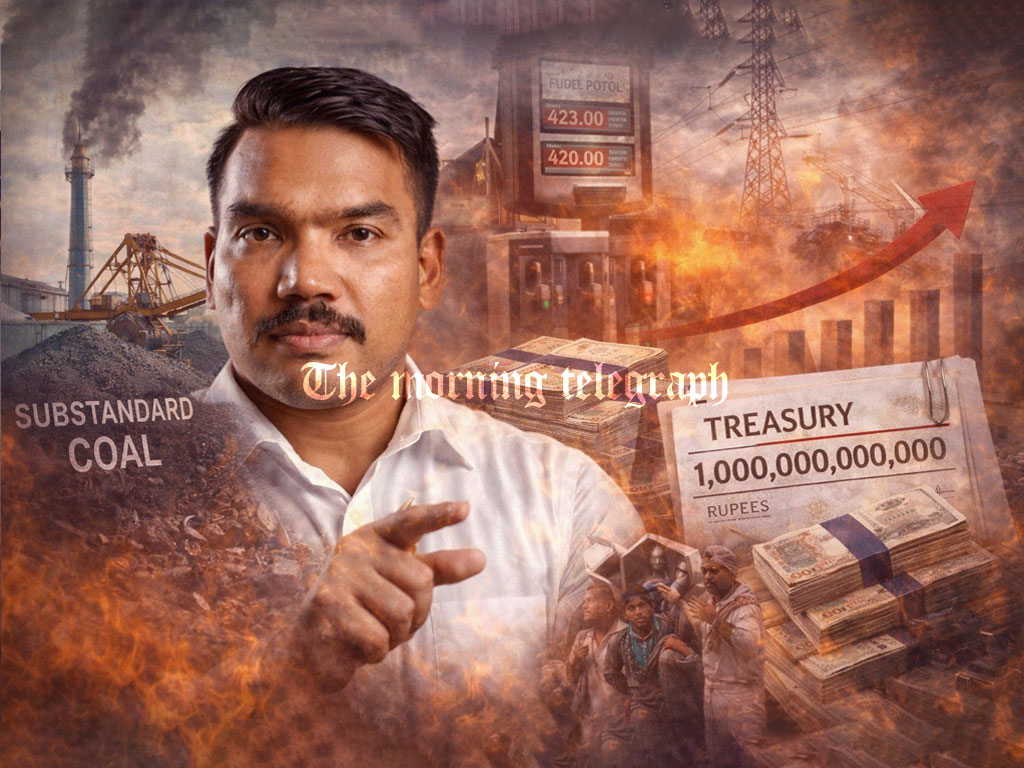
SLPP National Organizer Namal Rajapaksa accuses the government of shifting losses from substandard coal imports onto the public through fuel and electricity hikes, urging authorities to instead use the reported trillion rupee treasury surplus to provide relief to struggling citizens.
SLPP National Organizer and Member of Parliament Namal Rajapaksa stated that it is a grave injustice for the government to burden ordinary citizens with losses incurred due to its own wrong decisions. Speaking to the media in Kandy, he accused the government of raising electricity tariffs and fuel prices to cover losses from importing substandard coal, placing the burden on innocent poor people.

“We made a very positive proposal to the government not to import substandard coal. But they did not listen. Now the loss and suffering caused by that substandard coal is being passed on to the people,” Rajapaksa said.
He noted that his party consistently urged the government to focus on renewable energy projects. “We had no objection to bringing any investor to build the Mannar wind power plant. But the government rejected those positive proposals. They refused to listen to any good advice.”
Rajapaksa argued that if the government’s accounts now show a surplus of one trillion rupees, that money should be used to cover the losses caused by the substandard coal imports, rather than raising fuel and electricity prices. “It is completely unfair to place that burden on innocent poor people,” he emphasized.
The MP also criticized what he described as the politicization of the police force. “The government has turned the country’s police into their own political machinery. They are not only trying to fabricate statements through coercion, but looking at the government’s behavior today, they are trying to cover up their own incompetence while the people face immense challenges.”
Rajapaksa suggested that international organizations that helped bring this government to power should observe its conduct. “They should know what kind of government they helped bring to power. Whether they like it or not, those organizations need to understand what is happening.”
He contrasted the current government’s behavior with the conduct of the JVP during past crises. “When the Covid pandemic hit and the Russia-Ukraine war began, crude oil prices rose to $139 per barrel on the world market. Look at how the JVP behaved then, and how their members behaved in fuel queues. Audit reports now confirm that the fuel bowsers they took out never actually reached their destinations. The opposition today is not engaging in such disruptive politics.”
Rajapaksa accused the government of trying to suppress the opposition to advance its own political agenda. “If they think institutions are functioning independently because they don’t need to force statements out of people through fear, or because they haven’t involved the Police Chief in their political projects, they can tell that to the international organizations that appointed them. But why is the government so agitated? They are agitated because they need to satisfy the diaspora they made promises to. They don’t want those people to know about their decisions and their incompetence.”
He also commented on the Samagi Jana Balawegaya’s internal leadership matters, stating that it is natural for any political party to work towards making its own candidate the leader. “Ultimately, the people will decide who their leader is. Whether Sajith can or cannot, whether Mr. Anura can or cannot, the people will decide based on their actions. No other political party can make that decision.”
Reiterating his party’s constructive approach, Rajapaksa said, “We made a very positive proposal not to import substandard coal. They didn’t listen. They imported substandard coal. No matter how many positive proposals we make, if the government imports substandard coal and places that suffering on the people, what can we do?”
He concluded by stating that the SLPP, having ended the era of conflict, understands the pain and pressure of that period. “We will not inflict that pain and pressure on anyone else. We are clearly watching to see what decisions the government will make. Our political party operates within a democratic framework, doing politics at the grassroots level.”