From fumbling foreign policy to a confused response over a deadly US strike in its waters, Sri Lanka’s leadership stands exposed as directionless, leaving the nation vulnerable to global powers and its own institutional decay.
Diplomacy is not courtesy dressed in fine language; it is power performed with a smile. As Niccolò Machiavelli made brutally clear, rulers who depend on affection alone invite their own ruin. Henry Kissinger argued that states survive not on goodwill but on a cold equilibrium between authority and acceptance. Every handshake conceals a calculation; every agreement is signed because the alternative carries a heavier price.

Diplomacy operates in the long shadow of violence. Carl von Clausewitz described war as politics pursued through harsher instruments. John Mearsheimer reminds us that powerful states do not seek harmony; they compete relentlessly. Yet genuine diplomacy lies in defusing conflict before it erupts. Peace, therefore, is never permanent; it is managed, negotiated, and constantly at risk. Against that unforgiving reality, Sri Lanka appears dangerously unprepared.
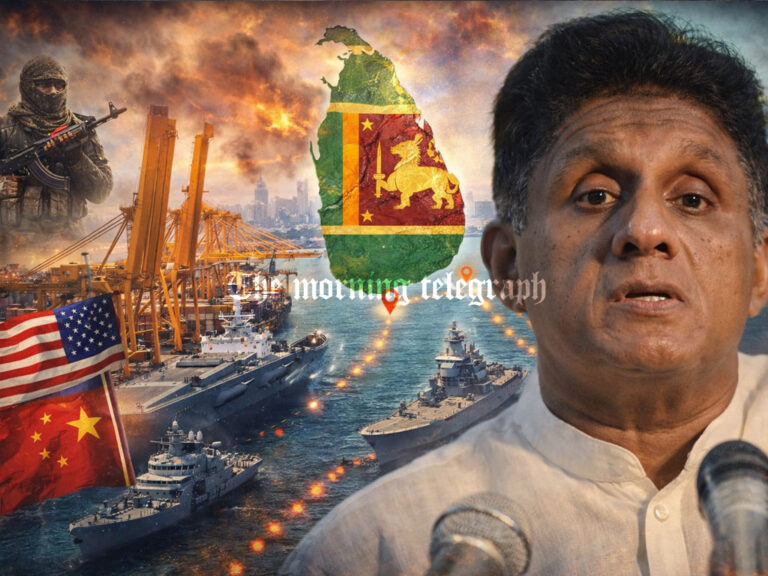
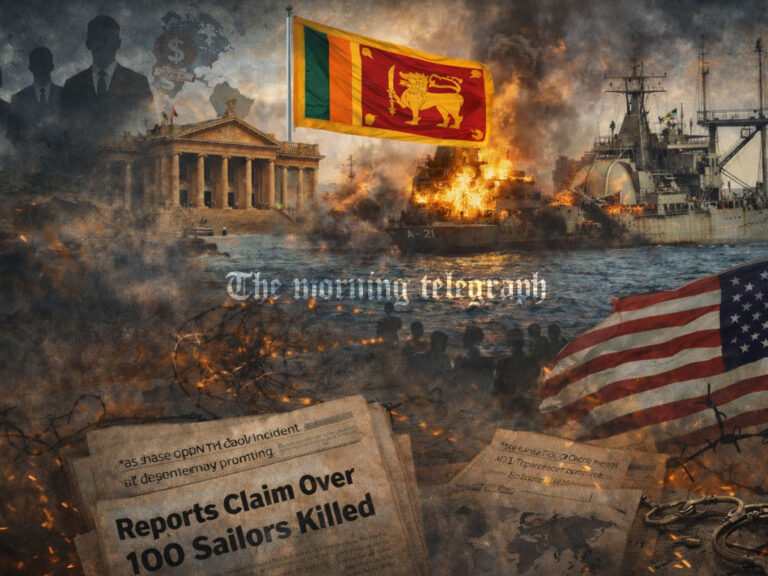
The country’s diplomatic posture has not merely weakened; it has unravelled. Consider the spectacle of a Foreign Minister publicly fumbling a direct question from an international journalist, only to later parade that embarrassment as a triumph before Parliament. More disturbing still is the government’s incoherent response to the reported American strike on an Iranian vessel in Sri Lankan waters, an incident said to have killed over a hundred sailors. While American leaders boasted openly about the attack, even indulging in grotesque remarks about its entertainment value, Sri Lanka’s reaction drifted between silence, confusion, and contradiction.
Viewed against such statements, the episode carries the stench of a grave breach of international norms. Yet the government’s conduct has been less that of a sovereign state and more that of a startled bystander. This is not merely incompetence; it is a display of political adolescence. Even more alarming is the President’s own contribution to this confusion, which has only deepened the sense that the state machinery is no longer guided by coherence or restraint. No volume of propaganda can conceal a structural decay of this magnitude. History offers ample warnings: regimes that substitute spectacle for substance eventually collapse, often dragging their nations into prolonged instability.
What is truly astonishing is the casual indifference shown towards the consequences of such an incident. Either those in power fail to grasp its seriousness, or they are acting in quiet deference to an external force whose interests outweigh those of their own country. Neither possibility inspires confidence. In either case, Sri Lanka stands to lose.
The contradictions multiply. The Defence Ministry Secretary claimed that the country first learnt of the attack through an email from the US Navy’s Asia Pacific Command and that the Sri Lankan Navy merely observed events and provided humanitarian assistance. This version sits uneasily alongside earlier statements by naval officials and the President himself. The absence of consistent communication invites a far more troubling interpretation: that the government either knew more than it admits or understands far less than it should. Both scenarios are damaging. One suggests complicity; the other, incapacity.
Instead of clarifying matters, senior ministers have only deepened the confusion. The attempt to dismiss the Iranian ambassador’s claim that Sri Lanka had formally invited the vessel as unofficial is not merely unconvincing; it is absurd. A naval commander does not extend casual invitations to foreign warships as though arranging a private social call. Such engagements fall squarely within the domain of state authority. To suggest otherwise insults both logic and public intelligence.
If these events were manipulated to serve the interests of a powerful ally, then the subsequent evasions are not acts of damage control but accelerants of reputational harm. Governments may change, but the consequences of such actions endure. Sri Lanka’s past is littered with examples of leaders mistaking bravado for strength, only to leave behind long shadows of instability. Posturing before global powers has never served as protection; it has repeatedly proved to be the prelude to deeper crises.
Equally troubling is the conduct within the diplomatic service itself. Funded by the public, it too often appears detached from public duty. From minor staff to senior envoys, accountability is conspicuously absent. Social media has become a stage for self-promotion rather than a channel for advancing national interests. Credentials are displayed, yet competence remains questionable. Patronage continues to outweigh merit, leaving institutions hollowed out and ineffective.
The human cost of this decay is not abstract. When a young Sri Lankan died in Romania, his family struggled to repatriate his body while embassy officials reportedly responded with indifference. Such behaviour is not merely unprofessional; it is a betrayal of the very purpose of diplomatic missions. These institutions exist to serve citizens, not to indulge the comforts of those employed within them. If that basic duty cannot be fulfilled, resignation would be the more honourable course.
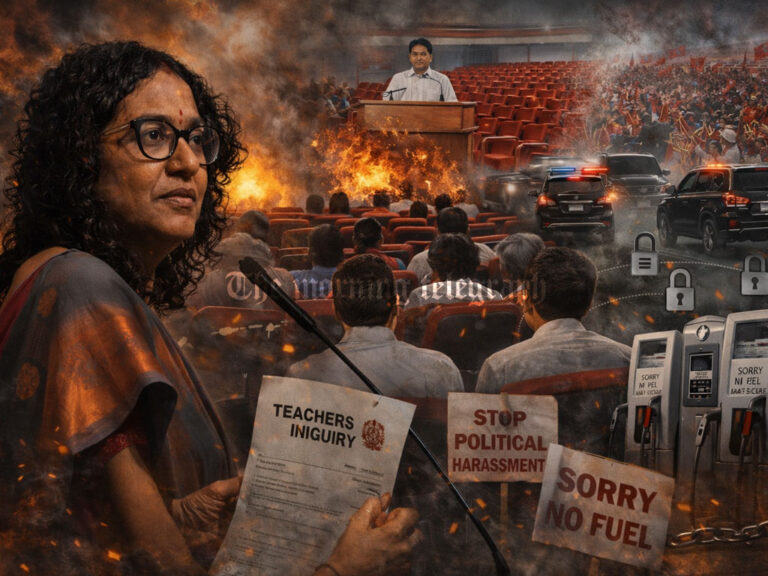
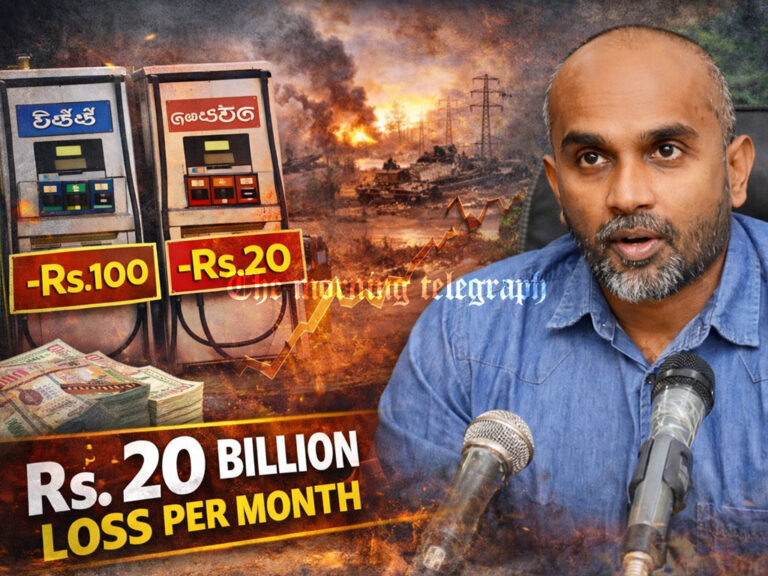
All of this unfolds against the backdrop of a public already strained by economic hardship. Citizens who queue for fuel, struggle to sustain livelihoods, and shoulder the burden of taxation are entitled to expect competence and integrity from those representing them abroad. Instead, they are confronted with negligence and arrogance.
What emerges is not an isolated failure but a pattern: a government unable to manage complexity, institutions stripped of credibility, and a diplomatic apparatus adrift. For weaker states, diplomacy can become less a shield than a disguise for flawed leadership. When short-term expediency replaces long-term judgement, powerful nations exploit the gap without hesitation. The result is a steady erosion of sovereignty, often disguised as pragmatic compromise.
The real question is not whether the global order is unjust; it has never claimed to be otherwise. The question is whether Sri Lanka possesses the clarity and resolve to confront its own weaknesses. No amount of carefully staged messaging can obscure the truth indefinitely. Sooner or later, reality asserts itself, and when it does, the cost of denial is always severe.