The Morning Telegraph’s investigation uncovers an escalating public clash marked by multimillion-rupee legal threats and sharply conflicting claims over aviation credentials, including the controversial assertion of being a “Captain,” bringing to light key documents, counterclaims, and a deeper truth behind the mounting scrutiny of Civil Aviation Authority Director General Daminda Rambukwella.
The latest controversy gaining traction across social media platforms has drawn the Civil Aviation Authority of Sri Lanka into an intense public spotlight, as serious allegations and counter-allegations swirl around its Director General, Daminda Rambukwella.
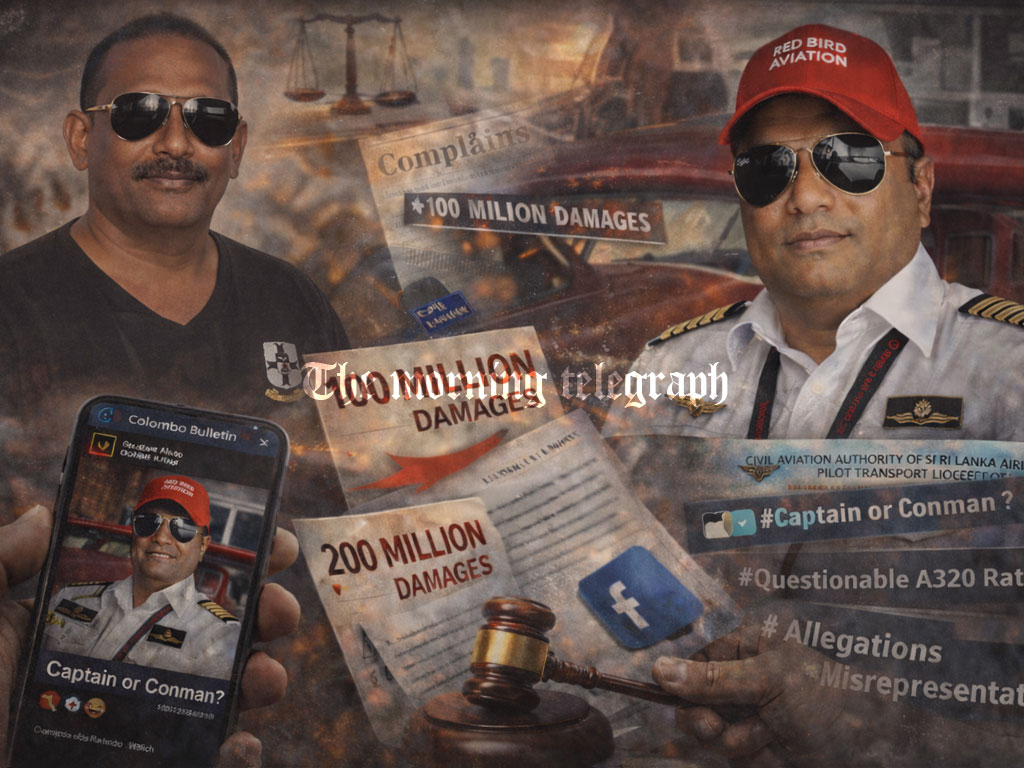
At the center of the storm is activist Dinesh De Alwis, who has publicly accused the Director General of misrepresenting himself as a “Captain,” claiming that Rambukwella does not legitimately hold that title. De Alwis has also raised broader concerns about alleged shortcomings within the aviation regulator itself.

The dispute escalated when De Alwis formally lodged a complaint with the Criminal Investigation Department and subsequently addressed the media outside its premises, amplifying his claims.
Simultaneously, a Facebook page operating under the name Colombo Bulletin began circulating memes and posts targeting Rambukwella, often in a manner widely viewed as degrading and personal.
The controversy deepened further when De Alwis appeared on Neth FM, where he expanded on his allegations. Among the most serious was the claim that Rambukwella had obtained an Airbus A320 Type Rating through SriLankan Airlines despite allegedly not meeting the required pass criteria.
These accusations triggered a sharp legal response. Rambukwella issued a letter of demand seeking Rs. 100 million in damages from De Alwis. In a dramatic counter, De Alwis, through legal counsel, is understood to have responded with his own letter of demand, this time seeking Rs. 200 million.
The Morning Telegraph Investigation: Documents Tell a Different Story
Amid the noise, The Morning Telegraph’s investigation team has examined documentary evidence that presents a more complex picture, one that appears to support Rambukwella’s aviation credentials, at least within a military context.
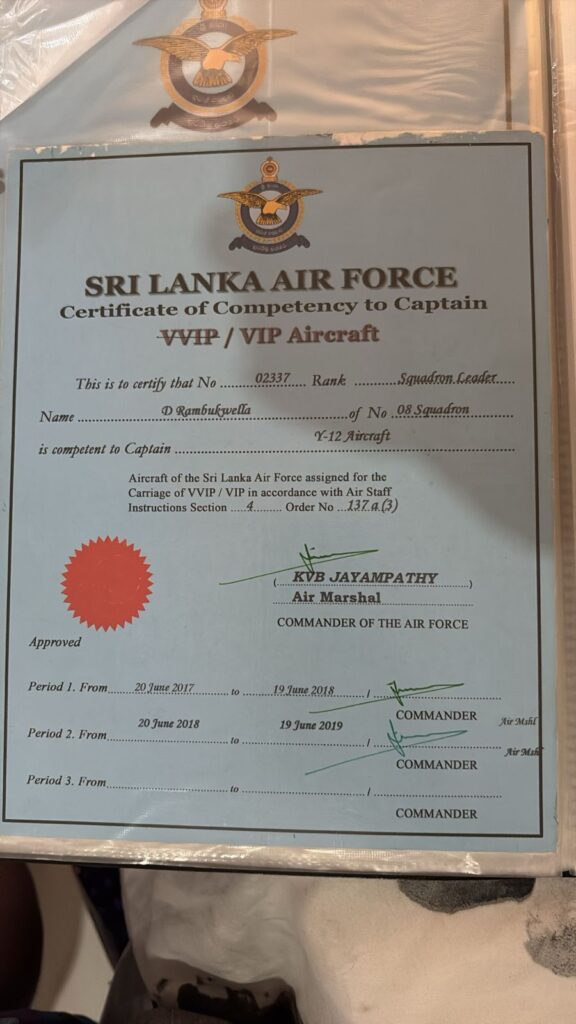
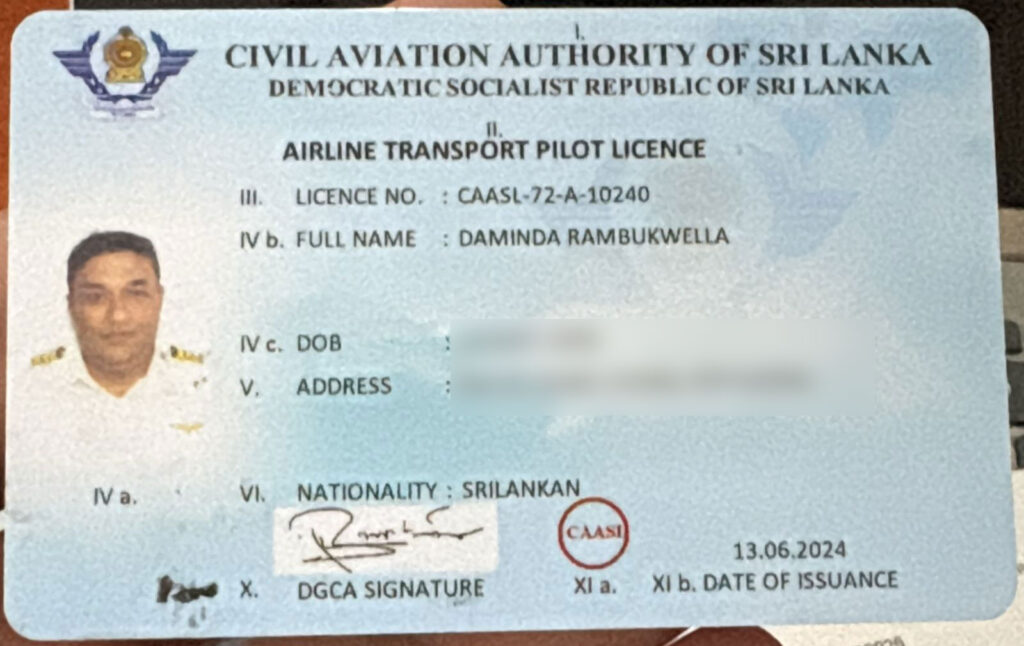
Two certificates issued by Air Marshal K.V.B Jayampathy, dated 20 June 2017 and 11 November 2018, state that Squadron Leader D. Rambukwella of No. 08 Squadron was competent to captain AN-32 and MA-60 aircraft.
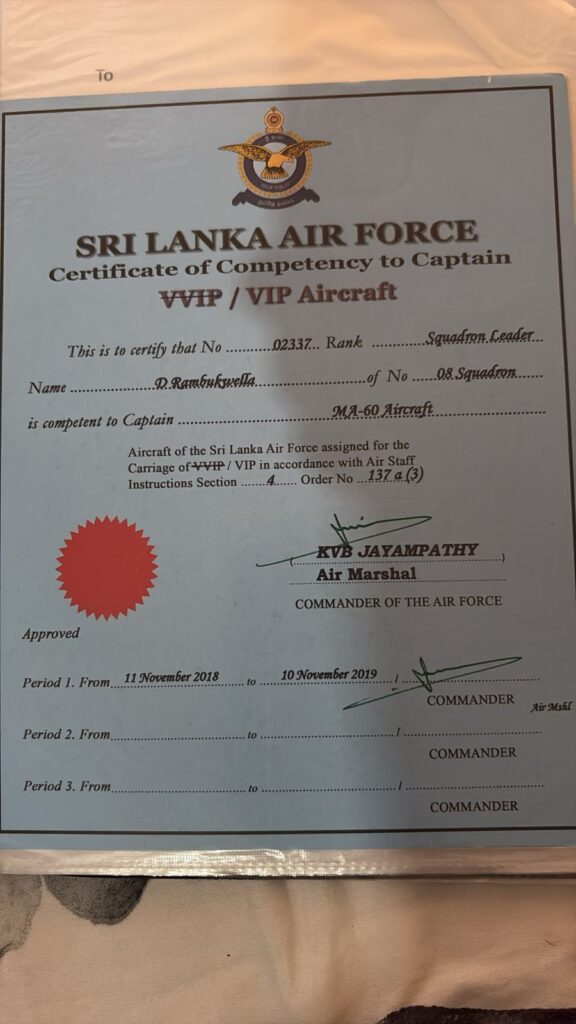
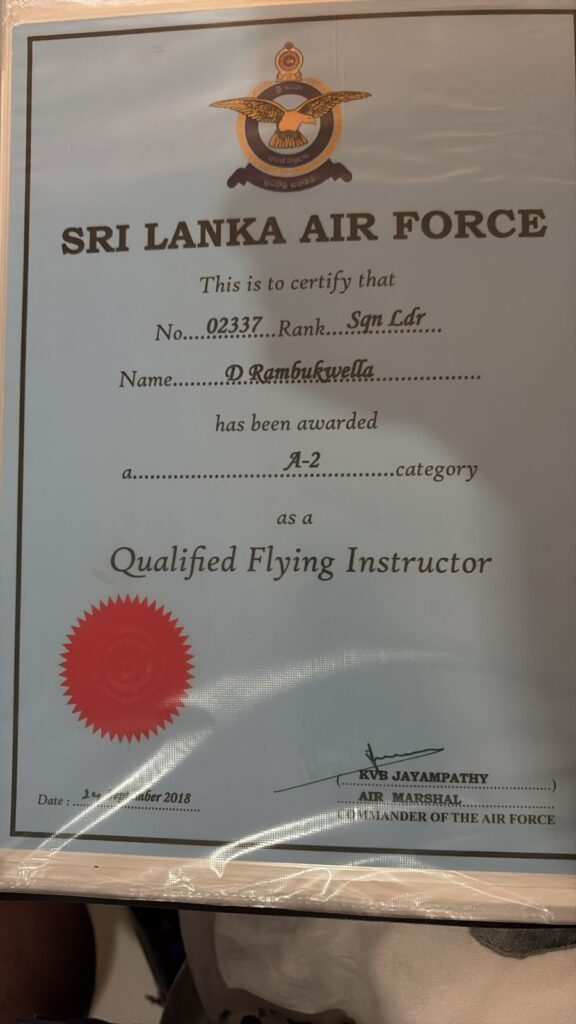
Further supporting this, aerospace giant Boeing issued a certificate recognizing Rambukwella as “Captain” upon his successful completion of a Maintenance Human Factors Regional Seminar and EASA GM1 Aid (MEDA) Investigator Training in New Delhi, India, conducted between 9 and 12 September 2024.
In addition, findings indicate that Rambukwella commanded Heli Tours operations when the Sri Lanka Air Force conducted commercial passenger transport services between Ratmalana, China Bay, and Jaffna, further reinforcing his operational command experience.
A320 Type Rating: Fact vs Allegation
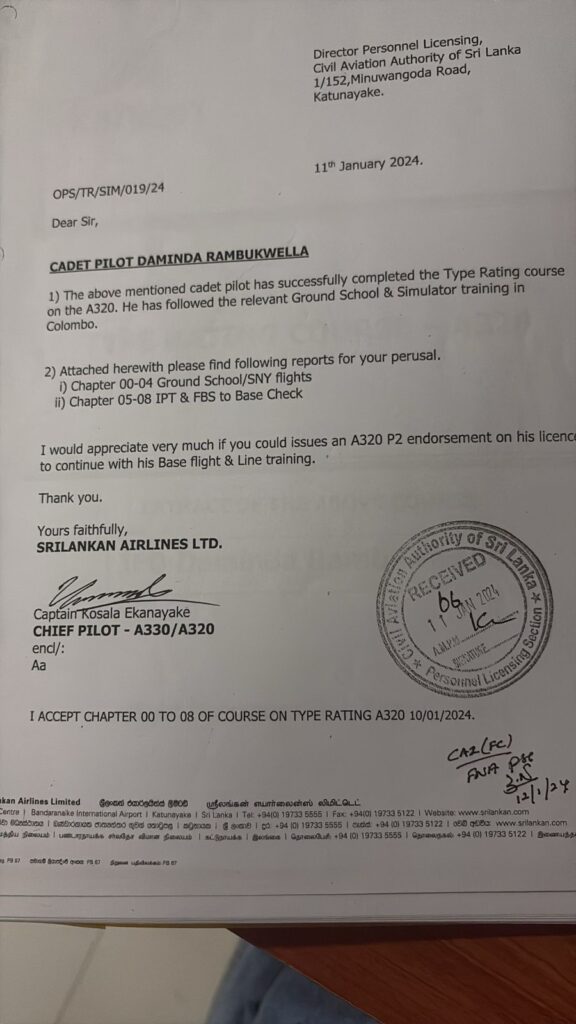
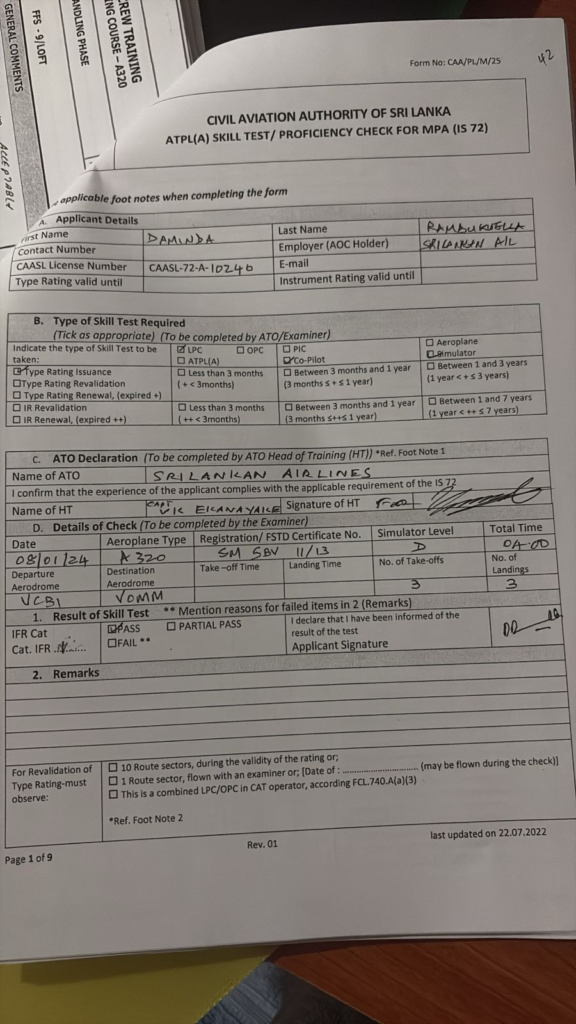
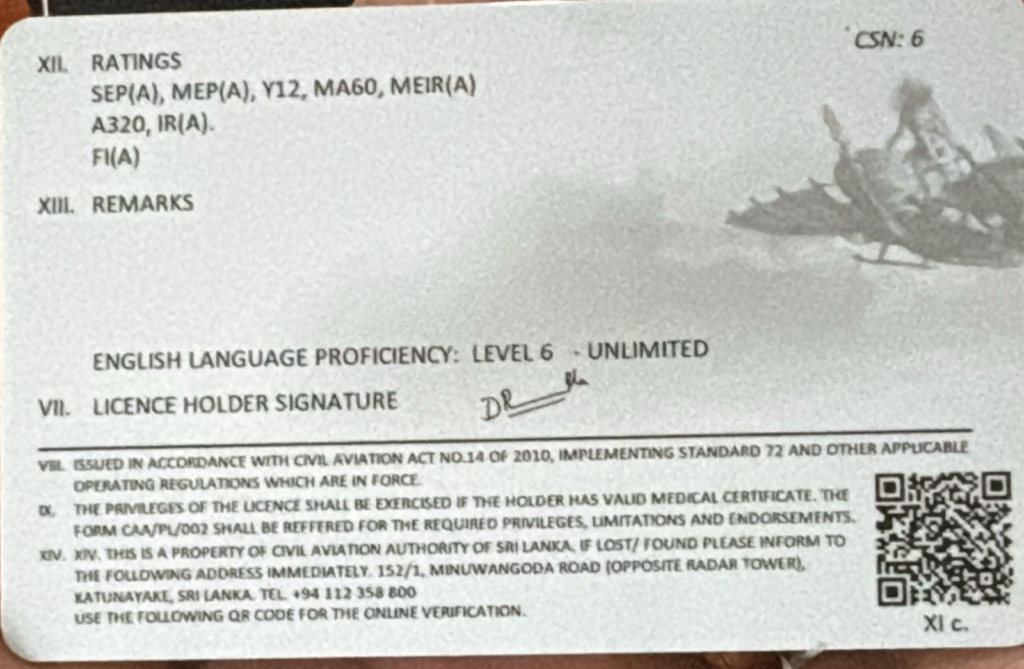
On the contentious issue of Airbus A320 certification, The Morning Telegraph has verified documentation from Kosala Ekanayake, addressed to the Director of Personnel Licensing at CAASL on 11 January 2024.
The letter confirms that Rambukwella successfully completed Ground School and Simulator Training, along with the required CAASL skill and proficiency checks.
This directly challenges claims that he failed to meet the necessary criteria.
The Core of the Confusion: Military vs Commercial Aviation Titles
However, the investigation also highlights a crucial nuance often overlooked in public debate—the distinction between military and commercial aviation titles.
Within the Sri Lanka Air Force, a Pilot in Command may hold the rank of Squadron Leader, yet is frequently addressed operationally as “Captain.” In contrast, in the commercial aviation sector, the title “Captain” is strictly tied to position, experience, and aircraft-specific command.
If Rambukwella were to enter commercial airline service on the Airbus A320, industry standards dictate that he would begin as a Junior First Officer, progressing only after accumulating sufficient flying hours and experience.
A Scandal or a Semantic War?
What emerges from The Morning Telegraph’s investigation is not a simple narrative of guilt or innocence but a layered dispute where technical definitions, professional titles, and public perception collide.
On one side stand allegations of misrepresentation and institutional failure.
On the other, documented evidence that appears to validate at least part of Rambukwella’s claims.
As legal battles intensify and public discourse grows increasingly polarized, one question remains at the heart of it all:
Is this a case of deliberate deception or a controversy fueled by misunderstanding, amplified in the age of social media?
For now, the truth sits somewhere in between, waiting to be fully tested in both legal and public arenas.