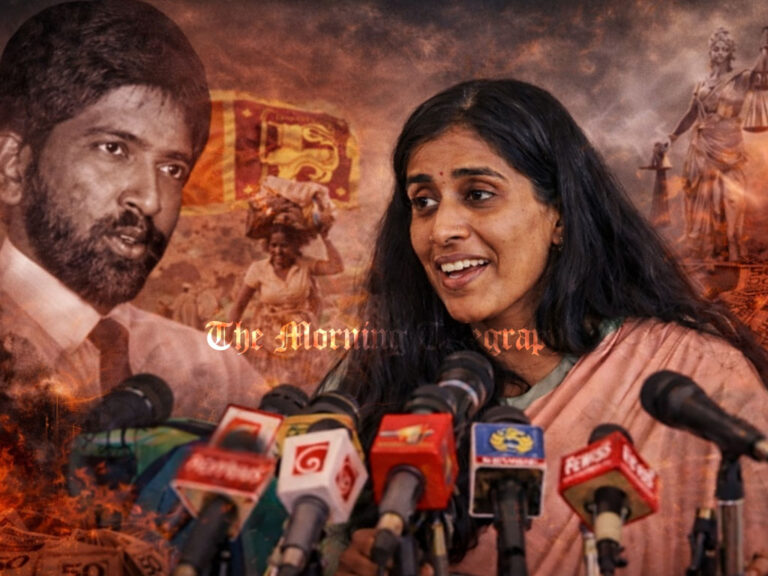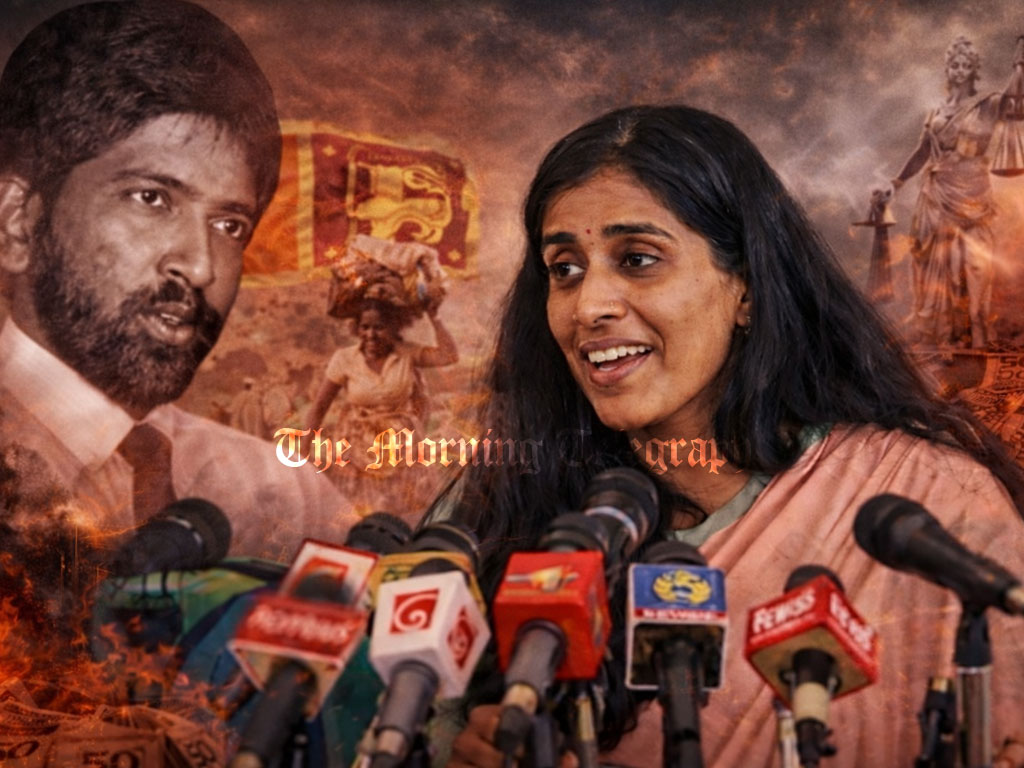
In a powerful and emotional address, Pravinna Raviraj reignites her father’s human rights legacy while exposing the harsh economic and legal realities faced by women across Sri Lanka, calling for urgent national reform.
At a recent event in Colombo organized by United Women Power, Pravinna Raviraj, daughter of the late Nadarajah Raviraj, delivered a direct and urgent call for reforms aimed at empowering women across Sri Lanka both economically and socially. Nadarajah Raviraj, a respected Tamil lawyer and politician, was assassinated in 2006 while serving as a Member of Parliament and previously as Mayor of Jaffna. He was widely known for his legal expertise, dedication to human rights, and courage in representing victims of enforced disappearances, extrajudicial killings, and conflict-related abuses across northern and eastern Sri Lanka. His daughter highlighted the lasting impact of his work as she addressed the structural challenges faced by women today.

Raviraj outlined the economic struggles and social pressures confronting women across Sri Lanka, emphasizing the urgent need for policy reform. She stated that plantation sector wages remain low, poverty among young women continues to rise, the care economy is weakening, and women-headed households, especially those linked to families of the disappeared, remain marginalized. She also criticized the long-standing underfunding of the National Women’s Commission and called for clear policy frameworks to ensure economic empowerment, legal protection, and truth-seeking mechanisms for affected families. Observers noted that her message strongly resonated across communities where women contribute significantly to the economy but continue to be overlooked in national decision-making.
The event also highlighted the enduring legacy of Nadarajah Raviraj, whose contributions to law and politics reflected both courage and integrity. Educated in Jaffna, he became an attorney at the Supreme Court and worked closely with the human rights organization Home for Human Rights before establishing his own legal practice. He handled cases under the Prevention of Terrorism Act and represented clients in courts across Ampara, Batticaloa, Jaffna, Trincomalee, and Vavuniya, often taking on high-risk cases that others avoided. Beyond his legal work, he served on the Civil Monitoring Committee overseeing abductions and unlawful killings and was recognized internationally as an ambassador of peace in 2004.
In the political arena, Raviraj joined the Tamil United Liberation Front in the late 1980s and rose to prominent positions within the party before becoming an influential figure in the Tamil National Alliance. He served as Mayor of Jaffna in 2001 and was later elected to Parliament, where he consistently advocated for accountability, justice, and human rights in Sri Lanka. His career was marked by resilience despite repeated threats, and although he survived earlier attacks during his political journey, he was assassinated in Colombo on November 10, 2006. His death continues to symbolize the risks faced by those who challenge injustice and speak out for marginalized communities.
Pravinna Raviraj drew a clear connection between her father’s legacy and her present advocacy for women’s rights. She reminded the audience that while society often celebrates female resilience, it rarely ensures female justice. Reflecting on her own experience growing up in a woman-led household after her father’s assassination, she emphasized that meaningful legal, economic, and social reforms are necessary to recognize and support the contributions of women across Sri Lanka, from plantation workers to garment sector employees and migrant laborers.
The gathering organized by United Women Power reinforced the urgent need for action beyond political rhetoric. Raviraj’s call for structural reforms, including stronger protections for caregivers, fair wages, and sustained support for families of the disappeared, was seen as a direct appeal to policymakers. Her message urged the country to move toward a future rooted in equality, justice, and inclusive economic development.