A Supreme Court-driven directive reignites national debate on student discipline, as Sri Lanka moves to eliminate corporal punishment while critics question whether policy without clear action plans can truly change classroom realities.
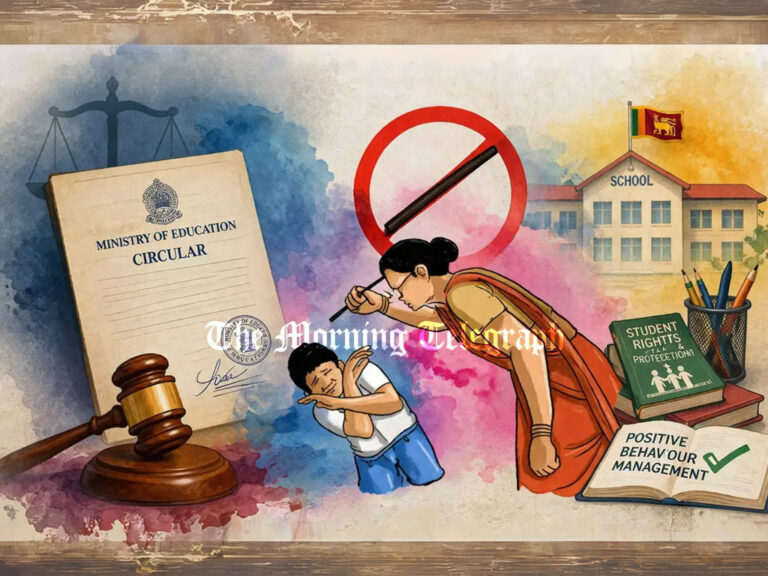
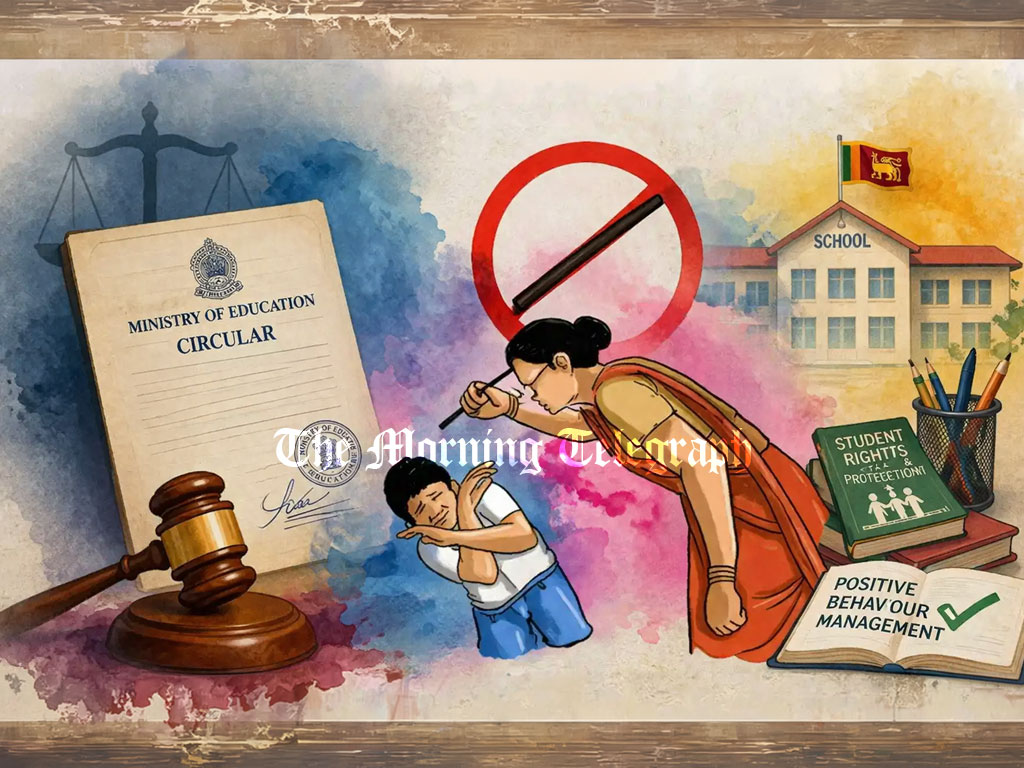
The Ministry of Education has issued a fresh circular aimed at banning both physical punishment and mental harassment in maintaining discipline among school students across Sri Lanka. This latest directive on school discipline and student protection comes directly in line with a Supreme Court order, reinforcing long-standing concerns about student rights and teacher conduct in classrooms.

According to official communication, the circular was issued following instructions tied to a landmark Supreme Court judgment. Authorities confirmed that the directive specifically references paragraph 17 of Supreme Court Case No. 461/2012 (FR), making it a legally guided move rather than a policy initiative taken in isolation.
The case that led to this development dates back to a fundamental rights petition filed by a Grade 11 student from Sir John Kotelawala College in Kurunegala along with his father. The complaint centered on allegations that an English teacher repeatedly subjected the student to harassment, labeling him weak in the subject and creating an environment of continuous psychological pressure.
As outlined in the case details, the sustained verbal targeting and negative treatment reportedly affected the student’s mental well-being to such an extent that he became unwilling to attend school. This highlighted broader issues surrounding emotional abuse and mental stress within Sri Lankan schools, prompting legal scrutiny into teacher conduct and disciplinary practices.
At the conclusion of the trial, the Supreme Court ruled that the student’s fundamental rights had indeed been violated. This decision not only addressed the individual case but also set a precedent emphasizing the importance of safeguarding students from both physical and psychological harm within educational institutions.
Paragraph 17 of the judgment carries particular significance. It clearly states that a new circular must be issued to all teachers and school administrators, affirming that no child should be subjected to physical or mental harm under any circumstances, whether as punishment or otherwise. The directive also stresses that there is no space for corporal punishment and that legal action must be taken against those who violate these standards.
Building on this, the newly issued circular reiterates that strict attention must be given to the principles laid out in the Supreme Court ruling when dealing with student discipline. It reinforces that all forms of punishment that cause harm are prohibited and that accountability mechanisms must be enforced within the education system.
In addition to restrictions, the circular highlights alternative approaches to discipline. It encourages the adoption of positive behavior management strategies, including intervention methods and student support systems designed to guide behavior rather than punish it. This reflects a shift toward modern educational practices focused on emotional well-being and constructive discipline.
The directive is also linked to Circular 12/2016, which previously addressed corporal punishment in schools. By referencing this earlier policy, the Ministry appears to be strengthening existing regulations while aligning them more closely with judicial expectations and evolving standards of child protection.
Deputy Minister of Education Madura Seneviratne explained that the issuance of this circular was not optional but a requirement stemming from the Supreme Court order. He stated that authorities were given a nine-month timeframe following the conclusion of the case to implement the directive, and that the Ministry complied within that period.
However, the move has not been without criticism. Ceylon Teachers’ Union General Secretary Joseph Stalin pointed out that similar circulars have been issued in the past without producing meaningful change. He argued that simply instructing teachers not to punish students is ineffective unless clear procedural guidelines are provided on how discipline should be maintained.
Stalin emphasized the need for structured recommendations that outline practical steps teachers can follow when addressing student misconduct. Without such clarity, he warned, schools may struggle to enforce discipline consistently while adhering to the new rules.
Meanwhile, the broader legislative landscape adds another layer to the discussion. A proposed amendment to the Penal Code related to such matters was presented to Parliament in 2025 but faced strong opposition and was subsequently put on hold. This indicates that legal and policy reforms in this area remain a work in progress.
Responding to these concerns, Deputy Minister Seneviratne noted that discussions are currently underway to develop alternative disciplinary frameworks. He revealed that the Ministry is exploring the introduction of a reward-based system that encourages positive behavior among students rather than relying on punitive measures.
He added that efforts are being made to design mechanisms for evaluating and recognizing good conduct, signaling a shift toward a more supportive and motivational approach within the education system. While these initiatives are still in development, they represent an attempt to address gaps identified by educators and stakeholders.
As Sri Lanka continues to reform its school discipline policies, the challenge will lie in translating legal directives into practical, effective classroom strategies. The success of this new circular will ultimately depend on how well teachers are supported, trained, and guided in implementing these changes across the country.