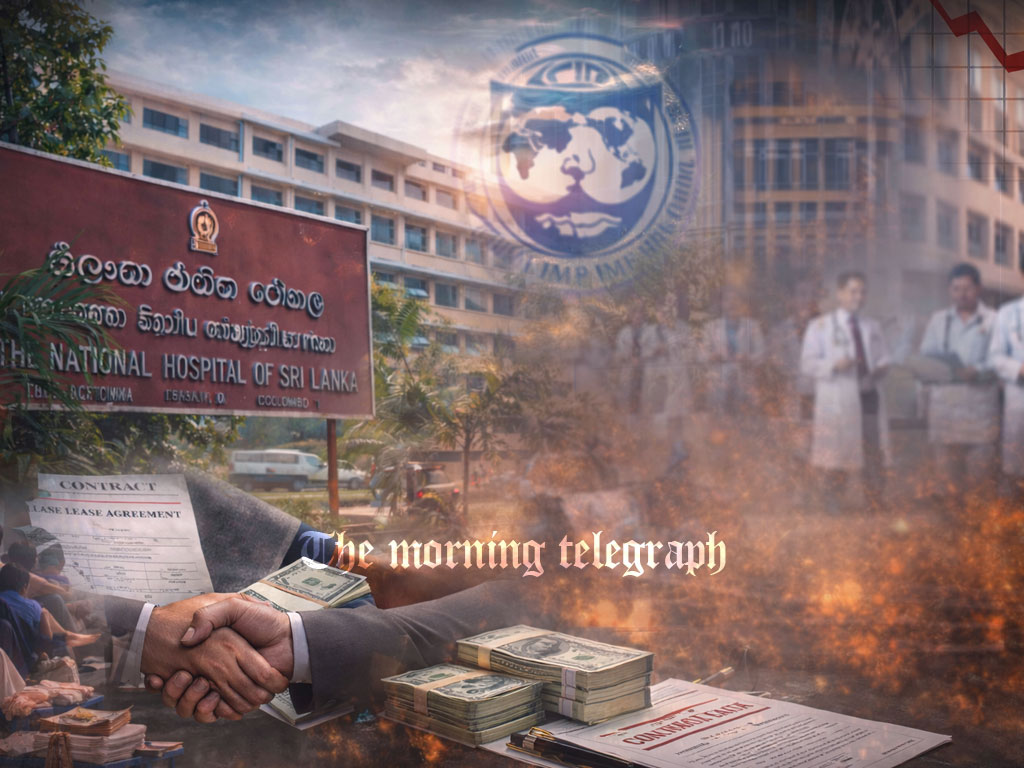
A growing health sector crisis unfolds as alarming claims suggest Sri Lanka’s free healthcare system could be quietly pushed toward privatization, leaving millions vulnerable amid doctor shortages and collapsing rural hospitals.
The government is allegedly moving toward a controversial plan to privatize Sri Lanka’s long-standing free healthcare system by leasing hospitals to private companies under conditions linked to the International Monetary Fund, according to Specialist Dr. Chamal Sanjeewa, President of the Doctors’ Trade Union Alliance for Medical and Civil Rights.

He stressed that despite being in power for nearly two years, the current administration and the Minister of Health have failed to establish a comprehensive national health policy, effective human resource management system, or a sustainable drug procurement strategy for the country.
Dr. Sanjeewa further claimed that what appears to be an organized strategy is gradually unfolding, where the weakening of public hospitals through lack of facilities and medicine shortages is pushing citizens toward a paid healthcare model.
He pointed out that Sri Lanka is currently facing a severe shortage of medical professionals, estimating a gap of between 2,000 and 2,500 doctors along with nearly 1,000 specialists, raising concerns about the sustainability of healthcare delivery.
Despite this shortage, he alleged that the Ministry of Health is reluctant to recruit newly qualified doctors who have completed their internships, suggesting this could be an attempt to suppress the medical workforce.
The impact on the general public has been significant, with rural communities suffering the most due to the deterioration of regional hospitals and limited access to essential healthcare services.
It was also revealed that even in Kalutara, the district represented by the Health Minister, basic hospital conditions have worsened considerably, with some regional hospitals reportedly shutting down.
Medical professionals argue that these developments indicate a broader attempt by the government to achieve political objectives while ordinary citizens struggle to access medicines and essential diagnostic services.
Dr. Chamal Sanjeewa emphasized the urgent need for dialogue between the government and healthcare professionals to address the escalating crisis and protect the country’s free health system.
He concluded by calling for immediate intervention from the President to safeguard public healthcare, warning that failure to act could permanently alter Sri Lanka’s healthcare landscape.