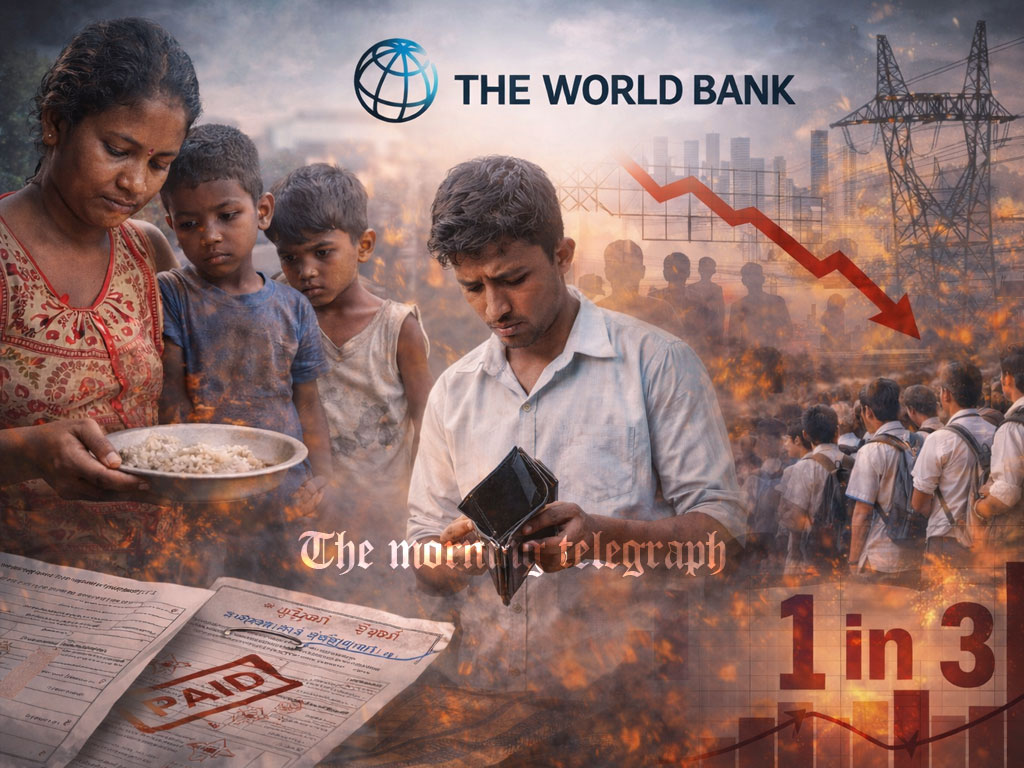
A stark economic warning reveals rising hunger, job insecurity, and soaring electricity costs in Sri Lanka, exposing deep structural challenges despite ongoing recovery efforts and international support.
According to a recent World Bank report, nearly 33% of Sri Lanka’s population is struggling without access to sufficient nutritious food, highlighting a growing food security crisis across the country.
The report further reveals that under the current economic growth trajectory, a significant portion of young people entering the workforce over the next decade face a high risk of unemployment and job instability.

While approximately one million youth are expected to join the job market within the next ten years, projections indicate that only around 300,000 new employment opportunities will be created during that period.
This means that nearly 7 out of every 10 young job seekers may be unable to secure suitable employment, raising serious concerns about Sri Lanka’s labor market and economic future.
The report also notes that many individuals who lost their jobs during the economic crisis have yet to re-enter the workforce, indicating that recovery in the labor sector remains slow and incomplete.
Poverty levels, which stood at 11.5% in 2019, surged dramatically to 27.5% in 2023 due to the economic downturn, though they have slightly declined to 22.3% by the end of last year and are expected to remain around 20% in the coming years.
In addition, the World Bank highlights that Sri Lanka’s electricity tariffs rank among the highest in Asia, placing further financial pressure on households and businesses already facing economic hardship.
Although the government’s policy measures aimed at stabilizing the economy have been acknowledged positively, the report cautions that macroeconomic risks and vulnerabilities have not yet been fully resolved.
To address these ongoing challenges, the World Bank has introduced a new five-year partnership framework covering the period from 2026 to 2030, aimed at supporting economic recovery and long-term development.
Under this initiative, Sri Lanka is set to receive one billion US dollars in direct investments along with an additional one billion US dollars in low-interest loans over the next three years.
The program aims to significantly boost the country’s export earnings, with a target of reaching 36 billion US dollars by 2030 through strategic economic reforms and investment support.
The World Bank also plans to assist Sri Lanka in transitioning towards renewable energy, with a goal of generating 70% of electricity from renewable sources by 2030, thereby reducing energy costs for both families and businesses.
Currently, 18 major development projects worth 1.5 billion US dollars are being implemented in Sri Lanka with World Bank support, focusing on key sectors such as education, energy, transport, agriculture, and social protection.