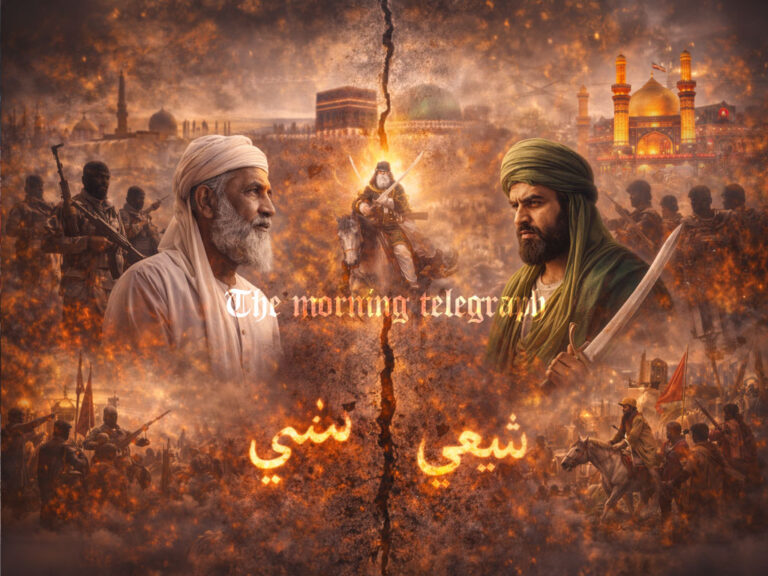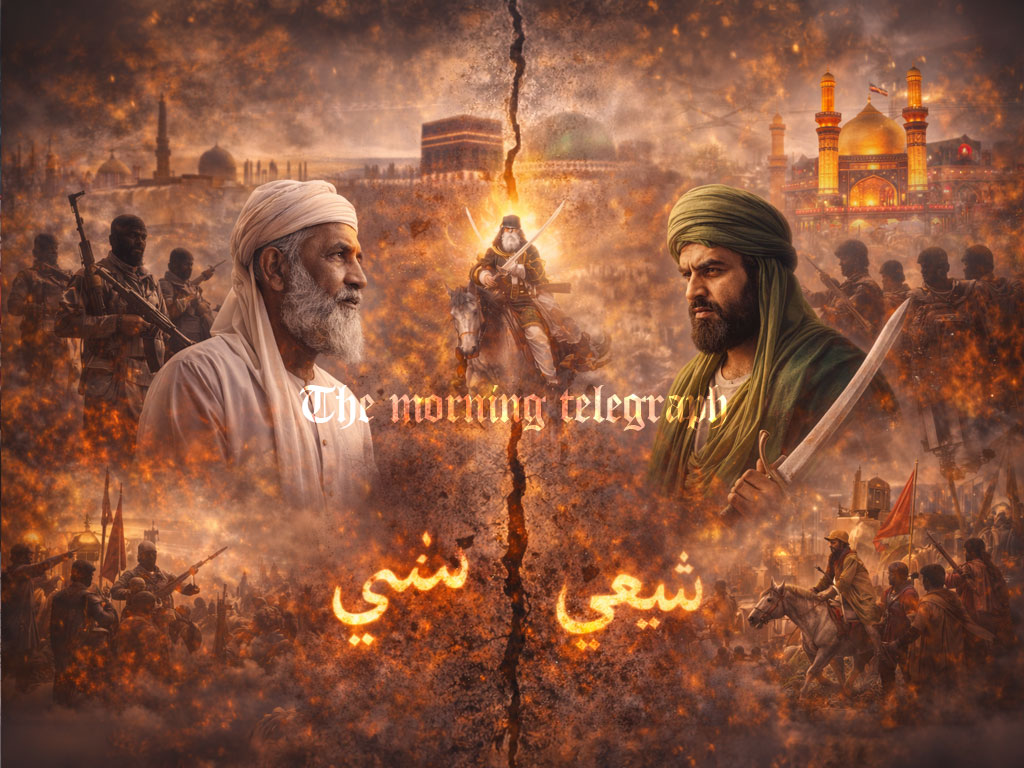
A powerful deep dive into the origins, evolution, and modern-day consequences of the Shia-Sunni divide, revealing how history, politics, and power struggles continue to shape conflicts across the Muslim world.
The roots of the Shia-Sunni divide can be traced back to the death of Prophet Muhammad in 632 CE, when a critical question emerged over who should lead the Islamic community. With no clear successor named, the Muslim world split into two distinct schools of thought that would shape centuries of history.

Basis of Sunni Theology
A majority of Muslims believed that leadership should be determined through consensus, selecting the most capable among the Prophet’s close companions. This led to the appointment of Abu Bakr as the first Caliph, forming the foundation of Sunni Islam, often referred to as the followers of tradition.
Basis of Shia Theology
Another group argued that leadership should remain within the Prophet’s bloodline. They believed Ali, the Prophet’s cousin and son-in-law, was the rightful successor. This group became known as Shiat Ali, meaning the party of Ali, which later evolved into the Shia sect.
The Battle of Karbala and the Confirmation of the Division
The division deepened irreversibly during the Battle of Karbala in 680 CE in Iraq. The killing of Prophet Muhammad’s grandson, Hussein, by forces aligned with Sunni leadership created a lasting sense of grief and martyrdom among Shia Muslims, shaping their identity and religious narrative.
Geographical Distribution
Today, Sunnis make up approximately 85 to 90 percent of the global Muslim population and are dominant in countries such as Saudi Arabia, Egypt, Indonesia, and Pakistan. Shia Muslims, who form about 10 to 15 percent, are concentrated mainly in Iran, with significant populations in Iraq, Lebanon, and Bahrain.
Ideological differences
Sunni Islam views leadership as a collective decision of the community, while Shia Islam emphasizes divine authority vested in religious leaders known as imams. Differences also exist in prayer practices, religious observances such as Ashura, and legal interpretations including temporary marriage.
Politicization and power struggle
In modern history, this theological divide has evolved into a geopolitical rivalry, especially after the 1979 Iranian Islamic Revolution. A strategic competition emerged between Saudi Arabia representing Sunni interests and Iran representing Shia influence, shaping power dynamics across the Middle East.
Creation of conflicts between countries
The Shia-Sunni divide now underpins several regional conflicts, including wars in Syria, Yemen, and Iraq. Nations often support opposing sectarian groups with funding and military backing, turning religious identity into a tool of geopolitical strategy rather than purely spiritual belief.
Sunni extremist groups
Extremist organizations such as al-Qaeda, ISIS, and the Taliban, originating from radical Sunni interpretations, have contributed to global instability. Their ideology has not only targeted non-Muslims but also labeled Shia Muslims as enemies, intensifying sectarian violence.
Shia armed forces
On the other side, Shia groups like Hezbollah and the Houthis have emerged as powerful armed entities claiming to defend their communities. Their involvement in regional conflicts has drawn international criticism and further complicated Middle Eastern geopolitics.
Becoming victims of the power struggle
Ordinary Muslims remain the biggest victims of this prolonged conflict. In countries like Yemen and Syria, thousands of civilians, including children, continue to suffer from war, hunger, and displacement driven by sectarian power struggles.
Humanity and Religion
Despite these divisions, both Shia and Sunni Muslims share core beliefs in one God, one Quran, and the same holy sites such as Mecca. The divide is often fueled by political interests rather than genuine religious differences among everyday believers.
The unjustified hatred that has arisen in the world
The actions of extremist factions have contributed to the rise of Islamophobia worldwide. Although Muslims themselves are the primary victims of terrorism and violence, global perceptions have increasingly associated Islam with conflict and instability.
The need for coexistence
There are many regions where Shia and Sunni communities coexist peacefully, working together in daily life and religious practice. These examples demonstrate that unity is possible when humanity is prioritized over sectarian identity.
Leaders must refrain from exploiting religion for political gain. Instead of deepening divisions, there is an urgent need to promote understanding, coexistence, and unity. True peace can only be achieved when humanity rises above hatred and embraces shared values.