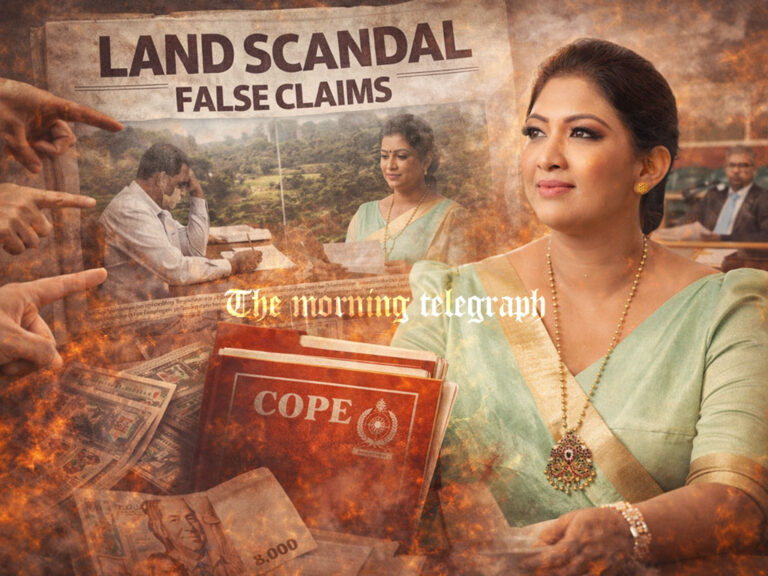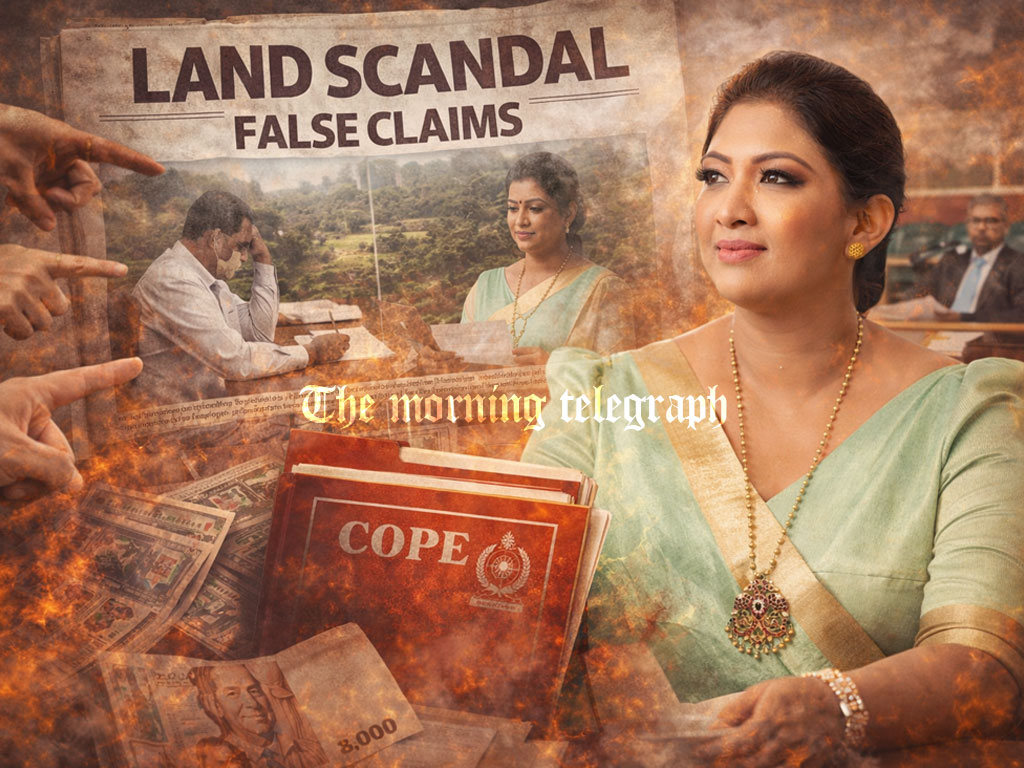
A dramatic political storm ends in vindication as false land allegations collapse, exposing the dangerous power of misinformation, political pressure, and the resilience of a leader who refused to back down.
The former Director General of the Land Reform Commission has formally apologized before the Parliamentary Committee on Privileges and Ethics, admitting that allegations regarding a 43-acre land in Hantana were false and made under intense pressure. With this admission, Kandy District Member of Parliament Chamindrani Kiriella has been officially cleared of all accusations.

The episode has triggered serious debate about governance, accountability, and how state institutions can be influenced by political agendas. It also highlights how misinformation and political narratives can damage reputations and test the strength of public figures. In this in-depth discussion, MP Chamindrani Kiriella reflects on the ordeal, the emotional toll, and the broader implications for Sri Lanka’s democratic system.
After nearly a year, there is now a sense of closure. When asked about her feelings, she explained that the issue was never a legal case in the first place. Allegations were initially raised by the Central Environmental Authority regarding illegal land acquisition in Hantana, but there was no supporting evidence. By 2023, those claims were withdrawn. However, her name resurfaced during a COPE committee session, which reignited public controversy. She emphasized that no formal case was ever filed against her, but expressed relief that the truth has now been acknowledged.
Despite her innocence, the pressure she faced during the height of the allegations was immense. She recalled the emotional strain of being accused publicly and having to navigate a narrative that spread rapidly across the country. During this period, she even contested elections while under scrutiny. Support from the people of the Kandy District played a crucial role in helping her endure the situation. She believes her electoral success reflected the trust voters had in her integrity. However, she admitted that reputational damage caused by such widespread allegations cannot be fully reversed.
Addressing the public scrutiny she faced, she stated that she never allowed negative perceptions to overwhelm her. Her supporters remained loyal and never treated her in a way that made her feel isolated. Their continued trust provided emotional strength during a challenging time.
During the election campaign, many voters approached her with questions and confusion about the allegations. She took the opportunity to clarify the facts directly and distributed informational material to ensure transparency. While some voters may have silently doubted her, she acknowledged that this likely influenced her overall vote count. Nevertheless, she remained committed to presenting the truth clearly and consistently.
The personal impact extended beyond politics into her family life. She shared that her family members, including her children, became targets of smear campaigns. Their images were misused, and they were subjected to harsh criticism and even verbal abuse. These experiences were deeply painful. However, she found comfort in the fact that her family knew the truth and stood firmly by her side.
She expressed disappointment not only with segments of the media but also with individuals who contributed to spreading unverified claims. She stressed that both traditional and social media platforms carry significant responsibility and must prioritize fact-checking and ethical reporting to prevent harm.
Throughout the ordeal, she continued to speak confidently in Parliament. When asked about her resilience, she described it as part of her personality. She stated that strength and composure are essential traits in politics, especially when facing adversity. Her upbringing and personal values helped her remain steady despite the pressure.
She also made it clear that quitting politics was never an option. Her entry into public life was driven by a desire to serve, inspired by her father’s legacy. With a professional background that includes work at the Attorney General’s Department and over 15 years in the private legal sector, she was well aware of the challenges that come with political life. The support she received from the public reinforced her commitment to continue.
The incident has raised broader concerns about democratic integrity. She pointed out that while state officials may act under pressure, political figures also play a role in amplifying issues. In this case, reactions from certain MPs escalated the situation, yet accountability was uneven. She emphasized that institutions like the COPE committee must exercise greater diligence and responsibility in handling sensitive matters. The current environment, she warned, risks creating fear among officials, discouraging open dialogue and transparency.
Reflecting on the consequences of misinformation, she acknowledged that false narratives often spread faster than truth. Given Hantana’s significance and emotional connection to the public, the allegations sparked strong reactions. This undoubtedly affected her public image and may have cost her electoral support.
She also viewed the experience as a lesson in understanding human nature. Political competition, even within her own party, revealed unexpected behavior. The situation helped her identify genuine allies and understand the complexities of political relationships more clearly.
In closing, she expressed gratitude to everyone who supported her during this period. She extended her thanks not only to those who voted for her but to all who believed in her integrity. She credited the people of the Kandy District and the broader Sri Lankan public for giving her the strength to persevere. She reaffirmed her commitment to serve with integrity and uphold the trust placed in her.