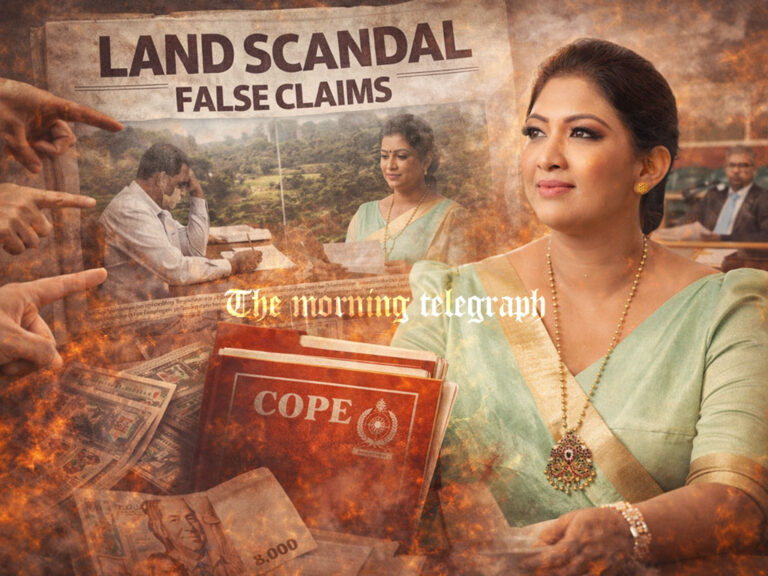
A cross-border controversy erupts as a political figure steps in to challenge alleged online sexual abuse, exposing legal gaps in Sri Lanka while raising the stakes under Australia’s strict cyber laws.
Opposition politician Hirunika Premachandra has officially lodged a complaint with the Australian High Commission in Sri Lanka on April 3, drawing attention to a serious online sexual insult directed at veteran journalist Dilka Samanmali. The complaint centers on a statement made via a YouTube channel operated by Sudantha Thilaksiri, widely known as ‘Suda Creation’. According to Premachandra, the offensive remark was triggered by a political opinion shared by Dilka Samanmali on her personal social media platform.

Although Dilka Samanmali is no longer actively involved in mainstream media, the incident has ignited widespread concern among journalists, media professionals, and women across Sri Lanka. The issue has evolved beyond an individual dispute into a broader conversation about freedom of expression, online harassment, and the protection of women’s rights in the digital space.
The matter has also taken a personal and legal turn. Dilka Samanmali’s father had already filed a complaint with Sri Lanka’s Criminal Investigation Department before leaving for Australia. It is significant that both the victim and the accused are permanent residents of Australia, while her parents are Australian citizens. This cross-border element adds complexity to the case, especially when considering jurisdiction and enforcement.
Under Sri Lankan law, there are provisions to address such incidents. Legal action related to online sexual harassment and defamatory content can be pursued under the Women’s Empowerment Act No. 37 of 2024, Section 365 of the Penal Code, and the Online Safety Act of 2024. However, Premachandra highlighted a critical institutional gap, pointing out that the resignation of the Chairperson of the Women’s Commission has weakened its ability to function independently, making it difficult for victims to seek timely relief.
In contrast, Australian law treats such offenses with far greater severity. Under Commonwealth legislation, insulting or degrading a woman can result in imprisonment ranging from three to five years. If the content is deemed sexually harassing or threatening in nature, the penalties increase significantly, with prison terms ranging from seven to ten years. These strict legal standards underscore the seriousness of the allegations.
Beyond criminal penalties, the consequences extend into immigration law. Actions involving online abuse and harassment can directly impact the character assessment required for Australian citizenship. For permanent residents, this raises the possibility of visa cancellation and deportation, placing the accused at significant legal risk under Australian regulations.
Given these implications, Dilka Samanmali and her family have already escalated the matter by filing a complaint with the Australian Federal Police. They are also preparing to formally notify the Australian government through official correspondence. These steps indicate a determined effort to pursue justice through international legal channels.
Hirunika Premachandra, who is no stranger to political criticism and public scrutiny, emphasized that this issue goes beyond politics. She stated that regardless of Dilka Samanmali’s affiliations or past professional roles, the enforcement of law against violence and harassment targeting women is essential. According to her, taking firm action in this case could establish a meaningful precedent, reinforcing accountability and protection for women facing similar abuse in the future.