Sri Lankan households are facing an immediate cost-of-living blow as both LAUGFS and Litro Gas announce sharp price hikes, pushing domestic LPG prices to new highs overnight.
Sri Lanka’s domestic gas market has been hit with a significant price increase, as LAUGFS Gas announced a sharp upward revision effective from midnight on April 05, intensifying the ongoing cost of living crisis across the island.
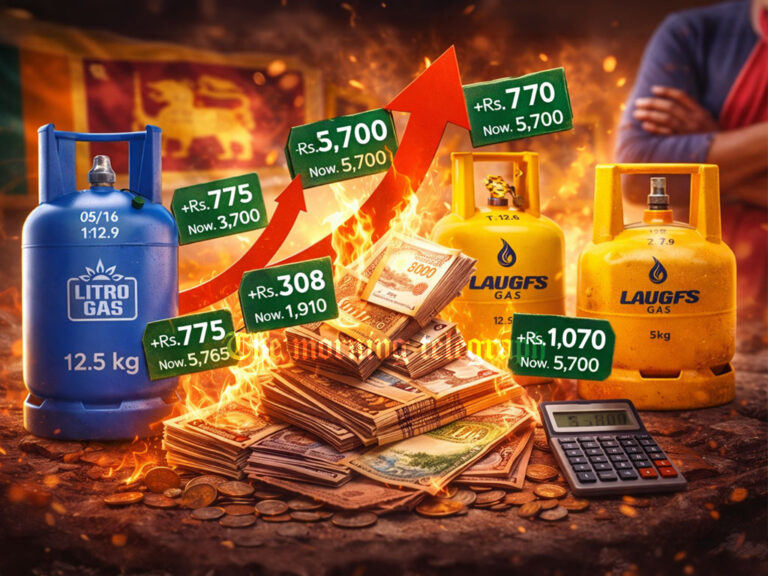
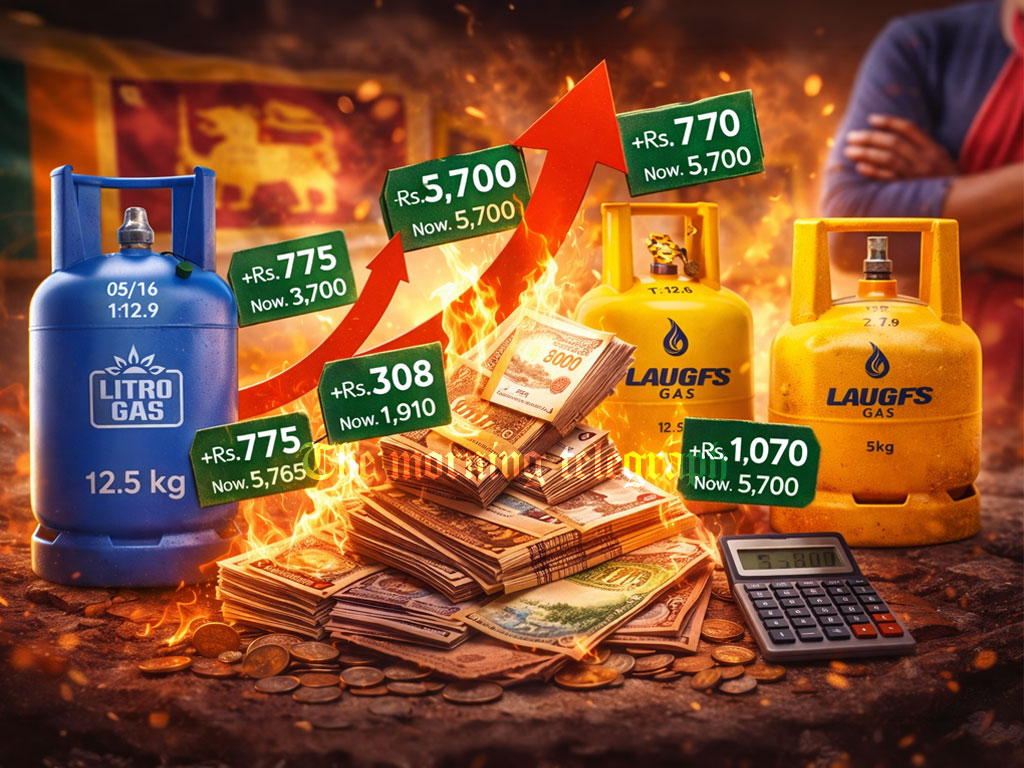
According to the latest price revision for the Colombo district, the widely used 12.5 kilogram cylinder has increased by Rs. 1,070, bringing the new retail price to Rs. 5,700, compared to the previous price of Rs. 4,630. Meanwhile, the 5 kilogram cylinder has been raised by Rs. 418, with the new price set at Rs. 2,280, up from Rs. 1,862. This sudden LPG price hike reflects mounting pressure on household energy costs and daily expenses.

The revised LAUGFS gas prices officially came into effect from April 05, 2026, with immediate impact on consumers already grappling with inflation and rising utility bills.
In a parallel move, Litro Gas Lanka also announced an increase in domestic gas prices, aligning its revision with prevailing global market trends and international LPG pricing pressures.
Under the new Litro pricing structure, the 12.5 kilogram cylinder has increased by Rs. 775, marking a 19.4 percent rise and setting the new price at Rs. 4,765, up from Rs. 3,990. The 5 kilogram cylinder has increased by Rs. 308, reflecting a 19.2 percent rise, with the new price reaching Rs. 1,910 compared to the previous Rs. 1,602. Additionally, the smaller 2.3 kilogram cylinder has gone up by Rs. 140, an 18.7 percent increase, bringing the new price to Rs. 890 from Rs. 750.
This latest gas price revision underscores the growing impact of global energy price fluctuations on Sri Lanka’s domestic market, as authorities continue to pass through international cost increases to local consumers.
With both major suppliers implementing simultaneous price hikes, households across the country are now forced to adjust to higher cooking gas costs from today, further straining disposable income and household budgets.