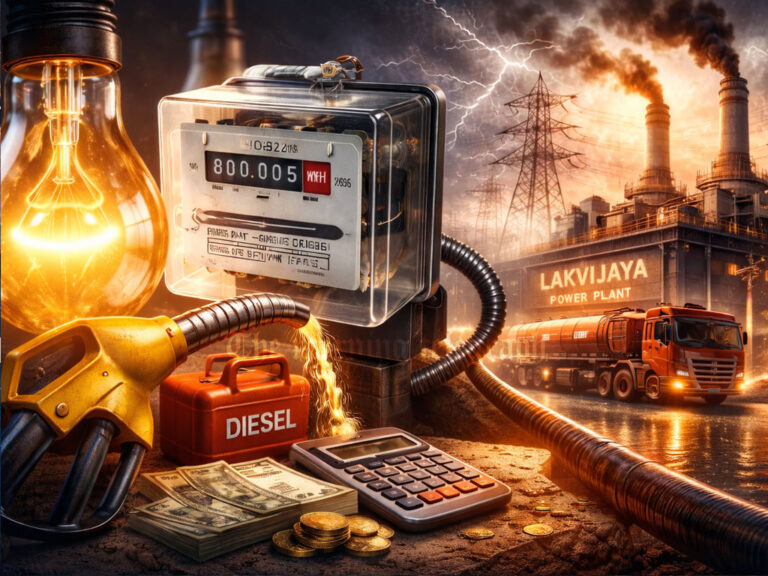
Sri Lanka’s electricity crisis deepens as substandard coal forces costly diesel use, pushing bills higher while authorities scramble to avoid power cuts.
Sri Lanka’s ongoing energy crisis has taken a new turn, with authorities acknowledging that substandard coal has significantly reduced electricity generation, forcing the system to rely heavily on expensive diesel power to meet demand.
JVP General Secretary Tilvin Silva stated that power plants have been unable to produce the expected electricity output due to poor coal quality, resulting in increased diesel usage to bridge the shortfall. This shift toward diesel-based power generation has directly contributed to the rising electricity bills now affecting consumers across the country.

He made these remarks while addressing the 53rd April Heroes’ Day commemoration held in Vavuniya, where the issue of energy security and fuel management took center stage.
Elaborating further, Tilvin Silva rejected allegations made by the opposition, emphasizing that no fraud or corruption had taken place in the procurement process related to coal imports.
According to him, the issue originated from a supplier selected through a formal tender process, which had delivered substandard coal. He confirmed that an official investigation would be conducted and that the responsible company would face penalties under existing regulations.
Tilvin Silva also accused opposition groups of spreading misinformation in an attempt to gain political advantage during a period marked by fuel shortages and global geopolitical instability.
He stressed that the government is making every possible effort to ensure an uninterrupted electricity supply and avoid power cuts, highlighting the importance of public cooperation during this challenging period.
While electricity generation remains stable during daytime hours, he urged citizens to reduce electricity consumption at night, when demand peaks and the system becomes more dependent on costly diesel-powered generation.
He further explained that the increased reliance on diesel during nighttime operations has been a key factor driving up electricity tariffs, placing additional pressure on households already struggling with the rising cost of living.