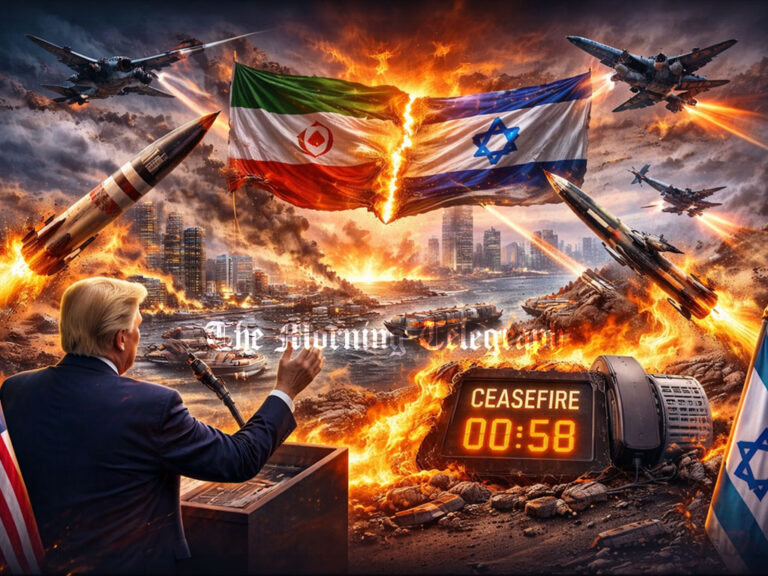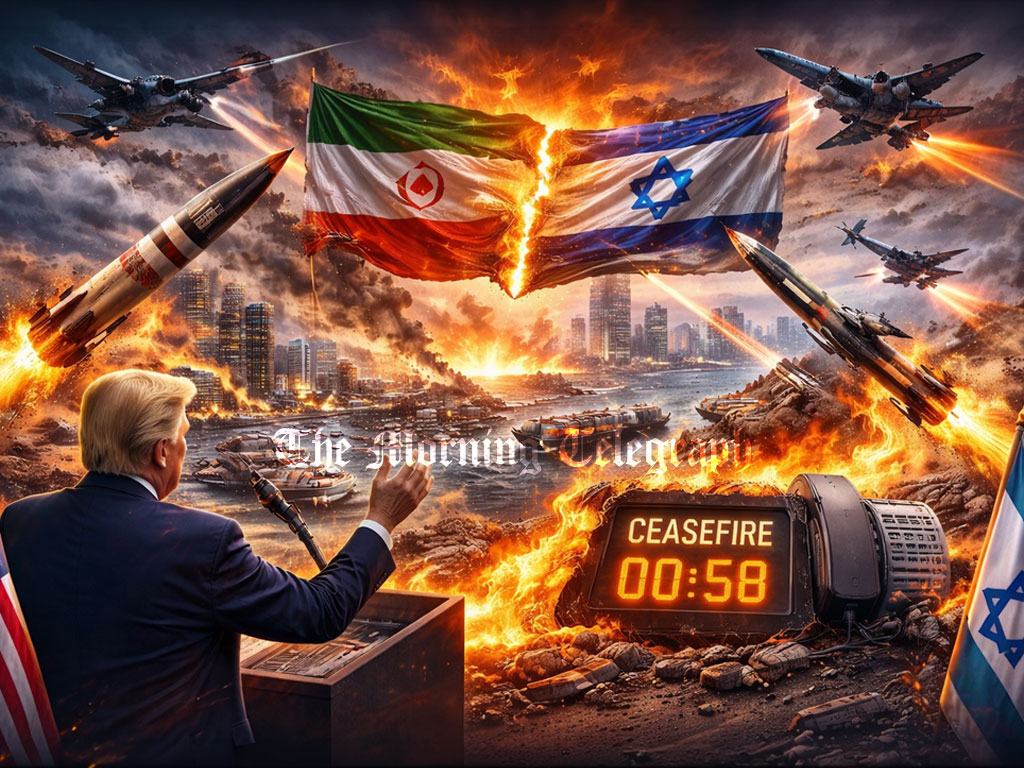
A fragile US-brokered ceasefire between Israel and Iran unravels almost instantly, as missile strikes and air raids reignite fears of a wider Middle East war and threaten global stability.
Just hours after US President Donald Trump announced a two-week ceasefire between the United States, Israel and Iran, both Iran and Israel appear to have significantly violated the agreement by launching fresh attacks on each other.
According to President Trump, the ceasefire was conditional, requiring Iran to halt its attacks and ensure uninterrupted shipping through the strategically vital Strait of Hormuz, a key global oil transit route.

Further diplomatic talks aimed at stabilizing the situation were scheduled to begin next Friday in Islamabad, with Pakistan acting as a mediator in efforts to de-escalate tensions in the Middle East.
Iran’s Supreme National Security Council confirmed its acceptance of the temporary ceasefire, but made it clear that the broader conflict was far from over and warned that any hostile actions would be met with a strong and immediate response.
Despite this, within hours of the ceasefire announcement, Iran reportedly launched a wave of ballistic missile strikes targeting Israel early Wednesday, triggering nationwide air raid sirens and forcing Israeli air defense systems to intercept incoming threats.
The escalation extended beyond Israel, with reports indicating that Iran also launched an attack on the Jubail chemical industrial area in Saudi Arabia, while missile alerts were simultaneously issued in the United Arab Emirates, raising concerns of a regional spillover.
The Israeli Defense Forces stated that, regardless of the ceasefire agreement, the Israeli Air Force continues to conduct targeted military operations within Iran, signaling a lack of full commitment to the truce.
Israeli leadership had expressed skepticism about the ceasefire from the outset, noting that while they agreed under US guidance, there remain multiple strategic targets inside Iran that Israel believes must still be neutralized.
Earlier in March, Prime Minister Benjamin Netanyahu described Trump as a trusted ally and leader of Israel, stating his respect for US decisions, but he stopped short of confirming whether Israel would fully cease military operations under a ceasefire framework.
The announcement of the ceasefire followed weeks of escalating military confrontation between Iran and Israel, including recent US strikes on military installations on Kharg Island and an Israeli operation that reportedly killed a senior intelligence figure within Iran’s Revolutionary Guard Corps.
While global crude oil prices initially dipped following news of the ceasefire, market confidence remains fragile as continued military exchanges cast doubt over the sustainability of peace efforts in the region.
There is also no clear indication that Israel has scaled back its operations against Hezbollah targets in Lebanon, further complicating the already volatile geopolitical landscape.