From viral images of political simplicity to explosive questions about wealth, Minister Lal Kantha’s remarks on ‘social capital’ have ignited a national debate on ethics, legality, and political accountability.
Several photographs recently circulated across social media platforms showing President Anura Kumara Dissanayake, Prime Minister Dr. Harini Amarasuriya, and other senior figures seated on simple chairs sharing a meal during a Dānama religious ceremony held at the residence of Minister K.D. Lal Kantha. Initially, these images drew widespread praise, with many users highlighting the apparent simplicity, humility, and grounded nature of the country’s top leadership.

However, within days, the tone of the conversation shifted dramatically. The same images began to fuel a wave of criticism and skepticism, with social media users raising pointed questions about how Minister Lal Kantha, who has spent years in full-time politics without a conventional income stream, was able to construct a multi-storey house on high-value land within a relatively short time frame.
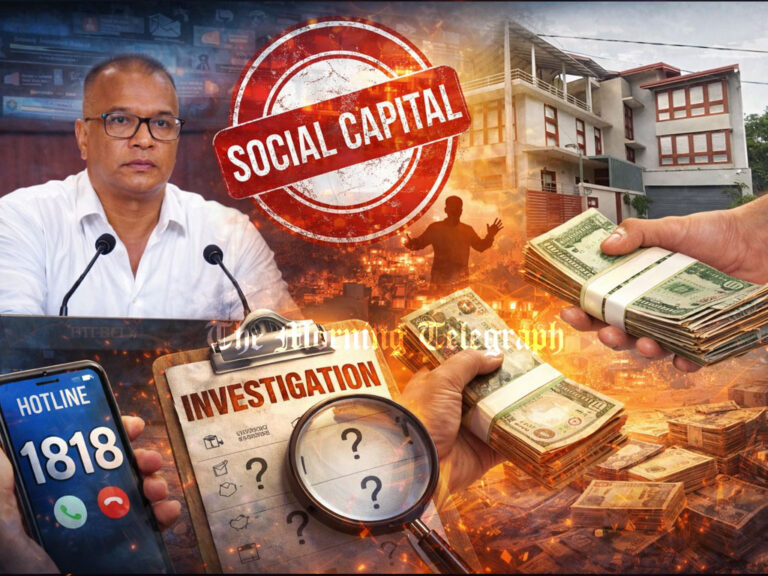
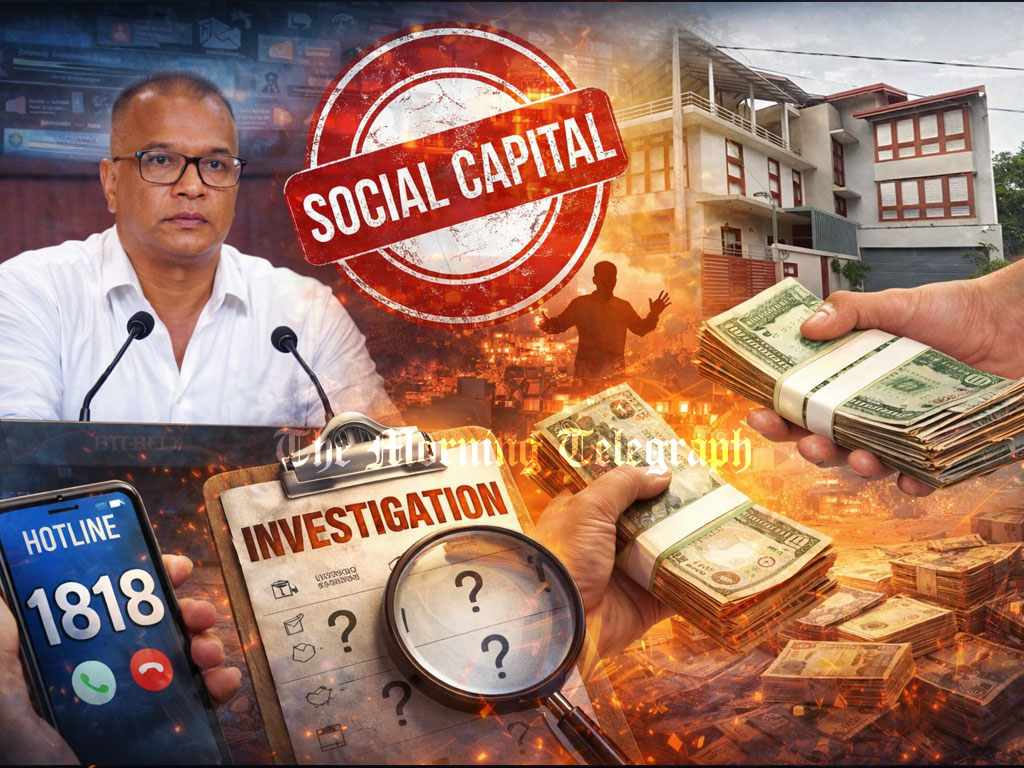
Amid growing speculation and allegations surrounding the funding of his residence, Minister K.D. Lal Kantha addressed the issue during a discussion on the YouTube platform Prakampana. He emphasized that he has always maintained strict discipline regarding financial ethics, stating that he has never interfered with party funds nor engaged in the misuse of government resources. According to him, his financial dealings have been limited to personal transactions such as selling and purchasing property.
The minister went on to introduce the concept of social capital as a key factor in his financial capability. He explained that through years of political engagement, he has built extensive relationships and networks that extend beyond politics into personal trust and friendships. Lal Kantha stated that if necessary, he could raise substantial funds quickly by reaching out to individuals across different regions, requesting financial support with an understanding of repayment, even without formal expectations.
This statement has triggered intense public discourse, particularly regarding the interpretation and application of social capital. In sociological terms, social capital refers to the ability to derive benefits through networks of relationships, built on trust, cooperation, and shared social participation. It is widely recognized as a crucial element contributing to community development, economic growth, and social well-being.
However, academic voices have raised serious concerns about the minister’s interpretation. Senior Lecturer Dr. Niluka Priyadarshani from the University of Sri Jayewardenepura stated that while social capital plays a vital role in society, its use must be confined to collective benefit rather than personal gain. She warned that collecting funds from acquaintances for private purposes such as building a personal residence could be considered illegal and potentially interpreted as bribery, particularly when power dynamics are involved.
Adding to the scrutiny, Professor Nirmal Ranjith Dewasiri emphasized the need for full transparency. He argued that public officials must clearly disclose the sources of their wealth, especially when significant assets such as property are involved. Questions regarding the cost of construction, the origin of the land, and whether any undue influence or financial misconduct occurred must be addressed openly to maintain public trust.
In response to earlier concerns, Minister Lal Kantha had previously explained that a sudden increase in his declared assets was due to inheritance. He stated that after the passing of his parents, he became the sole beneficiary of family-owned lands, which were subsequently included in his asset declarations. He maintained that annual declarations have been consistently submitted and are available for public review.
Despite these assurances, concerns persist over the absence of his 2025 asset declaration on the official website of the Commission to Investigate Allegations of Bribery or Corruption. Although officials confirmed that the declaration had been submitted, it had not been published at the time of reporting, prompting further inquiries and formal information requests.
Transparency International Sri Lanka has also initiated an inquiry into why the asset declaration has not been made publicly accessible, adding another layer of scrutiny to the unfolding situation.
Meanwhile, public pressure has intensified, with citizens actively engaging through newly introduced reporting mechanisms. A complaint has already been lodged via the 1818 hotline by an individual seeking an official investigation into the financial sources behind the minister’s house construction.