A stark warning emerges as Sri Lanka’s healthcare crisis deepens, with growing calls for decisive government action to protect patient lives and restore public trust in essential medical services.
Former diplomat Ambassador Kananathan has urged the government to adopt a firm and uncompromising stance on doctors’ strikes, cautioning that Sri Lanka is approaching a critical turning point in its healthcare system.
He stated that there are moments when leadership must shift from negotiation to decisive governance, and emphasized that Sri Lanka is currently facing such a moment of urgency and responsibility.

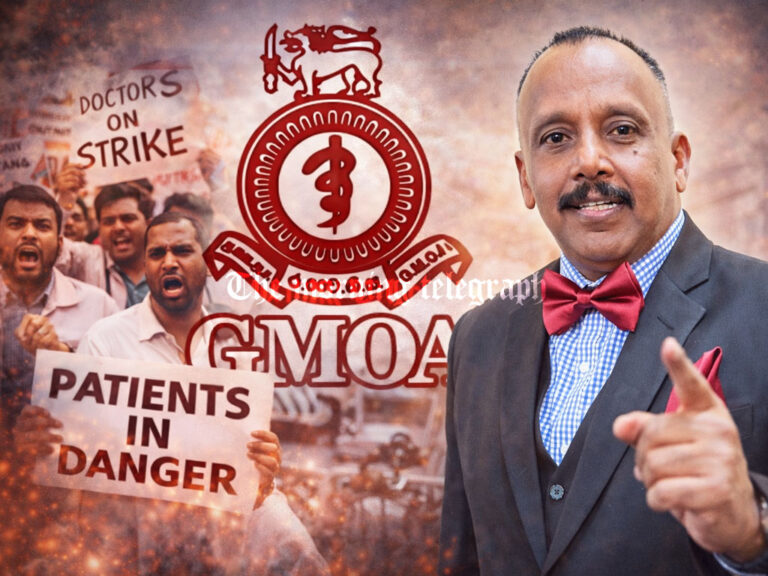
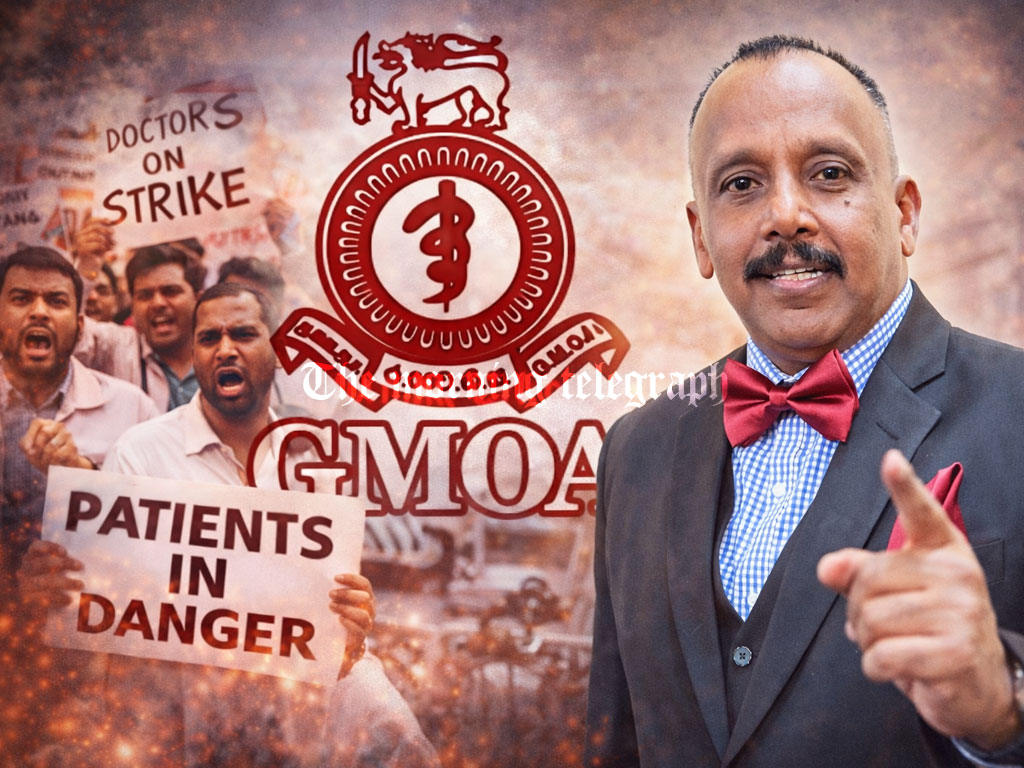
Kananathan stressed that when doctors engage in strike action, the issue goes far beyond a typical labour dispute or economic inconvenience. He highlighted that such disruptions directly endanger human lives, noting that every cancelled clinic, delayed surgery, and unattended emergency can lead to irreversible consequences for patients across the country.
The Ambassador further pointed out that the Sri Lankan State has made a substantial investment in the education and training of doctors, from early schooling to university-level medical education. This taxpayer funded system enables medical professionals to qualify without the burden of significant debt, unlike in many other countries, and therefore carries an expectation of accountability and public service.
However, he observed that during periods of industrial action, this sense of responsibility appears to weaken. He noted that many citizens increasingly view doctors’ strikes not as legitimate protest, but as pressure tactics that place patient welfare at risk. According to him, there is a growing perception that essential healthcare services are being used as leverage in disputes.
Drawing on international precedent, Kananathan referred to a major industrial dispute involving Singapore Airlines in 1980, which threatened the country’s economic stability and global reputation.
He explained that former Prime Minister Lee Kuan Yew responded with decisive leadership, confronting union leaders and warning that he would ground the airline if necessary, even at the cost of dismissing the workforce and rebuilding operations from scratch.
Quoting Lee Kuan Yew, he recalled the statement that he would not allow anyone to damage Singapore, underscoring a leadership philosophy rooted in protecting national interests above all else.
Kananathan noted that this firm approach ultimately restored authority, stabilized the situation, and brought the disruption to an end, reinforcing the importance of decisive governance in times of crisis.
He emphasized that Sri Lanka cannot afford indecision when it comes to disruptions in the healthcare sector, calling for strong policy action that ensures essential medical services remain operational at all times. He proposed measures such as enforcing mandatory minimum service requirements, resolving disputes through binding arbitration mechanisms, and taking strict action against repeated violations of public service obligations.
He warned that failure to act decisively risks creating a dangerous precedent in which essential services can be disrupted to force outcomes, undermining both governance and public confidence in the healthcare system.
Kananathan concluded by stating that the lesson from Lee Kuan Yew is not about punishment, but about safeguarding the greater good with clarity, strength, and resolve, adding that Sri Lanka must adopt a similar approach as healthcare remains a matter of life and death.