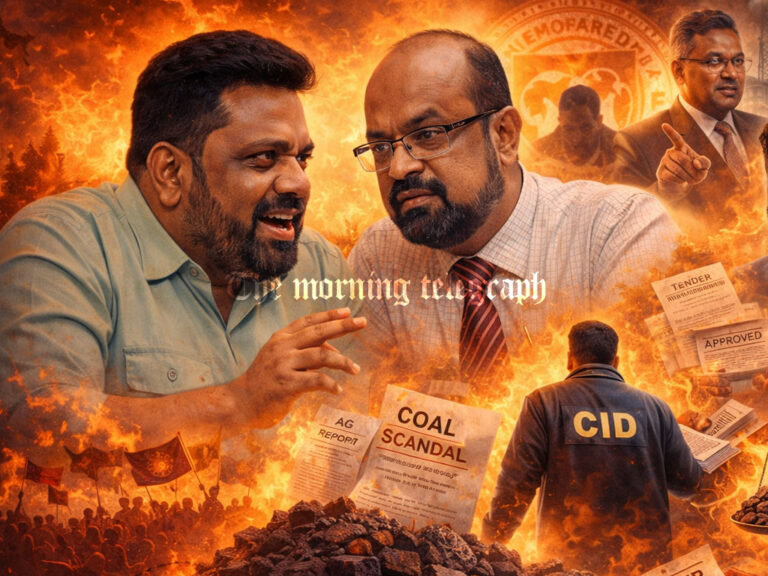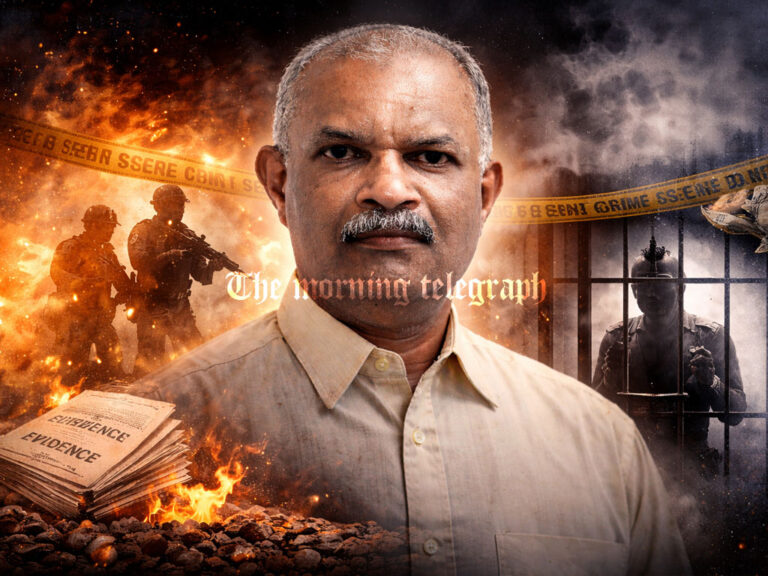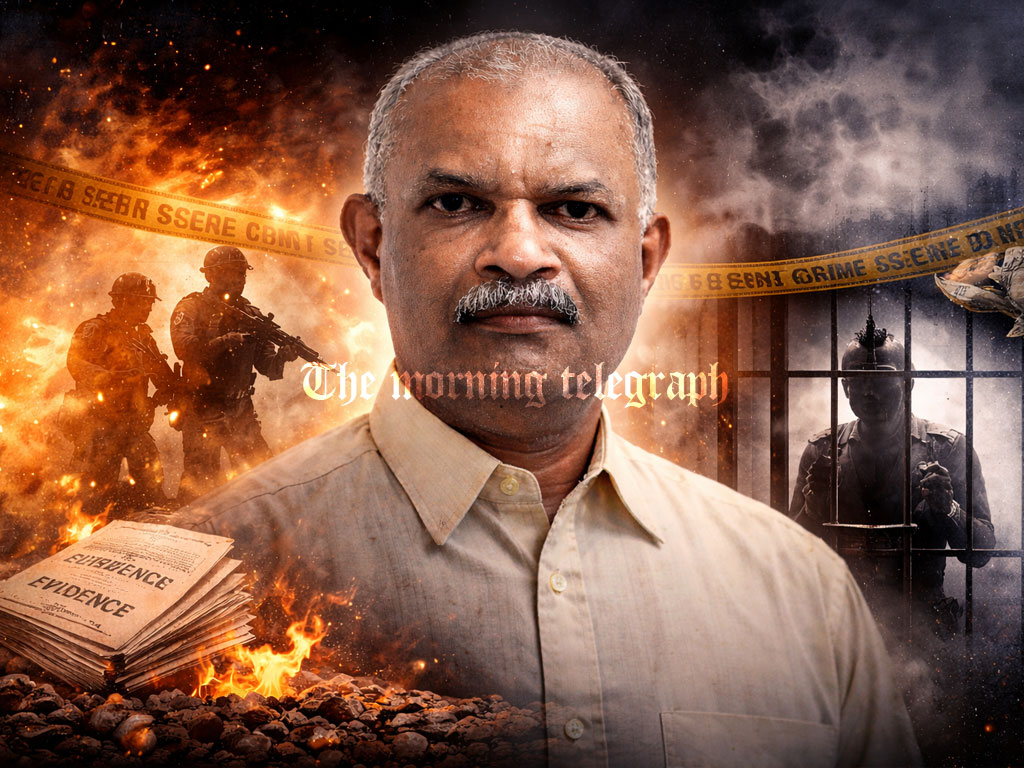
A gripping political journey where power, betrayal, and justice collide, revealing how one investigator became both a weapon and a victim in Sri Lanka’s relentless war over corruption and truth.
From 1977 to 1994, the Bandaranaike and Rajapaksa factions within the SLFP failed to unseat the long-standing UNP government. Even the JVP, armed and militant, could not dismantle the regime despite widespread violence and unrest.
By 1994, however, both the SLFP and JVP shifted tactics and found a powerful new narrative to rally the masses.

“Against Corruption and Violence…”
This slogan became their political weapon. While J.R. Jayewardene had used military force to crush the JVP uprising, opponents reframed him as a symbol of brutality. When Vijaya Kumaratunga was assassinated, Chandrika publicly blamed Premadasa. Similarly, when Lalith Athulathmudali was killed, accusations again pointed toward Premadasa. The same narrative extended to the deaths of General Kobbekaduwa, Wijaya Wimalaratne, Ranjan Wijeratne, and Clancy Fernando.
Allegations of torture chambers like Batalanda were amplified, with UNP figures accused of orchestrating atrocities. The SLFP capitalized on these claims politically, while the JVP spread them across grassroots networks. Together, this strategy succeeded in toppling the UNP in the 1994 Southern Provincial Council election. Chandrika pledged accountability through presidential commissions to investigate these crimes, assigning the responsibility to Attorney General Sarath Silva.
These investigations strengthened Chandrika’s political dominance and secured her second term. Later, Mahinda Rajapaksa, backed by the JVP, used similar narratives surrounding the 1988 to 1989 violence and assassinations to claim victory in the 2005 presidential election.
From 1994 to 2015, the UNP struggled to regain power from the SLFP. In 2015, with JVP support, they introduced a new political message: “Catch the Thieves… End the Culture of Killings…”
This slogan became the central campaign against Mahinda Rajapaksa. Allegations of corruption involving his family and high-profile killings of journalists such as Lasantha Wickrematunge, Prageeth Eknaligoda, and Wasim Thajudeen captured public attention. The electorate responded, Mahinda was defeated, and Maithripala Sirisena emerged victorious as the UNP-backed candidate. Ranil Wickremesinghe assumed office as Prime Minister, forming a new government.
Soon after, investigations into corruption and unresolved murders linked to the Rajapaksa era were assigned to Shani Abeysekara. Having joined the police in 1986 and later transferred to the CID in 1999, Shani had built a reputation through high-profile investigations, including the LTTE attack on Chandrika. By 2015, he was entrusted by key political leaders to lead critical probes targeting the Rajapaksa network.
Shani’s investigations created immediate political tremors. Gotabaya Rajapaksa was summoned, while allies of Mahinda faced scrutiny, causing unease among both Maithri and Ranil. In a strategic shift ahead of the 2019 election, Maithri began protecting Gotabaya, while Ranil facilitated Mahinda’s political regrouping, effectively halting momentum against the Rajapaksas. This deeply frustrated the JVP and civil activists who expected swift justice.
Instead, political compromises reshaped the narrative. Maithri and Ranil’s decisions indirectly cleared the path for Gotabaya’s rise. Investigators like Shani were left exposed, and the anti-corruption drive stalled. As Sajith Premadasa’s candidacy weakened, Gotabaya secured victory.
Following the election, CID officer Nishantha de Silva fled overseas with sensitive case files. Gotabaya’s administration then moved against Shani, accusing him of misconduct. He was suspended, arrested, and imprisoned.
Shani’s detention during the COVID crisis marked a critical turning point. Despite warnings about his health, he was denied proper care. He contracted the virus and suffered a severe heart attack, nearly losing his life while in custody.
During this period, opposition figures such as Sajith Premadasa and SJB members publicly defended Shani. The JVP leadership, however, remained largely silent. Ironically, Shani had believed the JVP would offer the strongest platform for pursuing corruption cases independently. Instead, he found himself abandoned, his work dismantled, and his life in danger.
When political tides shifted again and Anura Kumara Dissanayake rose to power, Shani was reinstated as CID Director. His return symbolized a revival of stalled investigations and a renewed push against corruption. His task now was not only to resume past cases but to validate the allegations that had shaped Sri Lanka’s political battles for over a decade.
Yet, this new phase presents its own challenges. Anura now faces the delicate task of navigating a political landscape shaped by past betrayals, competing narratives, and public expectations. In this unfolding story, Shani stands once again at the center, not just as an investigator, but as a symbol of how power can both elevate and destroy.