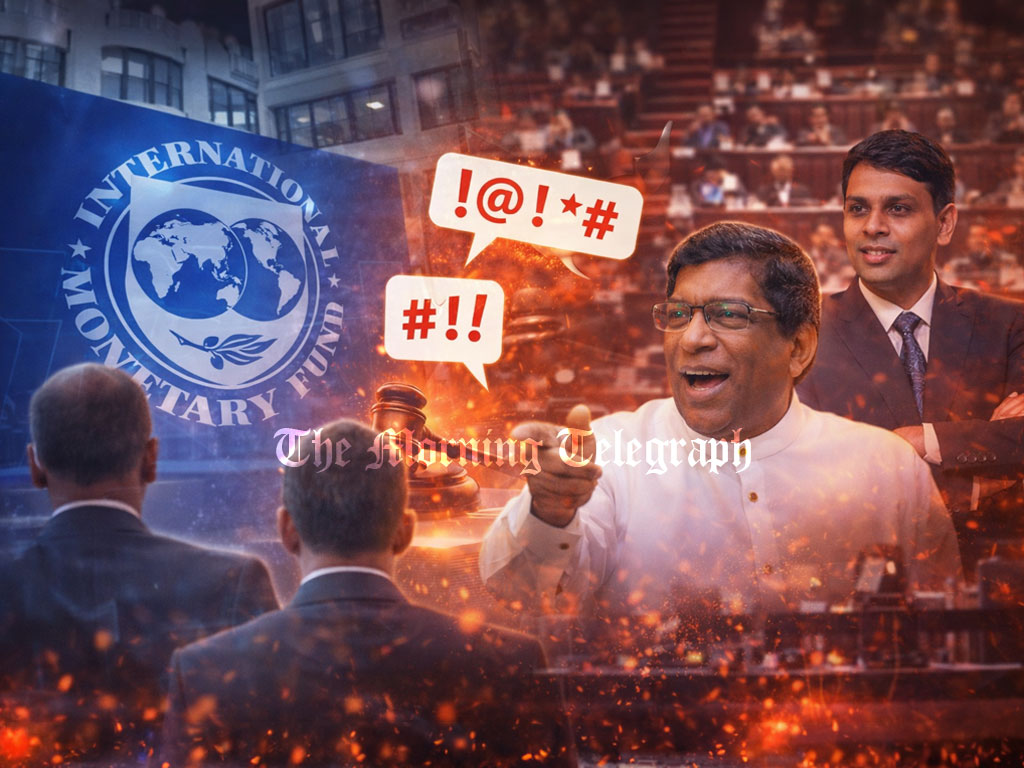
A rare behind-the-scenes meeting between IMF officials and Sri Lanka’s opposition erupted into a tense confrontation, exposing deep concerns over economic policy, transparency, and political bias.
A little reported but highly significant incident unfolded inside Parliament last week, during a period already charged with political tension following the no confidence motion brought against Minister Kumara Jayakody.
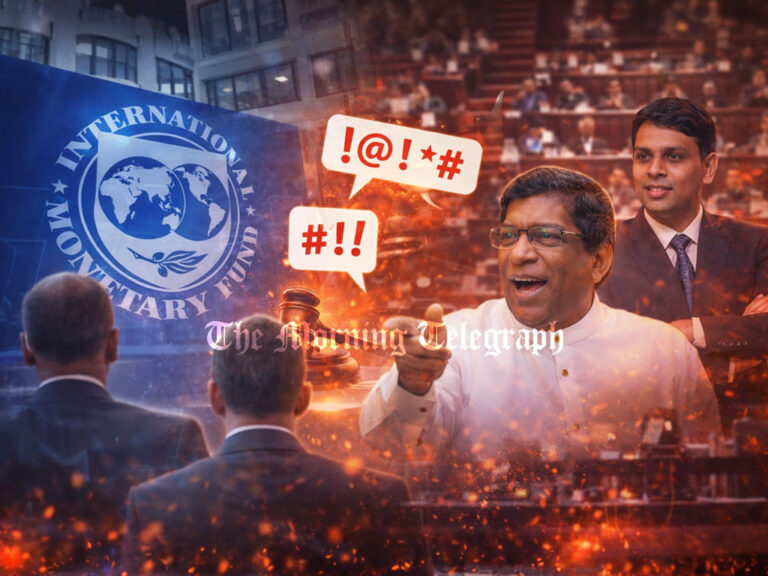
At the center of this development was an unusual engagement involving officials from the International Monetary Fund, who visited Parliament and held a special discussion with opposition party leaders.

Traditionally, IMF delegations visiting Sri Lanka have followed a clear pattern by first meeting government representatives before engaging with the opposition. However, since the Malima government assumed power, that practice appeared to shift. Although IMF officials continued to meet government authorities, they had been leaving the country without holding discussions with opposition leaders.
After repeated concerns raised by opposition figures, IMF representatives altered this approach during their most recent visit. Acting on a request facilitated through the Speaker’s office, they agreed to meet opposition leaders within Parliament itself.
What followed was not a routine diplomatic exchange, but a highly charged and intense discussion.
The tone of the meeting was largely shaped by former Finance Minister Ravi Karunanayake, who led a series of pointed and persistent questions directed at IMF officials regarding Sri Lanka’s current economic direction.
From the outset, Ravi expressed strong dissatisfaction over remarks made by IMF Managing Director Kristalina Georgieva during her recent visit to Sri Lanka.
He questioned the neutrality of her public statement, noting that she had praised the current government’s economic performance while failing to acknowledge the role played by former President Ranil Wickremesinghe in stabilizing the country after its economic collapse.
Ravi emphasized that it was Wickremesinghe who initiated negotiations with the IMF during Sri Lanka’s financial crisis and implemented key reforms that laid the foundation for recovery. He argued that recognizing only the current administration while ignoring that contribution was both inaccurate and politically biased.
He then expanded his criticism to the broader IMF program currently in place.
Ravi raised concerns that the IMF, instead of guiding Sri Lanka away from excessive borrowing, appeared to be enabling further debt accumulation. He pointed out that the core objective of IMF intervention should be to strengthen fiscal discipline and reduce reliance on loans, yet the current trajectory suggested otherwise.
Presenting his arguments in clear and direct language, Ravi captured the attention of IMF officials, who listened closely as he continued to challenge the framework of the program.
He questioned whether the agreed conditions between Sri Lanka and the IMF were being properly enforced. He highlighted the importance of transparency, accountability, and corruption free governance as key pillars of IMF engagement, suggesting that these standards were not being consistently upheld.
Despite these concerns, he noted that there had been little visible response from the IMF regarding questionable transactions and governance issues within the current administration.
As the discussion intensified, MP Archuna Ramanathan joined the exchange, reinforcing the opposition’s stance by raising specific allegations.
He referred to the controversial release of 323 containers from the port without inspection and questioned whether the IMF had investigated the matter. He also pointed to the ongoing coal procurement controversy, stating that such issues raised serious doubts about compliance with anti corruption standards expected under IMF programs.
These interventions appeared to amplify the pressure on IMF officials, turning the meeting into a rare moment of direct accountability.
As the session concluded and opposition members began to leave, one IMF representative approached Ravi personally and acknowledged the impact of his intervention.
The official expressed surprise at the depth and clarity of the questions raised, noting that such direct engagement had not been encountered before. He described the issues highlighted as highly relevant and indicated a willingness to continue discussions privately in the future.
Ravi responded by expressing his readiness to engage further at any time.
The immediate impact of this exchange became evident within days. A report published in The Island newspaper cited IMF sources indicating that the Fund is now closely monitoring whether Sri Lanka is meeting the agreed conditions under its program.
The report further suggested that continued IMF support would depend on the government’s adherence to these commitments.
In this context, the confrontation inside Parliament appears to have had tangible consequences.
What began as a rare meeting between IMF officials and opposition leaders evolved into a critical moment of scrutiny, raising broader questions about economic governance, institutional accountability, and the direction of Sri Lanka’s recovery.