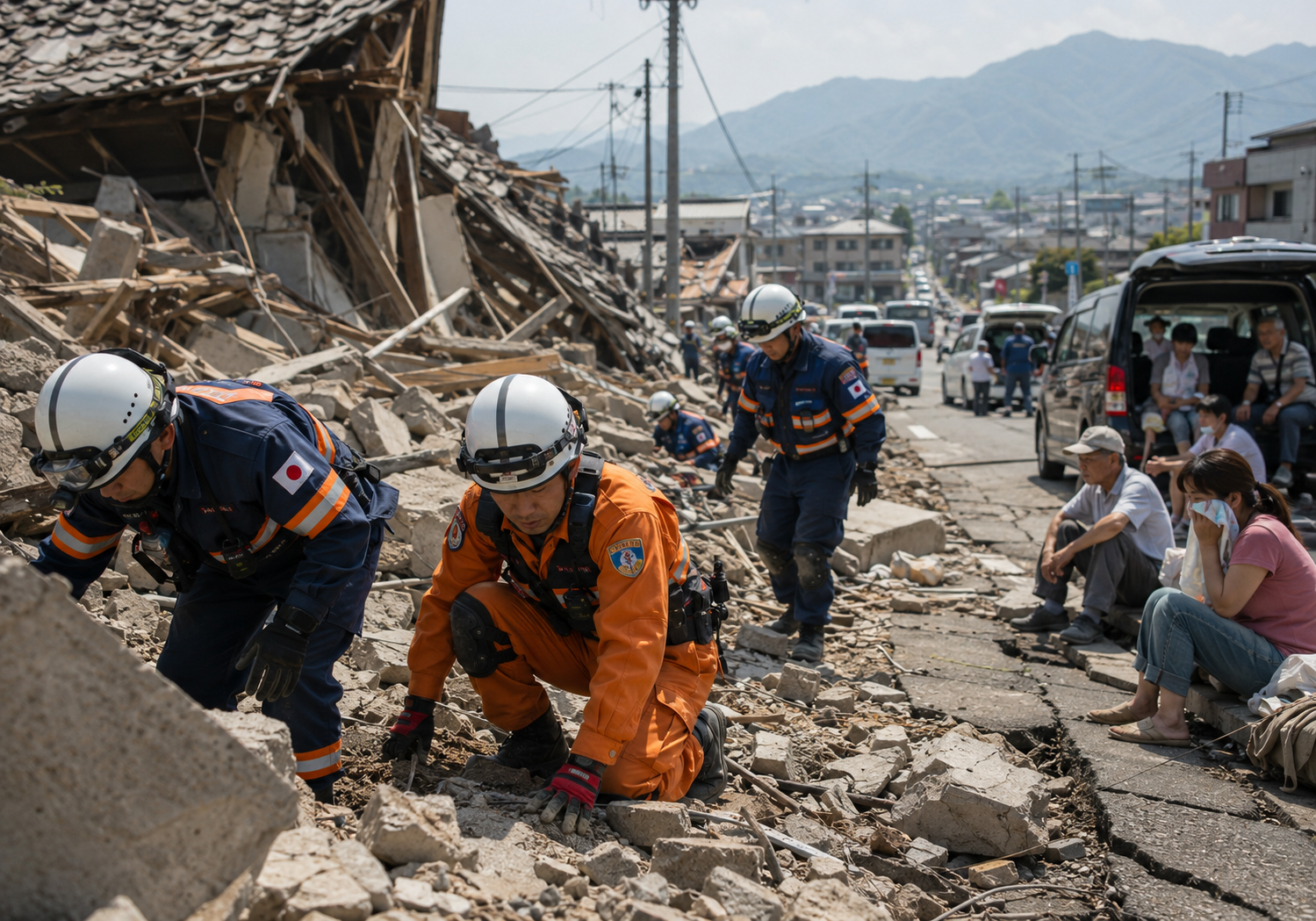
The Kumamoto earthquake death toll has reached 34 as rescuers search damaged buildings and survivors face water shortages and extreme heat.
The Kumamoto earthquake death toll has risen to 34 as rescue teams continue searching damaged buildings across Japan’s southwestern Kumamoto Prefecture.
At least 96 people suffered injuries, while others remain missing after the magnitude 7.1 earthquake struck the southern island of Kyushu.
The disaster toppled buildings, damaged roads and preceded an explosion at a shopping centre. Thousands of residents have moved into emergency accommodation.
However, many survivors are sleeping inside vehicles because shelters remain overcrowded. Others fear that powerful aftershocks could bring down more damaged structures.
Get
Breaking News
First
on WhatsApp
Follow The Morning Telegraph for instant alerts, top stories and exclusive updates delivered straight to your phone.

Kumamoto Earthquake Death Toll Rises Amid Water Crisis
Electricity has returned to most affected communities. However, nearly 80,000 homes reportedly remain without running water.
Fuel shortages have also developed as residents attempt to leave the worst-hit areas. Some survivors need fuel to operate their vehicles’ air-conditioning systems during the intense summer heat.
Temperatures have climbed to around 36 degrees Celsius. As a result, officials fear heat exhaustion and dehydration among people sleeping outdoors or inside parked vehicles.
Authorities have urged residents to remain prepared for further strong tremors. Prime Minister Sanae Takaichi warned that another earthquake of similar strength could follow the initial shock.
Emergency teams have concentrated their operations around collapsed structures. These include the damaged Aeon shopping mall and an industrial site where a large chimney fell.
Search operations remain difficult because aftershocks could destabilise weakened buildings and endanger rescuers entering the rubble.
Historic Inn and Industrial Facilities Damaged
The earthquake caused extensive damage in Yatsushiro and several other communities across Kumamoto Prefecture.
Among the affected properties was Kinparo, a historic Japanese inn built more than a century ago. The earthquake damaged its entrance, walls and tiled roof.
Local businesses, factories and transport services have also reported interruptions. Officials continue assessing the potential effects on industrial production, including facilities connected to Japan’s semiconductor supply chain.
The earthquake initially prompted tsunami warnings for coastal areas. Authorities later lifted the immediate warning, although residents were advised to remain away from vulnerable shorelines while safety assessments continued.
Japan is one of the world’s most earthquake-prone countries. It maintains strict building regulations, advanced warning systems and extensive emergency-response procedures.
However, the scale of the damage has placed local authorities under significant pressure. They must accommodate thousands of displaced residents while restoring water supplies during severe summer temperatures.
Search-and-rescue operations are continuing across the affected region. Officials have warned that the Kumamoto earthquake death toll could increase as emergency teams reach heavily damaged buildings and locate people who remain unaccounted for.