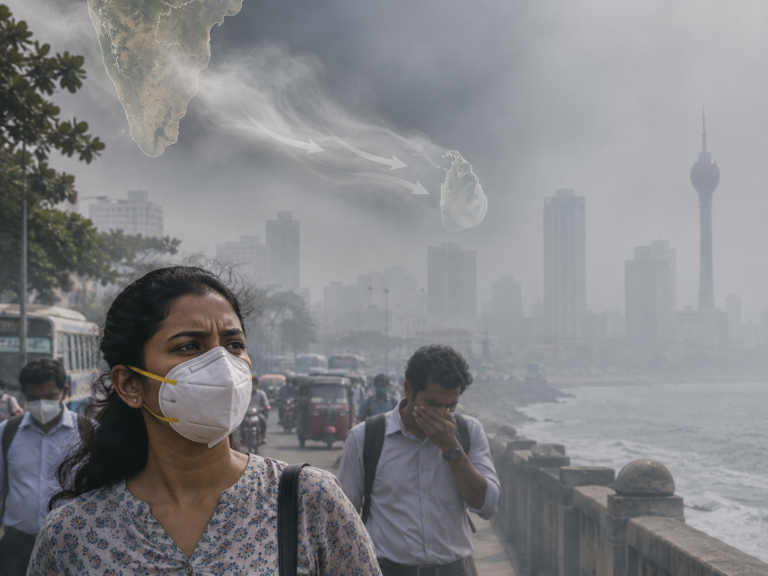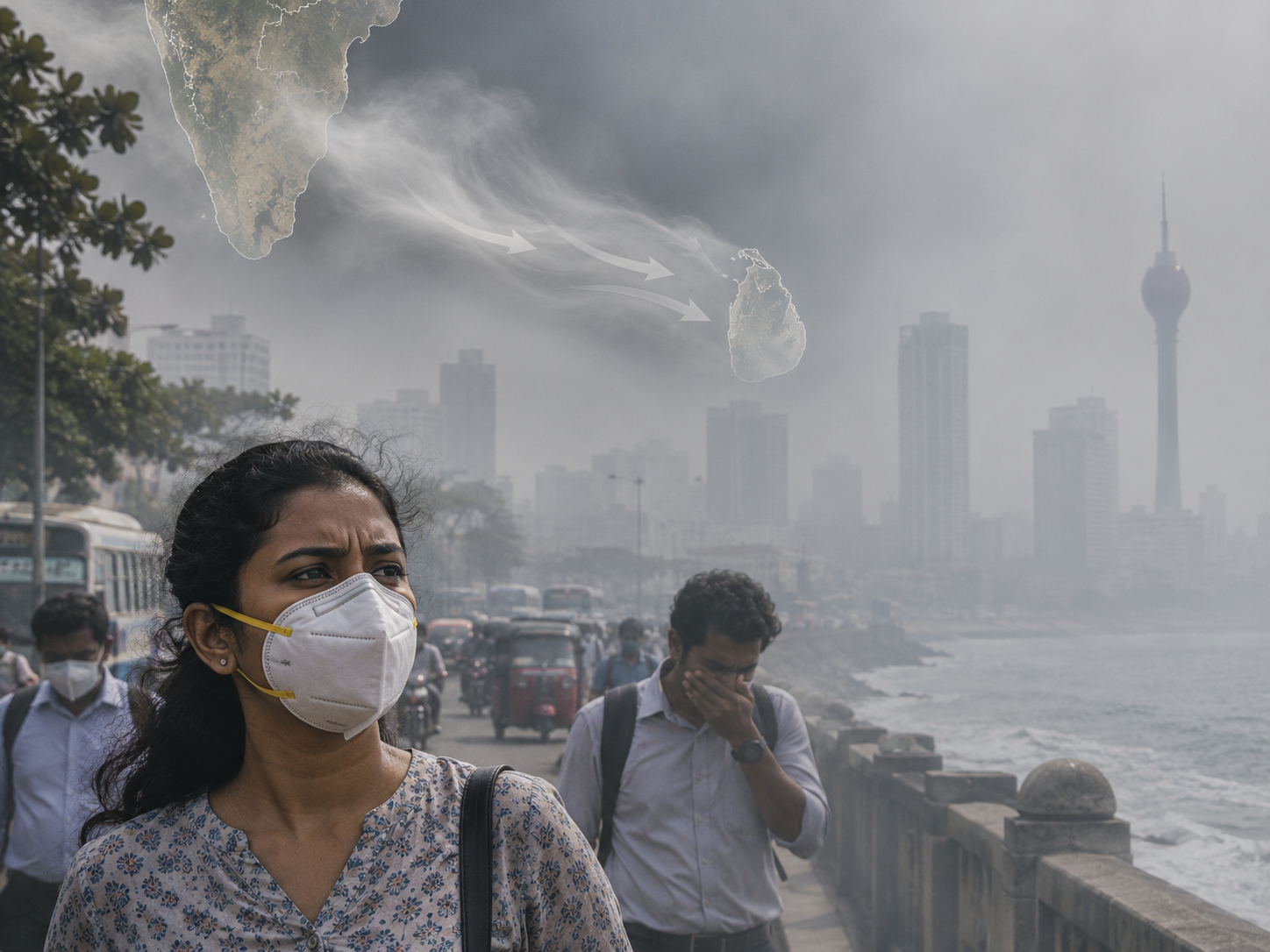
Cyclonic Storm Akvan is pushing polluted air towards Sri Lanka, with Jaffna, Kilinochchi, Battaramulla and several other areas recording unhealthy pollution levels as authorities warn of continued health risks.
COLOMBO, November 18, 2026 — Sri Lanka is facing a growing air pollution crisis as contaminated air carried across national borders spreads over the island, pushing air quality into unhealthy territory and raising concerns about the health of millions of residents.
The Central Environmental Authority (CEA) has confirmed that elevated concentrations of airborne pollutants, including fine particulate matter, are affecting several parts of the country, while meteorological officials have linked the unusual atmospheric conditions to changing wind patterns associated with Cyclonic Storm Akvan in the Bay of Bengal.
The situation has brought an uncomfortable reality into focus: although Sri Lanka may control pollution generated within its own borders, it remains vulnerable to dangerous airborne contaminants transported from elsewhere in the region.

Jaffna Records Highest Pollution Among Reported Morning Readings
Air quality readings reported at 7.30 a.m. on Wednesday showed Jaffna recording an Air Quality Index (AQI) of 186, placing the northern city firmly within the unhealthy category.
Other affected locations included:
| Location | AQI |
|---|---|
| Jaffna | 186 |
| Kilinochchi | 170 |
| Battaramulla | 166 |
| Anuradhapura | 165 |
| Chilaw | 162 |
| Trincomalee | 156 |
| Akkaraipattu | 154 |
Under the AQI classification used in the reports, readings between 151 and 200 indicate unhealthy conditions, meaning that exposure may cause adverse health effects, particularly among vulnerable groups.
The deterioration is not confined to northern Sri Lanka. Monitoring information also identified poor air quality in Mannar, Mullaitivu and other locations, highlighting the geographical extent of the pollution episode.
On November 17, Colombo’s air quality reportedly reached an AQI of 178, according to IQAir data cited by local media, with PM2.5 identified as the principal pollutant.
How Pollution From India Is Reaching Sri Lanka
The Department of Meteorology has identified unusual wind movements associated with Cyclonic Storm Akvan as a contributing factor in the deterioration.
The storm system has altered regional atmospheric circulation, allowing winds approaching from the direction of India to carry polluted air towards Sri Lanka.
This process, known as transboundary air pollution, occurs when airborne contaminants move across international borders through atmospheric circulation.
The CEA has attributed the present deterioration to pollutants arriving from outside Sri Lanka, while meteorological officials have identified winds from the direction of India. However, the available reports do not establish that all the pollution originated specifically in New Delhi.
India has been experiencing its own seasonal air pollution problems, particularly across its northern regions.
On November 13, Reuters reported that Delhi had overtaken Lahore as the world’s most polluted city, as hazardous smog reduced visibility and intensified concerns over public health.
Vehicle emissions, industrial activity, agricultural burning, construction dust and seasonal weather conditions all contribute to the region’s recurring pollution episodes.
Why the Haze Is More Dangerous Than It Looks
While residents may initially mistake the unusual grey haze for ordinary mist, air pollution contains microscopic particles capable of penetrating deep into the respiratory system.
Two pollutants are particularly concerning:
- PM2.5: Fine particles measuring 2.5 micrometres or smaller, which can enter deep into the lungs and, in some cases, reach the bloodstream.
- PM10: Larger inhalable particles that can irritate the airways and aggravate existing respiratory conditions.
Exposure to elevated particulate pollution can cause coughing, throat irritation, breathing difficulties and worsening symptoms among individuals with asthma or cardiovascular conditions.
Prolonged exposure to particulate air pollution is also associated with increased risks of cardiovascular and respiratory diseases.
The threat is particularly significant for children, older adults, pregnant women and individuals with pre-existing heart or lung conditions.
Authorities Recommend N95 Masks as Conditions Persist
The Central Environmental Authority has advised individuals particularly vulnerable to air pollution to wear N95 masks as pollution levels remain elevated.
The authority has also warned that the prevailing conditions could continue over the coming days and urged the public to follow health guidance issued by the Ministry of Health.
Meanwhile, the Meteorology Department has cautioned that hazy conditions could persist, especially during early mornings and at night, with reduced visibility possible in some areas.
People living in areas experiencing poor air quality should consider reducing strenuous outdoor activities, keeping windows closed when outdoor pollution is elevated, and using properly fitted particulate-filtering masks when exposure cannot be avoided.
Residents experiencing persistent breathing difficulties, chest pain or other serious symptoms should seek medical attention.
A Warning That Goes Beyond the Current Weather System
The latest deterioration highlights a longer-term environmental challenge that Sri Lanka cannot address through domestic pollution controls alone.
Transboundary pollution is not a new phenomenon. Similar episodes have previously affected Sri Lanka during periods when seasonal winds transported polluted air from the Indian subcontinent.
Research published by Sri Lanka’s Federation for Environment, Climate and Technology in early November 2026 also identified worsening air quality associated with seasonal changes in wind direction and the movement of polluted air masses from the northern South Asian region.
The recurring nature of these events raises important questions about the country’s preparedness.
Are Sri Lanka’s air-quality monitoring networks sufficiently comprehensive? Are public health warnings reaching vulnerable communities quickly enough? And should stronger regional cooperation be pursued to tackle pollution that moves freely across national boundaries?
The current episode illustrates why timely public warnings, accessible monitoring information and coordinated regional action are increasingly important.
For Sri Lankans, the immediate concern is the air they are breathing today. But the broader question is how a country can protect its population when a significant portion of its air pollution problem may originate beyond its borders.
The skies above Sri Lanka may be governed by the weather, but protecting the people beneath them requires more than simply waiting for the winds to change.